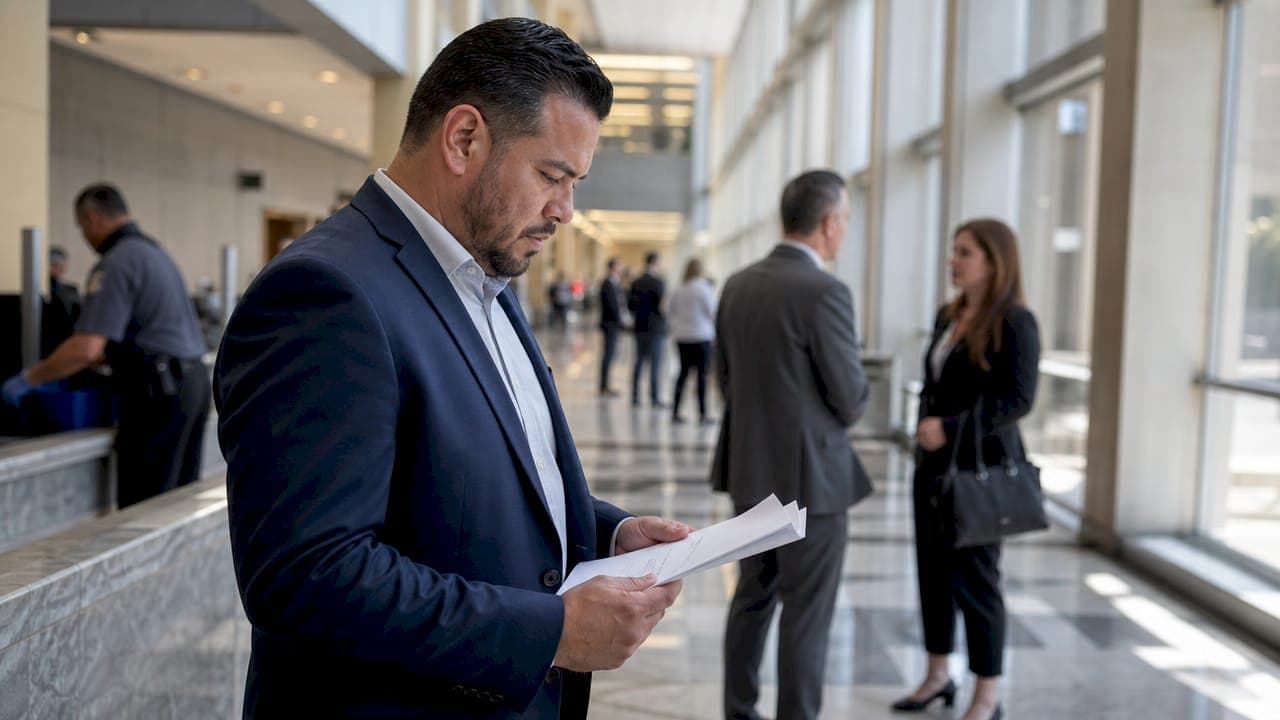
A bail motion hearing is a formal court proceeding where a judge reviews and rules on requests to change pretrial detention or bail conditions. No jury is present. The hearing focuses entirely on whether a defendant should be released, held, or have their bail amount adjusted. Understanding this process is the first step toward getting your loved one home faster.
Most families confuse a bail motion hearing with a trial. They are completely different. A trial determines guilt or innocence. A bail hearing determines freedom before trial. Hearings typically last minutes to an hour, with attorneys presenting arguments and judges often ruling the same day. The stakes are high, and preparation makes the difference between release and continued detention.
What is a bail motion hearing and how does it work?
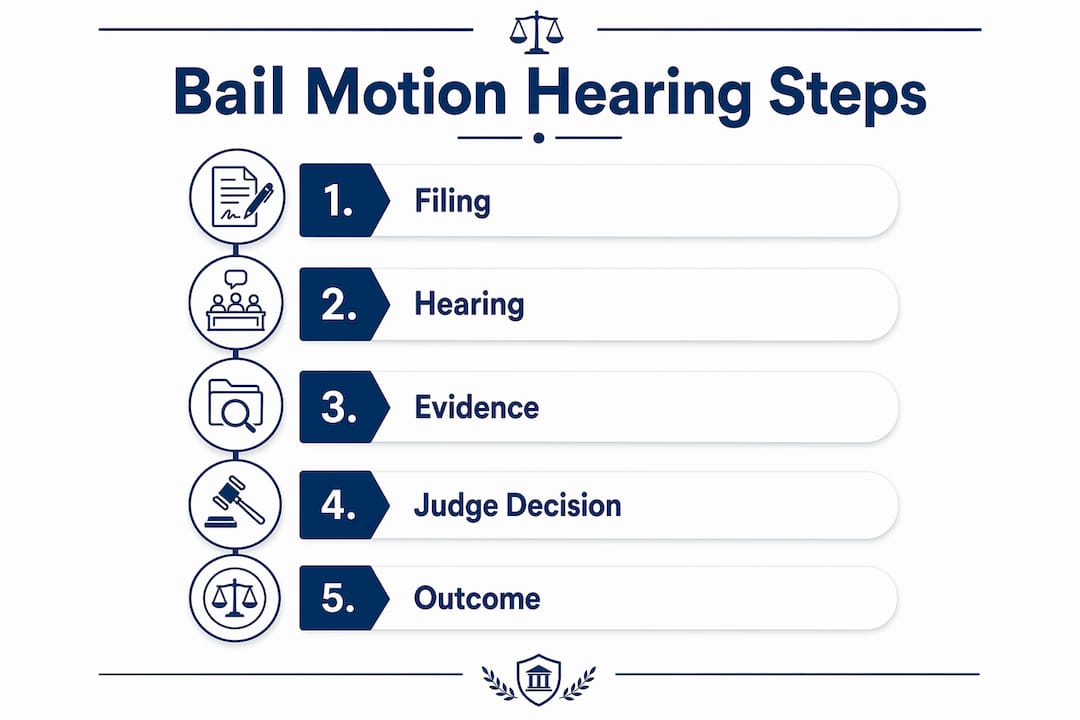
A bail motion hearing follows a structured format that moves quickly. Knowing each step removes the fear of the unknown and helps families support their loved one more effectively.

The hearing opens with the judge reviewing the case file and any motions filed by the defense. The defense attorney presents arguments for release or bail reduction, citing the defendant's community ties, employment, and lack of flight risk. The prosecution then responds, often arguing for higher bail or continued detention based on the charges and case history. Prosecution frequently has an advantage due to prior case knowledge, which is why thorough defense preparation matters so much.
The judge evaluates several key factors before ruling:
- Flight risk: Does the defendant have strong reasons to stay, such as family, a job, or a home?
- Danger to the community: Does the charge or criminal history suggest a risk to others?
- Community ties: How long has the defendant lived locally? Do they have dependents?
- Financial resources: Can the defendant realistically pay the bail amount set?
- Prior record: Does the defendant have a history of failing to appear in court?
Judges assess flight risk and community stability to determine whether release is appropriate. The goal of the defense is to shift the judge's perception from "this person might run" to "this person has every reason to show up."
After hearing both sides, the judge may maintain the current bail, reduce it, eliminate it entirely, or deny release. Judges may also use risk assessment scores but do not rely on them exclusively. They actively question defendants to gauge credibility and assess risk firsthand.
Pro Tip: If your loved one is asked a direct question by the judge, clear and consistent answers about employment and home address carry real weight. Vague or contradictory responses hurt the motion significantly.
What are the types of bail motions in California courts?
Not every bail motion is the same. California courts recognize several distinct types, and knowing which one applies to your situation shapes the entire legal strategy.
| Motion Type | When It Is Used | What the Defense Must Show |
|---|---|---|
| Initial bail hearing | First appearance after arrest | Basic eligibility and release conditions |
| Bail review hearing | After initial bail is set | Changed circumstances or legal error |
| Motion to reduce bail | Bail is set too high | New facts, financial hardship, or changed conditions |
| Source (Nebbia) hearing | Court questions origin of bail funds | Proof that funds are legally obtained |
A bail review hearing is the most common follow-up proceeding. It occurs after the initial bail amount has been set and the defense believes the amount is excessive or the conditions are unfair. Bail motions require new facts or errors in the original order to justify reconsideration. Simply being unhappy with the original decision is not enough.
A motion to reduce bail is a specific request asking the judge to lower the dollar amount. The defense must demonstrate changed circumstances, such as a job offer, a new residence, or a medical condition that makes detention especially harmful.
The source hearing, also called a Nebbia hearing, is less well known but critically important. Courts hold source hearings to verify that bail funds come from a legitimate, legal source. This is most common in drug cases, financial fraud cases, or any situation where the court suspects the money may be connected to criminal activity. Judges scrutinize bail fund sources in these cases, requiring bank statements, tax returns, and detailed financial documentation. Just showing that the money exists is not sufficient.
Jurisdictional rules vary across California's 58 counties. What works in Los Angeles Superior Court may differ from procedures in San Diego or Santa Clara. An attorney familiar with local court practices gives the defense a real advantage.
How to prepare for a bail motion hearing
Preparation is the single biggest factor in a successful bail motion. Families play a direct role here, and their support can shift the outcome.
-
Gather proof of community ties. Collect documents showing the defendant's address, length of residence, and family connections. Utility bills, lease agreements, and school enrollment records for children all count.
-
Document employment or income. A letter from an employer confirming active employment, recent pay stubs, or a signed job offer letter gives the judge concrete evidence of stability.
-
Collect letters of support. Character letters from employers, clergy, teachers, or community leaders carry weight. They should be specific, not generic, and address the defendant's reliability and ties to the community.
-
Prepare financial documentation. If the defense plans to post bail, the court may ask where the money comes from. Bank statements and tax returns should be ready, especially in cases involving financial or drug-related charges.
-
Identify changed circumstances. Courts look for changed circumstances to approve bail adjustments. A new job, a medical diagnosis, a change in living situation, or a family obligation that did not exist at the time of the initial hearing all qualify.
Bringing verifiable documents to the hearing significantly increases the chances of a favorable ruling. Judges respond to evidence, not arguments alone.
Preparation pitfalls include inconsistent testimony and failure to prove changed circumstances. Defendants who contradict themselves or give vague answers about basic facts like their address or employer damage their own motion. Consistency and clarity are not optional. They are the foundation of credibility.
Pro Tip: Ask your attorney to do a brief practice run before the hearing. Reviewing the most likely judge questions out loud reduces nerves and prevents the kind of stumbling answers that raise red flags in court.
What happens if bail is denied or set too high?
A denial or an unaffordable bail amount is not the end of the road. Families and defendants have real options after a difficult hearing outcome.
- File a new motion with changed circumstances. If new facts emerge after the hearing, the defense can return to court with a stronger case. A new job offer, a medical emergency, or a change in the prosecution's evidence can all support a fresh motion.
- Appeal the bail decision. In California, defendants can appeal a bail ruling to a higher court. This process takes longer but is appropriate when the original decision appears legally flawed.
- Use a licensed bail bond. When bail is set at an amount the family cannot pay in full, a licensed bail bond agent can post the full bail amount in exchange for a premium, typically 10% of the total bail. This gets the defendant out of custody while the case proceeds.
- Request a bail reconsideration hearing. If the prosecution's case changes or new evidence surfaces, the defense can ask the court to reconsider the bail conditions without filing a full appeal.
- Seek a public defender review. If the defendant cannot afford private counsel, a public defender can file motions on their behalf, including requests for bail reduction or reconsideration.
Pretrial detention carries serious consequences beyond the obvious loss of freedom. Defendants held in custody face greater difficulty preparing their defense, maintaining employment, and supporting their families. Acting quickly after a denial is not just practical. It is necessary.
Key Takeaways
A bail motion hearing is a judge-only proceeding requiring concrete evidence of changed circumstances, strong community ties, and consistent testimony to succeed.
| Point | Details |
|---|---|
| Hearings move fast | Bail hearings typically last minutes to an hour, with same-day rulings common. |
| Evidence wins motions | Employment proof, residence documents, and support letters are the strongest tools available. |
| Multiple motion types exist | Review hearings, reduction motions, and source hearings each serve a distinct legal purpose. |
| Denial is not final | New circumstances, appeals, or bail bonds provide real options after a difficult outcome. |
| Preparation prevents failure | Inconsistent testimony and missing documents are the most common reasons bail motions fail. |
What I've learned from watching families walk into these hearings unprepared
Families often treat a bail motion hearing like a formality. They assume that showing up and asking nicely will be enough. After working in the bail industry across California, I can tell you that assumption costs people weeks or months of unnecessary detention.
The families who get their loved ones home fastest are the ones who treat the hearing like the legal proceeding it actually is. They show up with documents. They have spoken with an attorney. They know what changed circumstances they are presenting and why those circumstances matter to a judge.
Demeanor matters more than most people realize. A defendant who answers questions directly and calmly reads as credible. One who hesitates, contradicts themselves, or seems evasive gives the judge a reason to say no. Judges are experienced at reading people. They do this every day.
The other thing families miss is that the hearing is not just about the defendant. It is about the support system around them. A mother in the courtroom, a letter from a pastor, a confirmed job waiting. These details tell a judge that someone is going home to a stable life, not disappearing. Build that picture deliberately, not accidentally.
— Jake
Jakehernandezbailbonds is ready when the hearing does not go as planned
When bail is set higher than your family can pay, or when a motion hearing results in an amount that feels impossible, Jakehernandezbailbonds is available 24 hours a day, 7 days a week across all 58 California counties.
Jakehernandezbailbonds covers facilities from Men's Central Jail in Los Angeles to San Diego Central Jail and dozens of other detention centers statewide. Bonds start at $1,000 and go up to $1,000,000, with 0% down options and payment plans available for qualified co-signers. Consultations are free, bilingual support is available, and there is no call center middleman. You speak directly with a licensed bail agent who knows the local system and can move fast.
FAQ
What is a bail motion hearing?
A bail motion hearing is a formal court proceeding where a judge reviews arguments about changing a defendant's bail amount or release conditions. No jury is present, and the judge typically rules the same day.
What is a bail review hearing?
A bail review hearing occurs after the initial bail has been set and the defense believes the amount is excessive or the conditions are unjust. The defense must show changed circumstances or a legal error in the original order.
What is a bail source hearing?
A bail source hearing, also called a Nebbia hearing, requires the defense to prove that the funds used to post bail come from a legitimate, legal source. Courts most often require these hearings in drug cases and financial fraud cases.
How long does a bail motion hearing take?
Most bail motion hearings last anywhere from a few minutes to about an hour. Judges focus on attorney arguments and evidence rather than witness testimony, which keeps the proceedings short.
What happens if bail is denied at the hearing?
If bail is denied, the defendant remains in custody until trial. The defense can file a new motion if circumstances change, appeal the ruling, or work with a licensed bail bond agent if bail is set at an unaffordable amount.