
Bail is a legal mechanism that permits an arrested person to leave custody before trial by providing a financial guarantee to the court. Understanding how bail reduces jail time is the most direct way families can protect a loved one's employment, housing, and defense options while a case moves through the system. Pretrial detention harms case outcomes: detained defendants face higher pressure to accept unfavorable plea deals, limiting their ability to build a real defense. Acting fast on bail, and understanding how to lower it legally, can change everything about what happens next.
How bail reduces jail time through pretrial release
Bail works by replacing physical custody with a financial promise. A judge sets a bail amount at a hearing, and once that amount is posted, the defendant walks out of jail and waits for trial at home. The difference between posting bail and staying detained is not just comfort. It is the difference between weeks or months in a cell versus returning to your family the same day.
The bail hearing is the first critical window. Judges consider the charge, criminal history, flight risk, and community ties before setting an amount. An attorney who arrives prepared with financial records, character references, and a clear argument for low flight risk gives the defendant the best shot at a manageable bail amount. Experienced attorneys treat bond hearings as pivotal strategic moments, not administrative formalities.

Bail bonds make release possible when the full cash amount is out of reach. A licensed bail bondsman posts the full bail with the court in exchange for a non-refundable premium, typically 10% of the bail amount in California. Jakehernandezbailbonds covers all 58 California counties and posts bonds ranging from $1,000 to $1,000,000, with 0% down options for qualified co-signers. Families who cannot afford full cash bail can use a bail bond to secure release within hours rather than waiting days or weeks.
Pro Tip: Request a bail hearing as soon as possible after arrest. Every day spent waiting is a day in custody. An attorney who files for a hearing immediately, and arrives with financial documentation, gives the defendant the best chance at a low bail amount.
The steps to posting bail through a bondsman follow a clear sequence:
- Contact a licensed bail bondsman immediately after the bail amount is set.
- Provide the defendant's full name, booking number, and the jail location.
- Complete the bond paperwork and pay the premium or arrange a payment plan.
- The bondsman posts the bond with the jail, and the defendant is processed for release.
- The defendant returns home and attends all scheduled court dates.
What bail reform data shows about pretrial detention
Bail reform across the United States has produced measurable reductions in pretrial jail time, and the numbers are significant. In New York, almost 90,000 fewer cases were detained before trial between 2020 and 2024, with bail or remand rates dropping by up to 45 percentage points in some regions. That scale shows how much pretrial incarceration is driven by policy choices, not public safety necessity.
Harris County, Texas, provides another clear example. Bail reforms there produced 15% fewer misdemeanor arrests and a 33% reduction in system costs per case, saving $1,191 per case. Defendants directly received 40% of those savings. Fewer people detained means fewer people losing jobs, housing, and family stability before their case is even resolved.
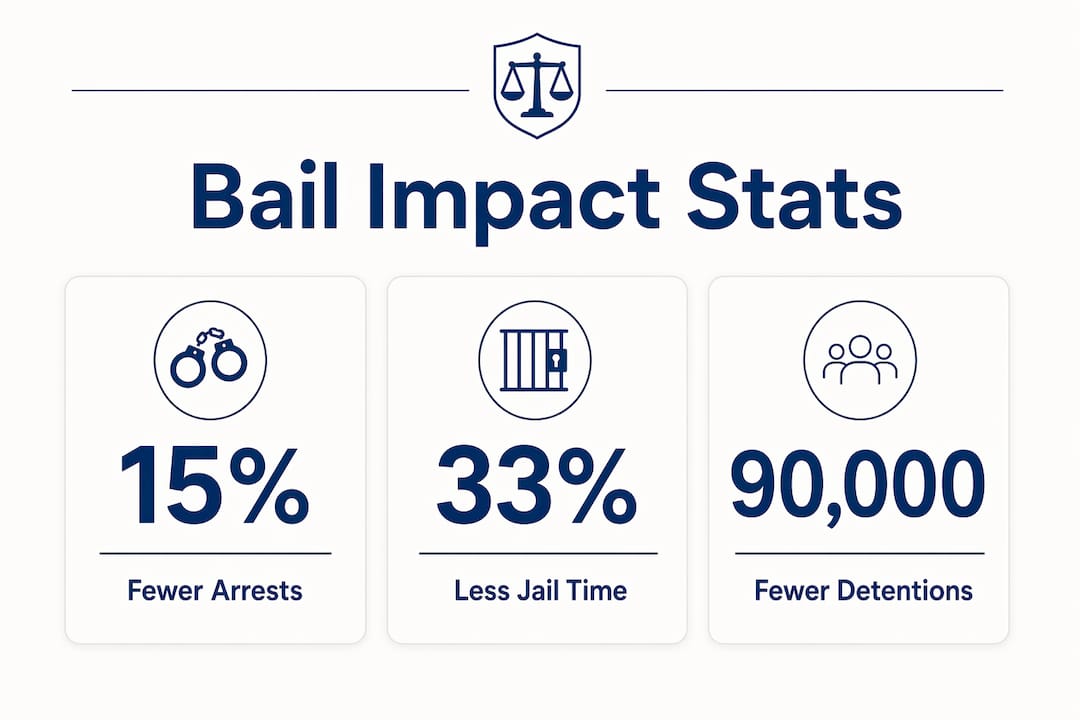
Non-monetary release programs show that money is not the only way to guarantee court appearances. The Bail Project's court reminder and transportation support programs achieved 92% court appearance rates without requiring cash bail, preventing over 1.4 million days of pretrial incarceration and saving taxpayers over $100 million. Simple supports like text reminders and transportation vouchers outperform cash bail in keeping defendants connected to their cases.
One important nuance: reform has not always made bail cheaper. Median bail amounts rose significantly from 2019 to 2024, and posting rates declined as a result. Fewer people qualify for bail, and those who do face higher amounts. That reality makes working with a licensed bondsman and filing for bail reduction even more critical.
| Reform area | Key outcome |
|---|---|
| New York (2020–2024) | 90,000 fewer pretrial detentions; rates dropped up to 45 percentage points |
| Harris County misdemeanors | 33% cost reduction per case; $1,191 saved per defendant |
| The Bail Project programs | 92% court appearance rate; 1.4 million fewer detention days |
| National bail amount trend | Median bail amounts rose 2019–2024; posting rates declined |
How bail affects your criminal case strategy
Being out on bail changes what a defendant can do for their own defense. A person at home can meet with their attorney freely, gather evidence, contact witnesses, and review documents without the constraints of a jail schedule. Bail status dramatically affects a defendant's ability to participate in their defense, maintain employment, and make clear-headed decisions about their case.
Pretrial custody creates pressure that distorts decision-making. Defendants sitting in jail often accept plea deals not because the deal is fair, but because they cannot endure more time locked up. That is not a free choice. It is a choice made under duress, and it can result in a conviction that follows a person for life.
The strategic advantages of being out on bail include:
- Defense preparation: Meeting with your attorney on your schedule, reviewing evidence, and identifying witnesses.
- Employment stability: Keeping your job protects your finances and demonstrates community responsibility to the court.
- Family presence: Staying home reduces the trauma on children and dependents and supports your mental health during a stressful process.
- Credibility: Defendants who appear in court voluntarily, on time, and well-prepared make a stronger impression than those brought in from custody.
Pro Tip: Missed court appearances are often treated as evidence of guilt by prosecutors and judges. Set calendar reminders, confirm every court date with your attorney, and arrange transportation in advance. One missed date can undo weeks of progress.
Legal steps to reduce bail amounts and get out faster
Filing a motion for bail reduction is the most direct legal tool for families facing unaffordable bail. Judges require specific financial evidence including tax returns, pay stubs, and documented fixed obligations like rent and child support. Vague claims of hardship do not move judges. Concrete numbers do.
Community ties are equally persuasive. Proof of local roots such as steady employment, school enrollment, religious participation, and long-term residence in the area directly counters the argument that a defendant is a flight risk. A defendant with a job, a lease, and children in local schools is far less likely to disappear than someone with no local connections.
The practical steps for pursuing a bail reduction follow a logical order:
- Hire an attorney immediately. Self-represented bail reduction motions rarely succeed.
- Gather financial documentation: tax returns, pay stubs, bank statements, and a list of monthly expenses.
- Compile evidence of community ties: employer letters, lease agreements, school records, and letters from community members.
- File the motion for bail reduction with the court, requesting a hearing date.
- At the hearing, present the financial evidence and community ties clearly and specifically.
- If cash bail remains unaffordable after reduction, contact a licensed bondsman to post a bail bond. Use the bail bond cost calculator at Jakehernandezbailbonds to estimate your premium before the hearing.
The most common mistake families make is waiting. Every day without a motion filed is another day in custody. Courts do not reduce bail automatically. Someone has to ask, with evidence, and ask quickly.
Key takeaways
Bail reduces jail time by replacing pretrial custody with a financial guarantee, and acting fast with the right legal support determines how quickly that release happens.
| Point | Details |
|---|---|
| Post bail immediately | Every day in custody before trial harms defense preparation and personal stability. |
| Use a bail bond when cash is short | A licensed bondsman posts the full bail for a premium, enabling release within hours. |
| File a bail reduction motion with evidence | Judges respond to specific financial proof and documented community ties, not general claims. |
| Reform has cut detention but raised bail amounts | Fewer people qualify for bail today, making legal support and bondsman access more critical. |
| Being out on bail improves case outcomes | Defendants at home prepare better defenses and avoid pressure-driven guilty pleas. |
What I've learned from years at the bail window
Every family I've worked with at Jakehernandezbailbonds comes in with the same question: how fast can we get them out? The answer almost always depends on two things. How quickly they called, and whether they had an attorney at the bail hearing.
The families who wait, hoping the situation will resolve itself, consistently pay more and wait longer. The families who call a bondsman and an attorney within the first few hours of an arrest get their loved one home the same day in most cases. Speed is not just about comfort. It is about protecting the entire trajectory of the case.
What surprises most people is how much the bail hearing itself shapes what comes next. A judge who sees a prepared defendant with documented ties to the community sets a lower bail. A lower bail means a smaller bond premium. A smaller premium means the family keeps more money for the defense attorney. Every piece connects.
Bail reform has made real progress in reducing unnecessary detention, and I believe that progress will continue. But reform does not help the person sitting in a cell right now. What helps that person is a family member who acts immediately, gathers the right documents, and calls a licensed bondsman who knows the local jails and can move fast.
— Jake
Jakehernandezbailbonds is ready when you need to act
When a family member is in custody, the window to act is narrow and every hour counts. Jakehernandezbailbonds provides 24/7 bail bond services across all 58 California counties, with no call center and no middleman. You speak directly with a licensed agent who knows the local jail system and can begin the release process immediately.
Bonds start at $1,000 with 0% down options and payment plans for qualified co-signers. Bilingual support is available at no extra cost. Whether your family member is held near Men's Central Jail in Los Angeles or at a facility anywhere else in California, Jakehernandezbailbonds can post the bond and get the process moving. Free consultations are available around the clock. Call now and get answers in minutes.
FAQ
How does bail reduce the time someone spends in jail?
Bail replaces pretrial custody with a financial guarantee, allowing the defendant to go home while their case proceeds. Without bail, a defendant waits in jail from arrest until trial, which can take weeks or months.
What is the fastest way to get someone out of jail after arrest?
Contact a licensed bail bondsman as soon as the bail amount is set. A bondsman can post the bond within hours, which is far faster than gathering full cash bail independently.
How can a bail amount be legally reduced?
File a motion for bail reduction supported by tax returns, pay stubs, and evidence of community ties such as employment and local residence. Judges require specific financial proof rather than general claims of hardship.
Does being out on bail actually help a criminal case?
Yes. Defendants released on bail can meet with their attorney freely, gather evidence, and avoid the pressure to accept unfavorable plea deals that pretrial custody creates.
What happens if someone cannot afford bail even after a reduction?
A licensed bail bondsman posts the full bail amount in exchange for a non-refundable premium, typically 10% in California. Options like 0% down and payment plans make release accessible even when the reduced bail amount remains out of reach.