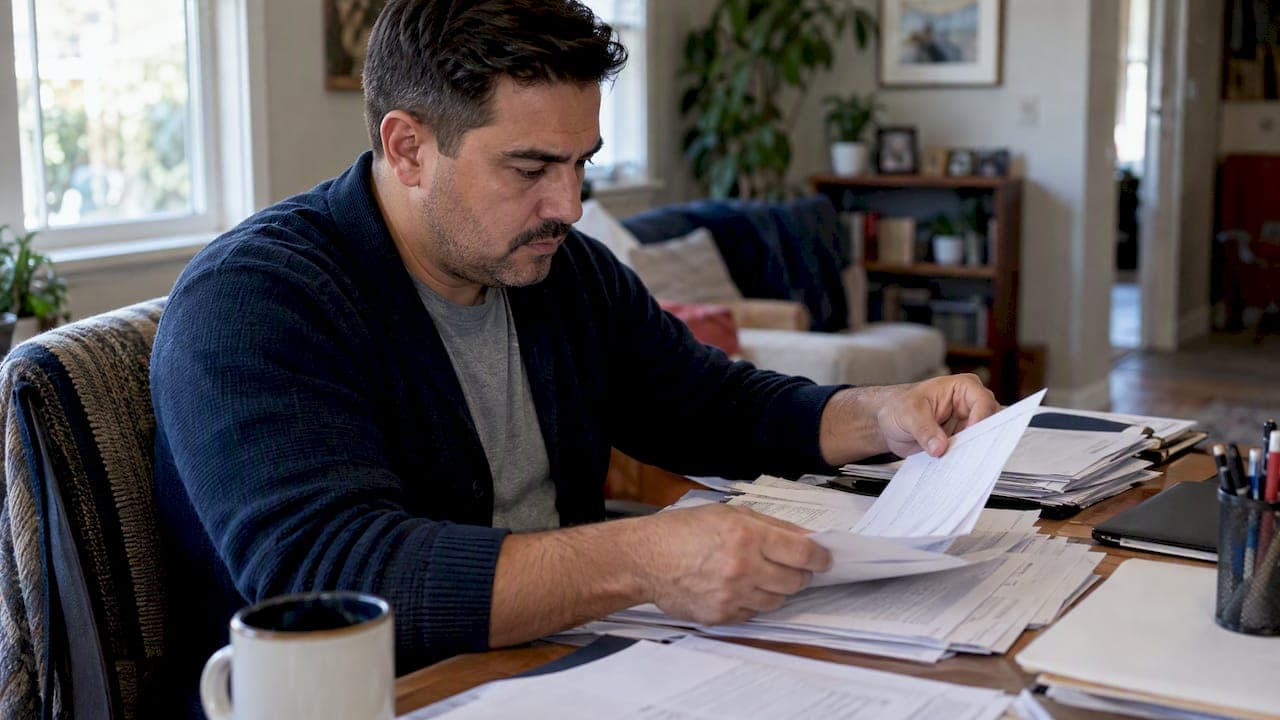
A Penal Code 1275.1 hold does not deny bail. It pauses release until the court is satisfied the bail money was not feloniously obtained, and the defendant carries the burden of proving it. The fastest way through it is to start gathering bank records and pay stubs right away and call an attorney or a licensed bail bondsman promptly.
TL;DR:
- Ask the officer whether a declaration was filed and verify magistrate approval within 24 hours; without approval, release may proceed once set bail is posted.
- The defendant must prove by a preponderance of the evidence that no bail funds came from felony activity; contributors may request a closed hearing.
- Organize bank statements, pay stubs, tax returns, and loan or gift records into a trail linking each dollar to its source, with contacts for verification.
- A documented bondsman payment plan can simplify tracing compared with separate family cash contributions, but the defendant must still prove the funds’ source.
- If cash seizures, alleged drug sales, or unexplained assets raise questions, gather records before arraignment; knowingly false claims can cause the court to raise bail.
Table of Contents
- What Penal Code 1275.1 covers: legal basics families must know
- Immediate steps to take at booking and in the first 24 hours
- Documents and evidence that typically satisfy a 1275.1 evidentiary hearing
- The timeline: magistrate review, the 24-hour rule, and the noticed evidentiary hearing
- Typical timeline from hold imposition to resolution
- How payment plans and 0% down options fit into a 1275.1 hold
- Common reasons a PC 1275.1 hold gets triggered
- How working with an online bail bondsman changes the process
- What families should expect from an experienced bail agent
- How Jake Hernandez Bail Bonds can help now
- FAQ
- Sources
What Penal Code 1275.1 covers: legal basics families must know
A peace officer or prosecutor can file a declaration alleging that bail money came from an illegal source, and a magistrate who finds probable cause can order a hold under PC 1275.1. Once that happens, the defendant has to prove, by a preponderance of the evidence, that none of the bail funds were feloniously obtained.
The law also protects financial privacy. At the request of whoever is putting up the money, the judge can close the evidentiary hearing to the public so bank balances and family finances are not aired in open court.
The hold is a checkpoint, not a verdict on guilt or a bail denial:
- A magistrate must find probable cause before the hold takes effect.
- The defendant, not the prosecution, has to prove the funds are clean.
- A closed hearing is available on request to protect financial details.
- Once the source is proven, the court must vacate the hold and release the defendant on the bail already set.
Immediate steps to take at booking and in the first 24 hours
The first day decides how fast everything else moves. Acting within that window, rather than waiting to see what happens, can help move the process forward.
- Ask the booking officer directly whether a 1275.1 declaration was filed and request a copy of it.
- Call an attorney and a licensed bail bondsman immediately, and tell them specifically that it is a PC 1275.1 hold, not a standard bail denial.
- Start pulling bank statements, pay stubs, tax returns, and any loan paperwork, and organize them by date and source.
- If the bail money is coming from a private loan or cash gift, document exactly where it came from and match the dates to actual deposits or withdrawals.
- Confirm whether the arresting officer has already sought magistrate approval, since county practice allows release upon posting bail if the declaration is not acted on within 24 hours.
Pro Tip: Keep every document in one folder, physical or digital, labeled by source, so your attorney or bondsman can hand the full picture to the court without a second trip back for more paperwork.
Our PC 1275 hold page walks through this same checklist in more detail if you want a reference to follow step by step.
Documents and evidence that typically satisfy a 1275.1 evidentiary hearing
Courts look for a clear paper trail more than any single type of document. Bank statements that show where deposits came from, payroll stubs, recent tax returns, receipts from asset sales, business ledgers, notarized gift affidavits, and signed loan agreements all appear in county declaration packets as accepted evidence, including the forms used in Santa Barbara and Riverside counties.
Presentation matters almost as much as the documents themselves:
- Build a simple timeline connecting each dollar to its source.
- Label every document so the connection to the bail amount is obvious.
- Include contact information for employers or lenders who can confirm the records.
- Add a short written statement from any witness who can corroborate a gift or loan.
The source of bail money, once proven with consistent paperwork, resolves the hold without further litigation, under the standard set in Penal Code 1275.1.
Willful misrepresentation carries its own risk. If a defendant knowingly submits false information about the source of funds, the court can increase bail rather than simply deny the request, a consequence written directly into the statute.
The timeline: magistrate review, the 24-hour rule, and the noticed evidentiary hearing
The process moves in stages, and each one has its own clock.
- The arresting officer has up to 24 hours to get magistrate approval for the hold; if that window passes without action, the defendant can be released upon posting the bail already set.
- If the magistrate finds probable cause, the court schedules a noticed evidentiary hearing where the defendant must prove the source of the funds under PC 1275.1(c).
- The hearing ends one of three ways: the hold is vacated and release proceeds, the hold stays in place pending more proof, or the court raises bail if it finds willful misrepresentation.
Families do not need to appear at every stage, but having someone present who understands the documents, usually counsel or the bondsman who will post the bond, keeps the hearing from stalling on a question that a phone call could have answered.
Typical timeline from hold imposition to resolution
Most 1275.1 holds move through two distinct clocks rather than one long wait. The first is the 24-hour window for magistrate approval of the hold itself. The second, which only starts once that approval happens, is the time it takes to schedule and hold the evidentiary hearing.
How long that second stretch takes depends on the county's calendar and how quickly the defense can assemble documentation. A family that shows up with organized bank records and pay stubs is in a very different position than one still tracking down a landlord's contact information. The paperwork, not the court's schedule, is usually the actual bottleneck.
This is why the first 24 hours matter so much. Every hour spent locating a pay stub or a loan agreement before the hearing is set is an hour the hearing itself will not need. Families who treat the hold as a document-collection problem, rather than a legal fight to win, tend to move through it fastest. Our blog post on clearing a PC 1275 hold covers the same groundwork in checklist form.
How payment plans and 0% down options fit into a 1275.1 hold
A 1275.1 hold is about the source of the money, not the amount, so a payment plan does not make the hold disappear on its own. But it changes what the family actually needs to document. Posting a bond with a smaller upfront payment means the paperwork the court wants to see is tied to a clear, traceable arrangement with a licensed bondsman rather than a lump sum pulled together from multiple informal sources.
That matters because a hearing goes faster when the funds trace back to one documented transaction instead of several cash contributions from relatives or friends, each of which would need its own paper trail. A structured payment arrangement, with terms set in writing, gives the court exactly the kind of record it is looking for.
We offer 0% down and flexible payment plans for qualified co-signers, which can simplify the documentation side of a 1275.1 case considerably compared to assembling proof for a large cash payment.
Common reasons a PC 1275.1 hold gets triggered
Officers and prosecutors file 1275.1 declarations when something about the money raises a flag, not simply because the charge is serious. County declaration forms, including the one used in Santa Barbara, show the recurring patterns that prompt a hold: cash seized at the time of arrest, charges connected to drug trafficking, or a defendant with no documented legitimate income who is nonetheless proposing a large bail amount.
A defendant facing a high bail figure with no visible paycheck or business income is a common trigger, since the mismatch between income and bail amount is exactly what the statute is designed to catch. So is a case where the arresting officer finds cash on hand that does not match any known employment.
Families can often see this coming. If the charge involves alleged drug sales, large cash transactions, or unexplained assets, it is worth assuming a 1275.1 hold is possible and starting to gather financial records before the arraignment rather than after.

How working with an online bail bondsman changes the process
Posting a bond online does not change the legal requirements of a 1275.1 hold. The court still needs the same proof of fund source, and the same evidentiary hearing still has to happen before release. What changes is how quickly the paperwork moves between the family, the bondsman, and the jail.
We provide online bail bonds, which can help families move forward during a hold. A family in one county can send scanned bank statements and pay stubs the same night instead of waiting for an in-person office visit the next morning.
The one thing that does not change online is who has to prove what. The defendant still bears the burden, the court still sets the hearing, and no amount of digital convenience substitutes for the underlying documentation the judge needs to see.
What families should expect from an experienced bail agent
A 1275.1 hold feels alarming at first, but most resolve once the paperwork is organized and someone with experience is coordinating the pieces. Speed matters more than panic. Pull the bank records, call counsel and a licensed bondsman promptly, and keep everything in one place so nothing has to be chased down twice.
— Jake
How Jake Hernandez Bail Bonds can help now
We provide statewide, 24/7 bail bond coverage across California, including direct experience with PC 1275 holds, so a family facing one is not figuring out the process alone.
- We coordinate with the jail and the court while your documentation comes together.
- We offer 0% down and payment-plan options for qualified co-signers.
- We provide bilingual support in Spanish, Hindi, and Arabic.
- Consultations are free and available any time, day or night.
Have the booking number, full name, charges, and any copy of the 1275.1 declaration ready when you call. Reach out to our team for a free consultation and immediate coordination with the jail and your attorney.
This article is general information, not a substitute for advice from a qualified lawyer. Consult a qualified legal professional about your own circumstances before acting on anything here.
FAQ
What is a no bail hold in California?
A no bail hold under Penal Code 1275.1 pauses release until the court verifies that bail money was not obtained through felony activity. It is not a denial of bail, and release follows once the source of funds is proven.
Who has to prove the bail money is legitimate?
The defendant bears the burden of proving, by a preponderance of the evidence, that none of the bail funds were feloniously obtained. This typically means producing bank statements, pay stubs, tax returns, or loan documents at an evidentiary hearing.
How long can a 1275.1 hold last?
The arresting officer has 24 hours to get magistrate approval for the hold; without that approval, release can proceed upon posting bail. Once approved, the hold lasts until a noticed evidentiary hearing resolves the source-of-funds question.
Can the hearing be kept private?
Yes. Whoever is providing the bail funds can ask the judge to close the evidentiary hearing to the public to protect financial privacy, an option built into PC 1275.1.
Can a bail bondsman get the hold removed?
A licensed bondsman can coordinate with the jail and court and prepare to post the bond once it is approved, but only the court can vacate the hold after the evidentiary hearing. We help assemble and present documentation; we do not replace the judicial process.
Sources
- California Code, PEN 1275.1.
- Adopted June 27, 2024, effective June 27, 2024, pursuant to Penal Code section 1269b(c)
- SUPERIOR COURT OF CALIFORNIA, COUNTY OF SANTA BARBARA EXAMINATION OF SOURCE OF BAIL (1275.1 PC DECLARATION)