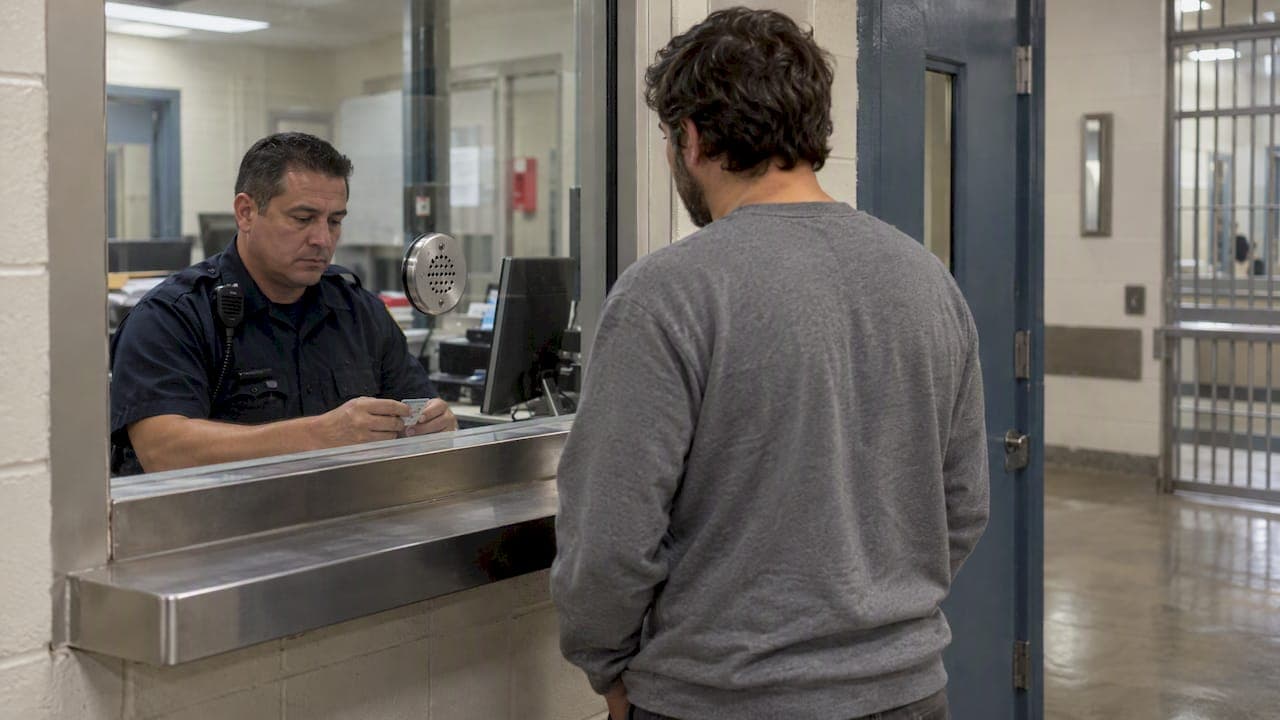
After an arrest in San Luis Obispo County, booking has to finish first. Bail is then set from the county bail schedule or by a magistrate. If you are eligible, release follows once someone posts cash, a surety bond or property, or the court grants own recognizance. Serious felonies and statutory holds can delay release even when an amount is listed, so confirm holds early.
TL;DR:
- The 2026 schedule sets unlisted felonies at $20,000 and unlisted misdemeanors at $0, but holds or court ordered conditions can still prevent release.
- Cash requires the full amount and is generally refundable after the case, less fines or fees; a bail agent’s 10% premium is not refunded.
- Property bonds take the longest because real estate must be documented and verified, while release on own recognizance requires judicial or schedule approval.
- Before paying, confirm booking is complete and ask whether a hold exists, which agency placed it, and what must happen to lift it.
- Record the arraignment date, department, and time; missing court can forfeit cash bail, expose cosigners, and trigger a bench warrant.
Table of Contents
- What happens from arrest to arraignment in San Luis Obispo County
- How bail amounts are set: the 2026 schedule and judicial review
- How to post bail: cash, surety bonds, property and own recognizance
- Holds and exceptions that delay release before arraignment
- Typical timelines for release and arraignment
- Costs, refunds and what happens if someone misses court
- A checklist for bailing someone out in San Luis Obispo County
- Where to find official bail schedules, court notices and contacts
- A bail agent's advice for families facing an arrest
- How we help families in San Luis Obispo County
- FAQ
- Sources
What happens from arrest to arraignment in San Luis Obispo County
The sequence is more predictable than it feels at 2 AM. Here is the path most people follow, and where you can step in.
- Arrest. Officers take the person into custody and transport them to the county jail.
- Booking. Staff collect identification and fingerprints, run warrant checks and record the alleged charges. The jail will not accept bail until this finishes, so a person can sit for hours with nothing you can do except wait.
- Bail determination. For most offenses, jail staff apply the county bail schedule. For certain offenses, or when a judge has already set a different amount, a magistrate decides. Under Penal Code §1269b, jail officers and clerks may accept bail at the scheduled amount, as laid out in the California Penal Code bail provisions.
- Posting. Someone posts cash, a surety bond, or property, or the person is released on their own recognizance.
- Release processing. Jail staff verify the paperwork, check for holds from other agencies, and complete the release. This step has no fixed clock. It depends on staffing, volume and whether a hold turns up.
- Arraignment. The person appears in court, hears the charges and enters a plea. Bail can be revisited here.
To confirm where someone is in this chain, use the inmate lookup or call the jail. Our San Luis Obispo County inmate search page gathers the lookup and jail contact options in one place. Have the full name and date of birth ready, and write down the booking number the moment you find it, because every later call goes faster with it.
Where the bail schedule is applied
The schedule works as a price list. A listed offense carries a presumptive amount, and jail staff can accept that amount without waiting for a judge. When an offense is not listed, the schedule's default rules apply, which we cover in the next section. A magistrate steps in when the offense is excluded from schedule release, when the person has holds, or when a judge has already ordered something different.
What release processing looks like
Expect paperwork verification, identity checks and a search for outstanding warrants or holds. Families often assume that paying means walking out immediately. In practice, posting and release are two separate events. Posting satisfies the court's condition. Release is the jail finishing its own checks.
What comes next
The person will be given a court date. Missing it triggers the consequences we describe later in this guide, so write the date and courtroom down immediately. Our felony bail bonds page for the county explains how this works when the charge is more serious.
How bail amounts are set: the 2026 schedule and judicial review
The Superior Court publishes the county's 2026 Bail Schedule for felonies and misdemeanors, effective June 15, 2026. It sets presumptive amounts by offense, and it sets two defaults that matter a great deal: $20,000 for an unlisted felony and $0 for an unlisted misdemeanor. A $0 presumptive amount means no money is required for those unlisted misdemeanors under the schedule, though other conditions can still apply.
The court's June 10, 2026 notice confirms that the local judges approved the schedule on June 9, 2026 and kept those same defaults. The move to a chart format began earlier. The court's 2025 notice on the bail schedule documents the adoption process, the subcommittee review and the implementation planning. Other California counties have moved in a similar direction, and a state staff memorandum on bail and pretrial release describes counties using chart-based schedules and cite-and-release for some misdemeanors.

What judges must weigh
The schedule is a starting point, not a verdict. When a judge sets or changes bail, the Penal Code directs the court to consider public safety, the seriousness of the offense, the person's prior record and the probability of appearing in court. After the Humphrey and Kowalczyk decisions, judges also cannot use unaffordable money bail as a back door to detention. Committee materials describe the framework this way: the court considers nonfinancial conditions first, any financial condition must be reasonably necessary, and holding someone without bail requires clear and convincing evidence. The same Judicial Council invitation to comment maps these findings to the CR-104 form judges use.
In plain terms, the number on the schedule is where the conversation starts. A defense attorney can argue that a lower amount, or release with conditions, is enough to protect the public and ensure a return to court.
Raising bail or questioning its source
Bail can also move up. A prosecutor can ask a judge to increase bail under Penal Code §1269c, and a court can order an examination of where bail money came from under §1275.1. Both processes have their own filing steps and timing limits, which the schedule's own rules describe. If the source of funds is questioned, the person posting may have to show that the money was lawfully obtained. Keep receipts and bank records handy, since that is the kind of paperwork a clerk or judge may ask to see.
Practitioner note: judges adjust bail at arraignment often. The scheduled figure is not locked in, which is exactly why showing up with accurate information about work, family and community ties matters.
How to post bail: cash, surety bonds, property and own recognizance
There are several routes, and each moves at a different speed.
Cash bail
You pay the full scheduled amount to the jail or court clerk. When the case ends and the defendant has made every court appearance, the court generally refunds the cash, though fines, fees or restitution can be deducted. The cost is tying up the full amount for months, sometimes longer. Ask the clerk exactly where to pay and what receipt you will get, and keep that receipt until the money is back in your hands.
Surety bail bonds
A licensed bail agent posts a bond with the court for the full bail amount. You pay the agent a premium, a fee for the service, and it is not refunded when the case ends. Our published premium is 10% of the bail amount, with an 8% rate for attorneys. Co-signers promise to make sure the defendant appears in court and take on financial responsibility if they do not. Read the indemnity paperwork before signing, and ask who will contact the jail and how long release is likely to take.
Qualified co-signers can use our payment plans, and we offer $500 down bail bonds for those who qualify. You can start the process through our online bail bonds page, and our general San Luis Obispo bail bonds page lists local contact options.
Property bonds
A property bond pledges real estate as security. It takes the longest because the property has to be documented and verified, so it rarely produces same-day release.
Own recognizance
For many misdemeanors and some lower-risk felonies, a judge or the schedule's rules can allow release on a written promise to appear, with no money paid. Conditions can be attached.
- Cash: full amount up front, usually refundable at the end of the case.
- Surety bond: a percentage premium, nonrefundable, with a co-signer.
- Property: slowest route, backed by real estate.
- Own recognizance: no payment, but only when a judge or the schedule allows it.
Pro Tip: Ask the clerk to confirm the exact bail amount and any holds before you pay anything, since a hold can mean the person stays in custody even after bail is posted.
Holds and exceptions that delay release before arraignment
Not everyone with a listed bail amount can walk out on it. The schedule itself flags several categories, and knowing them tells you whether a delay is normal or a sign that something is wrong.
Violent and serious felonies. Penal Code §1270.1 requires a hearing before release on certain enumerated offenses. Those cases cannot be resolved by simply paying the schedule amount. A judge must review them first.
Health and Safety Code holds. Some drug-related and related offenses call for judicial review before release, and the schedule's rules say so.
Out-of-county holds. If another county has a warrant or a detainer, San Luis Obispo County cannot release the person to the street, even with bail posted here. The other agency has to be dealt with first.
PRCS and mandatory supervision holds. People under post-release supervision can be held by probation regardless of bail on a new charge. County procedures describe how PRCS hold releases require interagency clerical work, such as matching court case numbers to booking records. That coordination is a common source of delay.
Source-of-bail examinations. If the court wants to know where the money came from, release waits until the examination is done.
Immigration holds. Federal detainers work on a separate track from state bail. Our immigration bail bonds page for the county explains the options for those cases.
When you call the clerk, ask three questions: Is there a hold? Which agency placed it? What has to happen for it to be lifted? Those answers tell you whether to wait, call an attorney or call a different agency.
Typical timelines for release and arraignment
Release may be possible when booking finishes cleanly, the offense is eligible for schedule release and no holds appear. Add a hold, a bail challenge or a source-of-funds question, and the clock stretches to many hours or longer. Nobody can promise a specific number of hours, and anyone who does is guessing.
Arraignment scheduling follows the court's local rules. The court's local rules notice covers Local Rule 10.03 and related calendaring rules. They explain where and when arraignments happen for in-custody defendants versus those who are out of custody, and how felony and misdemeanor calendars are handled. In-custody defendants are generally calendared sooner, since the court is balancing the time someone spends in jail.
Statutory time limits also matter. The Penal Code sets windows for automatic review after bail is set, and in many misdemeanors it provides a right to own-recognizance release. If those windows run without action, the law can require release. Check the exact deadlines in the Penal Code or with the clerk rather than relying on memory.
Write down the arraignment date, department and time as soon as you learn them. A missed first appearance is the most avoidable way to turn a manageable situation into a worse one.
Costs, refunds and what happens if someone misses court
Who pays what depends on the posting route. Cash bail is refundable at the end of the case, minus any fines or fees the court takes. A surety premium is a service fee and is not refunded. California regulates bail agents, and the state's administrative rules on bail agent licensing and conduct set duties and limits on what agents may charge. You can read the operational rules in 10 CCR 2083 and the consumer protection background in 10 CCR 2081.
You can estimate your own cost with our bail bond cost calculator. As a worked example only, say bail is set at $20,000. At the 10% premium, the fee would be $2,000. With the 8% attorney rate, it would be $1,600. Those are illustrative inputs, not a quote.
If the defendant misses a court date, the court can declare the bail forfeited and issue a bench warrant. Cash bail can be lost. On a surety bond, the bail agent and the co-signer face the exposure. The agent may locate and surrender the defendant to custody or work with the court to resolve the missed appearance, which can limit the co-signer's liability. Acting quickly after a missed date matters, so call the bail agent or attorney promptly, and do not wait to see whether it sorts itself out.

A checklist for bailing someone out in San Luis Obispo County
Work through these in order. Each step answers a question the next one depends on.
- Gather identifying details. Full legal name, date of birth, booking number, arresting agency and the alleged charge.
- Confirm booking. Use the county inmate lookup or call the jail. Until booking is complete, nothing else can move.
- Confirm the bail amount and any holds. Ask the clerk or the jail directly, and ask who placed any hold.
- Choose how to post. Cash if you can tie up the full amount and want it back later. Surety if you cannot, or if you want an agent handling the communication.
- Prepare your documents. Government photo ID for you, plus co-signer details, employment and residence information if using a bond, and payment.
- If using a bail agent, verify the license. Ask about the premium, payment plans, who will contact the jail and the expected release timeline. Get the terms in writing.
- If posting cash, confirm where to go. Ask what receipt and documentation you will get, and keep every piece of paper.
- Record the court date. Write the department, time and address, and make sure the defendant has it too.
Pro Tip: Take photos of every receipt and bond document the moment you receive them. If a dispute comes up months later, a dated record settles it quickly.
If records requests become relevant, for example when preparing for a bail hearing, guidance on California police records requests explains how people obtain those records.
Where to find official bail schedules, court notices and contacts
- Bail schedule: the Superior Court's 2026 felony and misdemeanor bail schedule PDF lists presumptive amounts and holds rules.
- Court notices: the judges' 2026 adoption notice documents approval and effective dates.
- Probation: the County Probation Department lists contacts and an online payment portal relevant to supervision holds.
- Statutes and forms: Penal Code §1269b covers acceptance of bail, and the CR-104 form is used for judicial findings.
A bail agent's advice for families facing an arrest
I have watched families lose the first hours to panic, and those hours are the ones that matter. Confirm booking, get the bail amount, and ask about holds before you spend a dollar. If cash would drain your savings, call a licensed agent, because a good one talks to the jail for you and keeps you informed. We answer around the clock and offer bilingual support. Verify every official figure with the court clerk, and keep every receipt.
— Jake
How we help families in San Luis Obispo County
We are a licensed bail bond service available across California, with bilingual support and free consultations. We handle the paperwork, talk with jail and court staff, and post the surety bond so you are not navigating it alone. Start on our main page or see how the premium and payment options work, then call us when you are ready.
This article is general information, not a substitute for advice from a qualified lawyer. Consult a qualified legal professional about your own circumstances before acting on anything here.
FAQ
Do you get bail money back in California?
Cash bail is generally refunded when the case ends and the defendant has made every required court appearance, minus any fines or fees the court deducts. The premium paid to a bail agent is a fee for service and is not refunded. Check the terms with the clerk or your agent before you pay.
How long do you stay in jail if you can't make bail?
It depends on the charge and the court calendar. The person generally stays in custody until arraignment, when a judge can reconsider bail, and the court's local rules on calendaring set how soon in-custody defendants are heard. A defense attorney can ask for a faster review.
What does a $0 bail amount mean in San Luis Obispo County?
Under the county's 2026 bail schedule, unlisted misdemeanors carry a presumptive amount of $0, so no money is required under the schedule. Holds or court-ordered conditions can still apply, so confirm with the jail.
What are the disadvantages of cash bail?
The full amount is tied up for the life of the case, and fines or fees can reduce the refund. For many families that is hard to manage, which is why people compare it with a surety bond, where you pay a percentage premium instead.
How do I check if someone is in custody?
Use the county inmate lookup or call the jail, and have the full name and date of birth ready. Our inmate search page lists the options.
Sources
- SUPERIOR COURT OF CALIFORNIA COUNTY OF SAN LUIS OBISPO
- Superior Court of California
- Codes Display Text