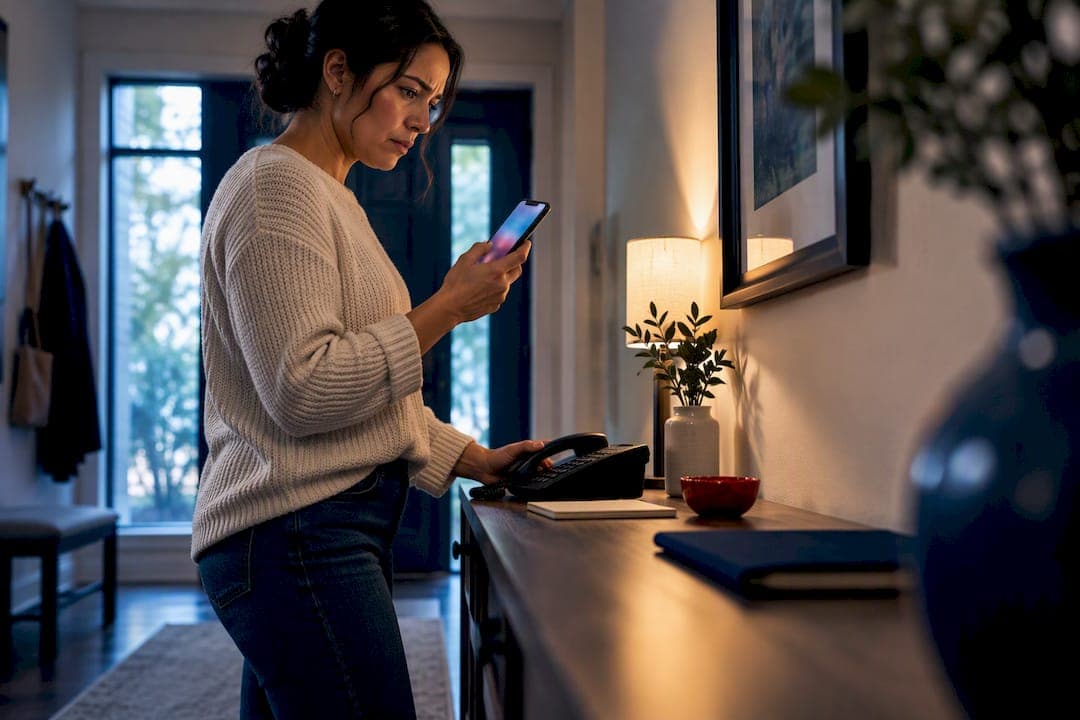
Bail bond scams are real, and the right first move is simple: if someone calls demanding immediate payment to free a jailed relative, hang up and verify the jail or court yourself before sending a cent. Never pay by gift card, cryptocurrency, wire transfer, or a peer-to-peer app like Zelle or Venmo. Those payment methods are the clearest sign you're talking to a criminal, not a bail agent.
TL;DR:
- Scammers often use fake police or court caller ID and AI voices to pressure victims into immediate payments via gift cards, cryptocurrencies, or peer-to-peer apps.
- Verifying arrest claims requires independently checking official jail or court contact details and asking for license and written documentation from the bail agent.
- Urgent, unsolicited calls that refuse verification or demand quick payment are common red flags indicating a scam.
- If you have already paid, immediately contact your bank, report to the FTC, and preserve all transaction records for potential recovery.
- Preparation before an emergency includes saving official contact information, establishing family verification protocols, and understanding the signs of imposter scams.
Table of Contents
- What a bail bond scam looks like
- Common scam tactics and red flags to watch for
- How to verify a bail request step by step
- If you already paid: what to do right away
- State licensing and verification, with a California focus
- Prepare your family before an emergency happens
- Why verification matters: a bail agent's perspective
- Getting verified bail help when you need it fast
- Quick authoritative links for reporting and verification
- Sources
- FAQ
What a bail bond scam looks like
The script usually starts with a phone call or text claiming a family member has been arrested and needs bail money right now. The caller poses as a police officer, jail clerk, or bail bondsman, and pressures you to act before you can think it through. Caller ID may show a real police department or courthouse number, but that number can be faked. The FCC warns that caller ID is not reliable proof of who is calling, since spoofing tools let scammers display almost any number they want.
Some scammers now use AI-generated voices that mimic a relative in distress, adding a layer of panic to the demand for cash. The payment request almost always funnels toward channels that are hard to trace or reverse.
- Gift cards from retailers, read aloud over the phone
- Cryptocurrency transfers to a wallet address
- Wire transfers through services like Western Union
- Peer-to-peer apps such as Zelle, Venmo, or Cash App
Legitimate bail agencies do not ask for payment this way, and no legitimate court or jail collects bail over the phone through prepaid cards.
Common scam tactics and red flags to watch for
Scammers rely on speed and fear to keep you from checking their story. Recognizing the pattern early can stop a loss before it happens.
- Urgency with no room to think. The caller insists you must pay in the next few minutes or your relative will face additional charges or stay locked up longer.
- Refusal to let you verify. Any request that you not hang up, not call the jail, or not tell other family members is a warning sign on its own.
- Limited payment options. If the only accepted methods are gift cards, crypto, wire transfers, or P2P apps, you are very likely being scammed.
- Insistence on staying on the line. Scammers often keep you on the phone while you drive to a store to buy gift cards, cutting off your chance to call anyone else.
- Unsolicited contact. You did not call them first, and you have no independent confirmation that anyone was arrested.
- Official-sounding props. A badge number, a spoofed caller ID, a fake court document, or a cloned bail agency website can all be manufactured. None of it counts as independent proof.
The FTC's guidance on imposter scams notes that scripts built around fear and urgency are the common thread across almost every version of this fraud, whether the caller claims to be police, a bail bondsman, or a court official.
Pro Tip: If a caller pressures you to stay on the line while you gather payment, hang up. A real bail agent will still be there after you've made your own call to verify.
How to verify a bail request step by step
Slow down before you send anything. A five-minute pause to verify costs nothing; a rushed payment to a scammer is gone for good.
- Stop and write down details. Note the caller's name, phone number, badge or license number claimed, and exact payment instructions.
- Find the jail or court's number yourself. Search independently for the facility's official phone number or online inmate locator instead of using any number the caller gives you, and confirm whether the person is actually in custody.
- Check the bail agent's license. Ask for a license number and confirm it with the state insurance regulator rather than taking the caller's word for it.
- Ask for verifiable office details. A real agency has a physical office address and can provide written paperwork, not just a phone number.
- Use traceable payment only. Legitimate bonds are paid by check, credit card, or documented bank transfer, and come with receipts and signed paperwork.
- When still unsure, call local police and an attorney. Local non-emergency law enforcement and the arrested person's attorney, if one is already involved, can confirm whether the situation is real.
Two-channel verification, meaning you confirm the arrest with the jail directly and separately confirm the agent's license, is the single most reliable defense against caller ID spoofing and AI-generated voices, according to FTC consumer guidance on imposter scams.
- Never wire money or buy gift cards based on a phone call alone.
- Keep a written record of every step you take to verify.
If you already paid: what to do right away
Acting fast improves your odds of recovering money and helps investigators trace where it went. Stop all contact with the suspected scammer and preserve everything, including text messages, call logs, receipts, screenshots, and transaction IDs.
- Contact your bank or payment provider immediately to request a recall or open a fraud investigation.
- Report the incident to the FTC at ReportFraud.ftc.gov.
- File a complaint with the FBI's Internet Crime Complaint Center for cyber-enabled losses.
- Report to local police, and to your state Department of Insurance if the scammer claimed to be a licensed bail agent.
- Give banks and investigators exact timelines and any destination account or wallet details you have.
In 2025, people reported losing $3.5 billion to imposter scams, with impersonation ranking as the top fraud category the FTC tracked. That scale shows why fast reporting matters: banks and law enforcement can sometimes trace or freeze funds when they're notified quickly, but the window closes fast once money moves through crypto exchanges or overseas accounts.
State licensing and verification, with a California focus
Bail bond licensing rules are set at the state level, so what counts as proof of legitimacy in one state may not apply in another. In California, the Department of Insurance has flagged recurring patterns specific to bail-agent scams: unlicensed people soliciting business, agents cold-calling family members unsolicited, agents showing up uninvited at jails or courthouses, and fake websites built to look like official government or jail portals.
- Look up any bail agent's license number through your state's official insurance regulator search tool, not a link the caller sends you.
- Ask for the agency's physical office address and confirm it independently.
- Insist on written paperwork and a signed contract before any money changes hands.
- If something feels off, file a complaint with your state Department of Insurance or state attorney general's office.
A licensed agent will never object to you checking their credentials first.
Prepare your family before an emergency happens
The best time to build a defense against these scams is before you ever get the call. A few minutes of preparation now can prevent a panicked mistake later.
- Keep an offline list of your local jail and court's official phone numbers somewhere easy to find.
- Pick one trusted family member everyone calls first if a scam attempt happens.
- Walk older relatives and non-English speakers through the common red flags in plain language.
- Bookmark the FTC, FBI IC3, and your state DOI reporting pages so you're not searching for them under stress.
Pro Tip: Agree in advance on a family code word or verification question so no one falls for a cloned voice claiming to be a relative in trouble.
Why verification matters: a bail agent's perspective

Working in California bail bonds means fielding calls from frightened families every day, often in the middle of the night. The legitimate process is slower and more paperwork-heavy than any scam script: a licensed agent confirms custody, explains the premium in writing, and never insists on gift cards or crypto. Scammers thrive on skipping every one of those steps.
Two-channel verification works precisely because it breaks the scammer's control of the conversation. Once you're calling the jail yourself and looking up a license number independently, a fake caller has nothing left to stand on. Real licensed bail processes have friction built in for a reason, and that friction is your protection.
*— Jake
Getting verified bail help when you need it fast
When a real arrest happens, you still need speed, just from a source you can confirm. A licensed bail agent will give you a license number on request, a real office address, and paperwork before any payment. That verification step costs you almost nothing and protects you from the exact tactics scammers rely on.
Before paying anyone, ask three questions: What's your license number? What's your office address? Can you send written paperwork before I pay?
Jake Hernandez Bail Bonds offers licensed bail bond services across all 58 California counties, with 24/7 availability and bilingual support in Spanish, Hindi, and Arabic.
- Consultations are often offered before commitment.
- Options for low or no down payment and payment plans may be available.
- Direct service without call center involvement is a feature claimed by some agencies.
If you need a verified bail agent right now, start at Jakehernandezbailbonds, and always confirm any agent's license before you pay.
Quick authoritative links for reporting and verification
Keep these on hand: the FCC's guide to spoofed calls explains why caller ID can't be trusted alone. The FTC's imposter scam guidance covers verification steps and how to report at ReportFraud.ftc.gov. The FBI's statement on AI-enabled fraud details how voice cloning is being used in scams. The FTC's imposter scam loss data shows the scale of the problem nationally.

This article is general information, not a substitute for advice from a qualified financial advisor. Consult a qualified financial professional about your own circumstances before acting on anything here.
Sources
- Stop unwanted robocalls and texts | FCC
- FTC data show people reported losing $3.5 billion to imposter scams in 2025
- Cryptocurrency and AI scams bilk Americans of billions | FBI
- How to avoid imposter scams | FTC Consumer Advice
FAQ
How to know if a bail bondsman is legitimate?
Ask for a license number and verify it directly with your state's Department of Insurance rather than trusting the caller. A legitimate agent will also have a real office address and provide written paperwork before you pay anything.
What are the biggest scams right now in the USA?
Imposter scams, where callers pretend to be police, government officials, or businesses, topped $3.5 billion in reported losses in 2025. Bail bond scams fall under this category and increasingly use spoofed caller ID and AI-generated voices to sound convincing.
Are there bail bond scams?
Yes, bail bond scams are an active and documented form of imposter fraud in the United States. Scammers pose as police officers or bail agents, demand urgent payment by gift card, crypto, or wire transfer, and rely on victims being too rushed to verify the story.
Why did a bail bond company contact me?
Unsolicited contact from someone claiming to be a bail agent is a red flag, since legitimate agents typically respond to a family's call rather than initiating one. California's Department of Insurance specifically warns against unlicensed agents who cold-call families or solicit business near jails and courthouses.