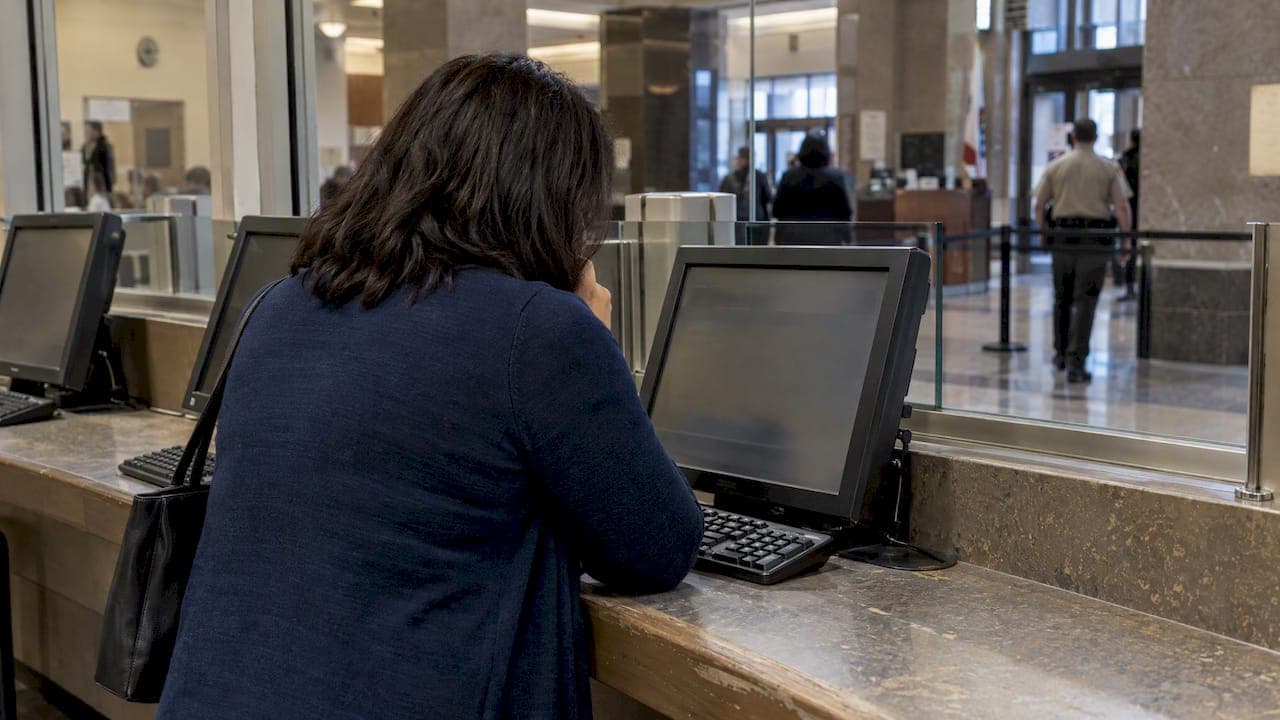
Yes, you can usually confirm whether a warrant exists by checking the county superior court's online portal or a sheriff's warrant list for the county where the case likely originated. There is no single statewide public warrant database in California, so a clear result in one county does not rule out something filed elsewhere. If your search comes back unclear, contact the issuing court's criminal clerk directly, consider a DOJ record review, and talk to an attorney before you act on what you find.
TL;DR:
- Name searches can miss records when spelling, middle names, aliases, or birth dates differ; sealed, juvenile, adoption, and mental health cases may not appear online.
- County procedures vary: Solano may charge $15 for searches exceeding ten minutes and $0.50 per copied page; Stanislaus requires in person bench warrant review.
- California DOJ Record Review requires fingerprints and takes weeks; it verifies state criminal history, not whether a county has an active warrant.
- Bench warrants often follow missed court dates or probation violations and can be served anywhere in California, so crossing county lines offers no protection.
- Consult a California defense attorney before appearing on a felony or probation matter, and ask the issuing court whether payment actually clears the warrant.
Table of Contents
- Search County Court Portals and Sheriff Warrant Tools Correctly
- Contacting the County Criminal Clerk or Sheriff Records Office
- California DOJ Record Review: What It Confirms and What It Doesn't
- Arrest Warrants vs. Bench Warrants: Know the Difference
- If You Find a Warrant: What to Do Next
- Why Verification Beats Guessing on a Warrant Check
- Need Help After an Arrest? How Our Bail Bonds Fit In
- FAQ
- Sources
Search County Court Portals and Sheriff Warrant Tools Correctly
Start with the superior court for the county where the arrest, citation, or incident likely occurred, since California runs criminal records at the county level rather than through one central lookup. The Sacramento Superior Court portal lets you search by name or case number and download certain documents for free, but coverage and search rules differ from county to county. A search that comes back empty in one county's system tells you nothing about records held in a neighboring county.
Exact-name search tools are unforgiving, so a mismatch in spelling can hide a real record from you. Before you conclude you're clear, run through these checks:
- Try common spelling variants of your first and last name, including hyphenated or accented versions.
- Search with and without a middle name or middle initial.
- Include your date of birth if the portal allows it, since many counties share names.
- Check for maiden names, former legal names, or known aliases tied to your record.
Several case categories rarely show up in online searches no matter how carefully you search. The Placer County Superior Court portal lists adoption, mental health, juvenile, sealed, and certain search-warrant records as unavailable for remote access, and most counties follow similar restrictions. A "no results" response from a portal can mean the case simply isn't published online, not that no warrant exists.
San Francisco's court case information page goes further, noting that some matters require a direct call to the relevant department rather than a self-service search. That distinction matters: checking a warrant online is a records-navigation exercise, not a single search-box answer, and the court itself is the only party that can confirm what a given docket entry means.
Contacting the County Criminal Clerk or Sheriff Records Office
When an online search leaves you uncertain, the county clerk's office or sheriff's records division becomes your next stop. Calling first saves a trip, since policies on what staff can confirm by phone vary widely by county.
- Call the clerk's office for the county you believe filed the case and ask what they can confirm over the phone versus in person.
- Gather your full legal name, date of birth, any known aliases, the likely filing county, and any citation or case numbers before you call.
- Ask whether a written request form is required and what fees apply to a records search or copy request.
- If the clerk requires an in-person visit, bring government-issued photo ID and any paperwork tied to the case.
Fees and procedures aren't uniform. Solano County's records and fees page lists a $15 research fee when a search takes longer than ten minutes, plus $0.50 per page for copies, and Stanislaus County charges a comparable $15 fee when the case number is unknown. Stanislaus also states plainly that bench-warrant information is not given over the telephone and must be reviewed in person, a policy echoed by several other counties.
Pro Tip: Write down your full legal name, DOB, and any case numbers before you call the clerk. A complete, organized request is processed faster and often avoids extra research fees.
California DOJ Record Review: What It Confirms and What It Doesn't
If county-level searches leave you without a clear answer, the California Department of Justice offers a process called Record Review that lets you see your own state summary criminal history. This is not a quick warrant lookup; it's a fingerprint-based record check meant for verifying accuracy, not confirming whether a warrant is active right now.
The process works like this:
- Schedule a Live Scan fingerprint appointment at a certified location.
- Submit form BCIA-8705 along with your fingerprints to the California DOJ.
- Pay the processing fee, with fee waivers available for applicants who qualify.
- Wait for DOJ to mail your state summary criminal history, which can take several weeks.
Only you, not a third party, may request your own record through this channel. The report is useful for catching errors in your criminal history or proving what the state has on file, but because of the mail turnaround and fingerprint requirement, it's a poor fit when you need an immediate answer about whether a county currently has an executable warrant against you.
Arrest Warrants vs. Bench Warrants: Know the Difference
California recognizes two main categories, and the distinction affects how urgent your next move should be. An arrest warrant is issued after a judge or magistrate finds probable cause that you committed a crime, typically tied to an active investigation or charge. A bench warrant, by contrast, is usually issued when someone fails to appear in court, violates probation, or ignores a court order, meaning the underlying case already exists in the system.

California Penal Code §978.5 allows a bench warrant to be served in any California county the same way an arrest warrant can, so leaving the county where the case was filed offers no protection. Practically, either type can lead to an arrest at a routine traffic stop, and bench warrants for missed traffic court dates can also trigger separate civil assessments on top of the original citation. Our guide on missing a court date covers what typically follows a failure to appear in more detail.
If You Find a Warrant: What to Do Next
Finding a record doesn't mean you should act on the first thing you see. Confirm the details first, then move carefully.
- Verify the issuing court and the exact docket entry rather than relying on a single aggregator site or a secondhand report.
- Call the clerk's office for the issuing court and ask exactly how they accept resolution, whether that's a court appearance, a motion, or in some cases a payment.
- Ask specifically whether an online or phone payment actually clears the warrant. The San Diego Superior Court's failure to appear guidance warns that some matters aren't resolved that way and require an appearance.
- Call a California criminal-defense attorney before voluntarily showing up if the warrant involves a felony, a probation violation, or anything touching immigration status. For complex matters tied to financial or regulatory issues, legal services like Murphy's Law illustrate the kind of specialized defense counsel worth consulting before you act.
If an arrest does happen, bail becomes the next practical issue. Our step-by-step explanation of how bail bonds work walks through what a co-signer can expect, including payment plans and typical timelines for release once bail is set.
Pro Tip: Never assume a warrant is cleared just because a website accepted a payment. Call the issuing court directly to confirm the case is closed before you relax.
Why Verification Beats Guessing on a Warrant Check
Checking for a warrant is fundamentally a records-navigation problem, and the records live with county clerks and courts, not with a single search engine or a third-party aggregator site. Online portals are a reasonable first pass, but they were built for case lookups, not for giving you legal certainty about your own status. The counties that tell you plainly what they won't confirm by phone, like Stanislaus, are doing you a favor: they're telling you where the real answer lives.
Our warrant search guide walks through these same county-by-county quirks in more depth if you want a second pass before calling a clerk or an attorney.
— Jake
Need Help After an Arrest? How Our Bail Bonds Fit In
If you've confirmed a warrant and an arrest has already happened, speed matters, and getting someone released fast is what we focus on every day. We post bail across all 58 California counties, with payment plans and an automatic 8% discount for clients working with an attorney through our bail bond cost breakdown, compared to the standard 10% premium.
Here's what we offer once bail is set:
- Bilingual support in Spanish, Hindi, and Arabic for families working through a stressful situation.
- Online bail bonds for families who need to start the process remotely.
- $500 down options and flexible payment plans for qualified co-signers.
- Direct, practitioner-led service with no call center standing between you and the person handling your case.
Talk to the court and a defense attorney first about how the case itself will proceed. Once you know bail is required, reach out to us and we'll walk you through the felony or misdemeanor bail bond process for your situation.
This article is general information, not a substitute for advice from a qualified lawyer. Consult a qualified legal professional about your own circumstances before acting on anything here.
FAQ
Can I check if I have a warrant in California?
Yes, you can check county superior court portals and some sheriff warrant lists for the county where a case may have been filed. Results depend on the county's search tools and what categories of cases they publish online, so an unclear result means you should contact the issuing court directly.
How do I check if I have a warrant in the USA?
There's no single nationwide warrant database, so checks start at the county or state level where the case may exist. In California, that means searching the relevant county superior court portal, calling the clerk's office, or requesting your state summary criminal history through the California DOJ Record Review process.
Can you look up if someone is wanted?
Some county court portals allow name-based searches that may show pending cases or warrants tied to a specific person, but access and detail vary significantly by county. Sealed, juvenile, and certain other case types generally aren't visible this way, so a clear portal result doesn't guarantee someone has no warrant.
Are warrants public record?
Many warrant-related court records are public, but counties differ in how much they publish online versus requiring an in-person or written request. Case types like juvenile matters, sealed files, and some search-warrant dockets are typically excluded from public access regardless of the county.
Sources
- Public Case Access | Sacramento Superior Court
- Records, Fees & Forms | Superior Court of California | County of Solano
- California Penal Code §978.5
- Record Review | California Department of Justice