
A bail bond payment plan is a formal installment agreement that lets you secure a defendant's release by paying the bail bond premium in scheduled payments rather than all at once. Understanding how payment plans for bail work is the single most useful thing you can do when a loved one is arrested and cash is short. Bail bond premiums typically run 10%–15% of the total bail amount set by the court, and that fee is non-refundable regardless of how the case ends. Payment plans do not reduce that total. They spread it into manageable installments, making release possible even when your family cannot cover the full premium today.
How do bail payment plans typically work?
A bail payment plan starts the moment you contact a licensed bail bond agency and agree on terms. The process follows a clear sequence, and knowing each step prevents costly surprises.
- Down payment. You pay an initial portion of the premium upfront, typically 10%–40% of the total premium amount. A larger down payment signals lower risk to the agency and often unlocks better terms.
- Contract signing. You and any co-signer sign a legal promissory note that specifies the total amount owed, the repayment schedule, and the consequences for missing payments. This document is binding. Read every line before signing.
- Bond posting. Once the down payment clears and the contract is signed, the bond posts immediately and release begins. There is no additional wait tied to the installment schedule.
- Scheduled payments. Remaining payments follow a weekly, biweekly, or monthly schedule depending on what you negotiated. Many agencies require automated billing to reduce default risk.
- Completion. Once all payments are made, the financial obligation ends. The bond itself stays active until the case resolves in court.
One detail that catches families off guard: some agencies charge financing fees on top of the premium, while others offer interest-free plans. Confirming these fees upfront is non-negotiable before you sign anything.
Pro Tip: Ask the agency to show you the total cost of the plan in writing, including any financing fees, before you commit. The difference between an interest-free plan and a financed plan can add hundreds of dollars to your total obligation.
What qualifications affect eligibility for bail bond payment plans?
Not every applicant qualifies for a payment plan, and not every agency offers one. Agencies evaluate several factors before approving an installment arrangement.
- Co-signer stability. Agencies prioritize co-signers with stable income and reliable contact. A steady paycheck and a verifiable address carry more weight than a credit score alone.
- Defendant's community ties. Strong local ties, such as long-term employment, family in the area, or property ownership, reduce the perceived flight risk and improve approval odds.
- Severity of charges. Higher-risk charges lead agencies to require larger down payments or additional collateral before approving a plan.
- Collateral. Real estate, vehicles, or other assets can substitute for a larger cash down payment. Collateral gives the agency a recovery path if the defendant fails to appear.
- Down payment size. A larger initial down payment can reduce the agency's default risk significantly, often resulting in lower monthly installments and shorter repayment periods.
Every agency applies its own underwriting criteria. Terms vary widely across bondsmen, including minimum down payment requirements, repayment duration, and whether interest applies. Asking for complete disclosure before committing is the only way to compare plans accurately.
Pro Tip: If your credit is limited, offer a larger down payment or collateral upfront. Both reduce the agency's risk and give you more negotiating room on the repayment schedule.

You can also use the bail bond cost calculator at Jakehernandezbailbonds to estimate your premium before you call, so you walk into the conversation knowing your numbers.
What types of bail bond payment plans exist?
Payment plan structures fall into three broad categories. Each one trades upfront cost against monthly burden differently.
| Plan type | Down payment | Monthly payments | Repayment period | Financing fees |
|---|---|---|---|---|
| Low down payment | 10%–15% of premium | Higher | 9–12 months | Often applies |
| Mid-range down payment | 20%–30% of premium | Moderate | 6–9 months | Sometimes applies |
| High down payment | 35%–40% of premium | Lower | 3–6 months | Rarely applies |
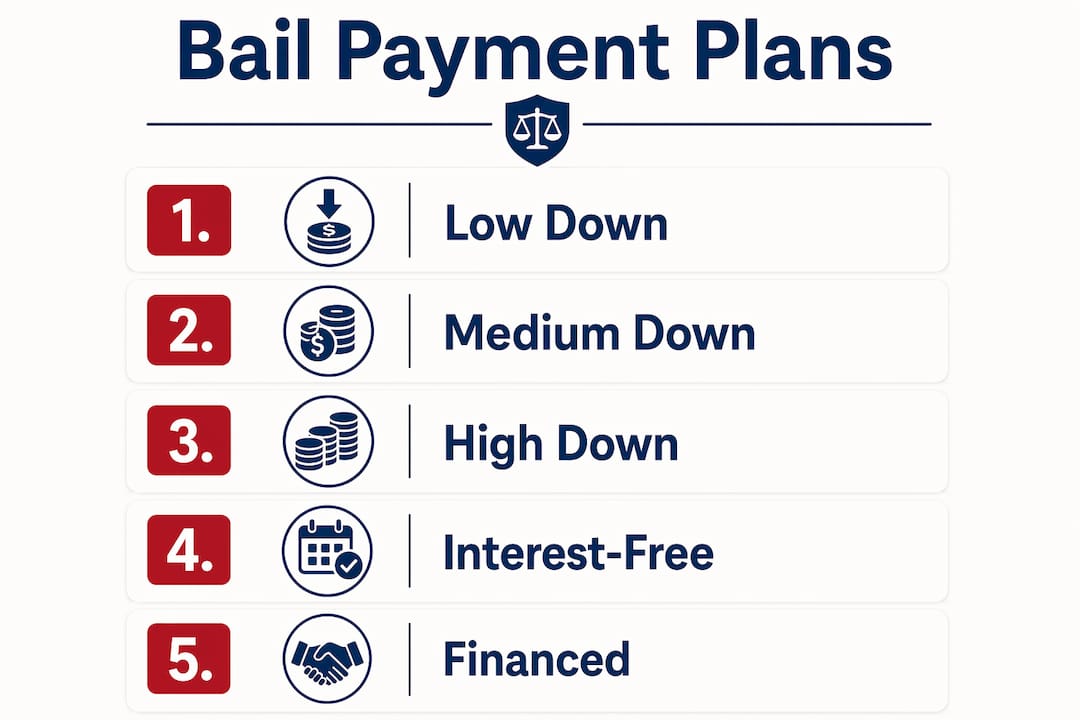
Larger down payments allow plans with lower monthly installments and shorter repayment periods. That math is straightforward: the more you pay upfront, the less the agency needs to recover over time.
Interest-free plans exist but require the co-signer to demonstrate strong financial stability. Financed plans charge a fee on top of the premium, which increases the total cost of securing release. The premium itself, whether 10% or 15% of bail, is always non-refundable. A payment plan does not change that figure. It only changes when and how you pay it.
Repayment durations typically run 3–12 months. Shorter plans cost less overall if the agency charges financing fees. Longer plans reduce monthly pressure but increase total cost when fees apply.
What responsibilities do co-signers have in bail bond payment plans?
A co-signer in a bail bond arrangement carries real legal and financial weight. This is not a formality.
- Payment liability. If the defendant or primary payer misses an installment, the co-signer is responsible for covering it. Missed payments can trigger default, which puts the bond at risk.
- Court appearance obligation. The co-signer is legally responsible for ensuring the defendant appears at every scheduled court date. If the defendant fails to appear, the bond is forfeited.
- Bond forfeiture consequences. When a bond is forfeited, the agency pursues recovery of the full bail amount. That recovery effort can include wage garnishment, liens on property, or legal action against the co-signer.
- Ongoing communication. Co-signers must stay reachable and maintain contact with both the agency and the defendant throughout the case. Disappearing from contact is treated as a red flag.
- Right to surrender. A co-signer who believes the defendant will not appear can contact the agency to surrender the defendant back into custody. This stops the financial clock before forfeiture occurs.
Co-signer cooperation keeps bonds active and defendants out of jail. That cooperation is not passive. It requires active monitoring and consistent communication throughout the legal process. If you are considering co-signing, read the promissory note carefully and ask the agency to walk you through every scenario where your liability increases.
Key Takeaways
A bail bond payment plan works by splitting the non-refundable premium into scheduled installments, with release occurring immediately after the down payment and contract are signed.
| Point | Details |
|---|---|
| Release happens immediately | The bond posts as soon as the down payment clears and the contract is signed. |
| Premium is always non-refundable | Payment plans spread the cost but never reduce the total premium owed. |
| Co-signers carry full liability | A co-signer is legally responsible for payments and court appearances throughout the case. |
| Larger down payments improve terms | Higher upfront payments reduce monthly installments and often eliminate financing fees. |
| Terms vary by agency | Always request full written disclosure of fees, schedule, and default consequences before signing. |
What I've learned after years of working bail payment plans
The families who navigate payment plans best are the ones who ask hard questions before they sign anything. The families who struggle are the ones who sign quickly out of panic and discover the financing fees later.
Here is what I tell every co-signer who calls Jakehernandezbailbonds: the promissory note is a real contract with real consequences. Courts have discretion to reduce bail when ability to pay is demonstrated, and that is worth pursuing before you lock into a plan based on a high bail amount. A bail reduction hearing can change the math entirely. If the bail amount drops, your premium drops, and your payment plan becomes easier to manage.
The second thing I see families overlook is the difference between a bondsman who offers a payment plan as a favor and one who has a structured, documented process. Structured plans with written promissory notes protect you. Informal arrangements leave you exposed. Always get the terms in writing, including the total cost, the schedule, and what happens if you miss a payment.
My honest advice: put down as much as you can afford upfront. A larger down payment is not just about getting better terms. It reduces the total amount you owe if financing fees apply, and it signals to the agency that you are a serious, reliable client. That goodwill matters when you need flexibility later.
— Jake
Flexible bail bond payment plans from Jakehernandezbailbonds
Jakehernandezbailbonds offers licensed bail bond services across all 58 California counties, with payment plan options designed for families who cannot cover the full premium upfront.
Plans include 0% down options for qualified co-signers, with bonds ranging from $1,000 to $1,000,000. Consultations are free, support runs 24/7, and bilingual agents are available to walk you through every step. Whether your loved one is held at a facility in Los Angeles, San Bernardino, or anywhere else in California, Jakehernandezbailbonds connects you directly with a licensed agent, no call center, no runaround. Call now or visit online to get a personalized quote and start the release process today.
FAQ
What is a bail bond payment plan?
A bail bond payment plan is an installment agreement that lets you pay the bail bond premium in scheduled portions rather than all at once. Release typically occurs immediately after the down payment and contract are signed.
How much do you need down for a bail bond payment plan?
Down payment requirements typically range from 10%–40% of the total premium. A larger down payment usually results in lower monthly installments and better overall terms.
Can anyone get a bail bond payment plan?
Not automatically. Agencies evaluate the co-signer's income stability, the defendant's community ties, the severity of charges, and available collateral before approving a plan.
Does a payment plan reduce the total cost of bail?
No. The bail bond premium is non-refundable and fixed at the state-regulated rate, typically 10%–15% of the bail amount. A payment plan spreads that cost but does not reduce it.
What happens if a co-signer misses a payment?
Missing a payment can trigger default on the bond agreement. The agency may pursue recovery from the co-signer, and in serious cases, the bond can be forfeited, exposing the co-signer to the full bail amount.