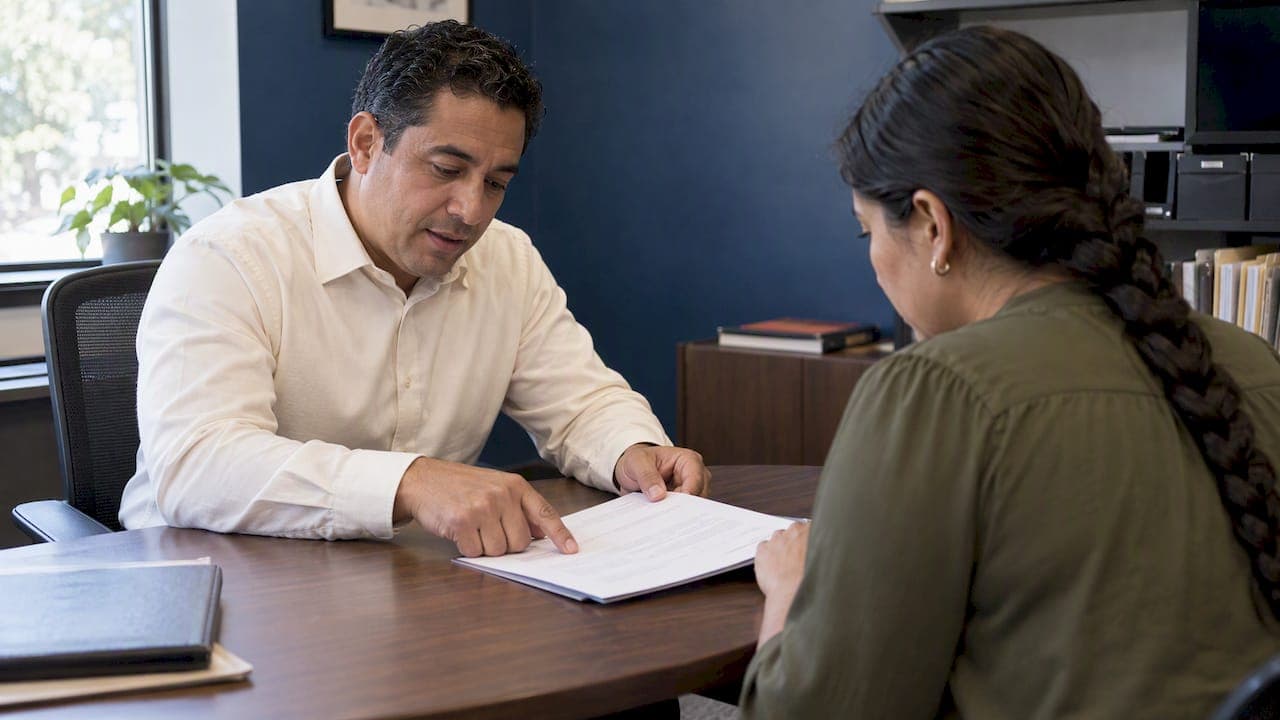
An attorney discount lowers the fee a bail agent charges when a defense lawyer brings or refers the bond. At Jake Hernandez Bail Bonds the standard California premium is 10% of the bail amount, and the attorney rate is 8%. The discount applies to our fee only. It never changes the bail amount the court sets. You can see both rates on our bail bond cost calculator.
This guide explains what the discount is, why California allows it, what it saves on real bail amounts, why a lawyer generally cannot pay a client's bail personally, and what families should verify before signing anything. It also covers the question behind "bail bonds and credit": what a co-signer takes on.
TL;DR
- Bail is set by the court. The bail bond premium is what a bail agent charges you to post it, and the attorney discount reduces only that premium.
- In California the most common premium is 10% of the bond. Our attorney rate is 8%, so a $100,000 bond costs $8,000 instead of $10,000.
- The discount exists because California agents may rebate part of the premium, and the premium is nonrefundable once the bond is posted.
- Ethics opinions in several states warn lawyers against putting their own money or credit behind a client's bond, so the bond is normally paid by the family or another co-signer.
- Before signing, confirm the agent's license, the total fee, the payment terms and how collateral comes back.
Table of Contents
- What an attorney discount actually is
- What the discount saves: the numbers
- Can a lawyer pay a client's bail?
- Bail bonds and credit: what a co-signer takes on
- What to verify before you sign
- Felony or misdemeanor: does the discount still apply?
- How to use the attorney discount, step by step
- Our perspective
- Get an attorney-rate quote today
- FAQ
- Sources
What an attorney discount actually is
Two different amounts get confused all the time.
Bail is the amount the court sets as a guarantee that the defendant will return for every hearing. A judge or a county bail schedule decides it.
The premium is the fee a licensed bail agent charges to post a bond for that amount. It is the cost of the service, and it is what a discount can reduce.
The California Department of Insurance explains that agents may negotiate a lower fee by rebating, as Proposition 103 allows. That is the legal footing for any bail discount in the state, including one for attorneys. The same page states that the cost to the consumer is most commonly 10% of the bond amount, plus actual, necessary and reasonable transaction expenses.
So an attorney discount is not a court program or a government benefit. It is a lower fee an agent chooses to offer when a defense attorney is involved. Each agent sets the terms, which is why you should ask for the rate in writing.

Who qualifies
At our company the discount is built for attorneys who place or refer a bond for a client. The agent's rate is 8% instead of 10%, and we apply the attorney discount automatically, so a lawyer does not have to hunt for a coupon or a code. If you are a family member and your lawyer is handling the case, tell us the attorney's name when you call so we can connect the bond to the case.
California also regulates how bail business arrives. Agents may not solicit it. According to the Department of Insurance, the request has to come from the arrestee, the attorney of record, or an adult friend or family member. An attorney of record calling an agent is exactly the kind of request the law expects.
What the discount saves: the numbers
The math is simple, because the premium is a flat percentage of the bail amount. Here is what 10% and our 8% attorney rate look like on common bail amounts.
| Bail amount | Premium at 10% | Premium at 8% (attorney) | Difference |
|---|---|---|---|
| $3,500 | $350 | $280 | $70 |
| $25,000 | $2,500 | $2,000 | $500 |
| $75,000 | $7,500 | $6,000 | $1,500 |
| $100,000 | $10,000 | $8,000 | $2,000 |
| $250,000 | $25,000 | $20,000 | $5,000 |
The $25,000 figure matches the state's own example: the California Department of Insurance has noted that a 10% fee on $25,000 bail is $2,500, and that agents may negotiate lower fees by rebating.
If you want to see your own number, our pages for specific amounts, such as the $75,000 bail bond cost and the $80,000 bail bond cost, break down what is due at each down payment level. For the bigger picture, our guide to how bail bond fees are calculated walks through the formula.
Why the premium is not a deposit
Families often ask whether they get the money back. The answer matters, because a discount only helps if you understand what you are paying for.
The California Department of Insurance warns that bail bond premiums are nonrefundable, even if charges are never filed or are dropped. One exception exists: when the agent surrenders the defendant, the fee is refundable minus administrative costs under CCR Title 10 section 2090.
Compare that with paying bail directly to the court in cash. Cash bail is returned at the end of the case, subject to court rules. The premium is the price of not having to put up the full amount, much like an insurance premium. Paying 8% instead of 10% is the same service for less money.
Since January 1, 2022, California has also barred licensees from charging a renewal premium on a bail undertaking. If an agent tells you the bond needs a new premium to stay in force, ask them to show you the statute.
Can a lawyer pay a client's bail?
This is the question behind many searches for an attorney discount, and the answer is more cautious than people expect. A lawyer using their own money or credit to secure a client's release runs into professional conduct rules, and those rules vary by state.
- The Maryland State Bar's ethics committee concluded that a lawyer may not use personal funds to post a criminal client's bail or pledge personal credit. It does allow the lawyer to pass along the client's money, or a third person's, to the court without becoming liable.
- The North Carolina State Bar reached a similar view in RPC 173. It reasoned that a lawyer who lends money for a bond then has a financial interest in the client being caught if the client flees, which can conflict with the duty to the client. It also flags solicitation concerns when a lawyer offers bond money.
- The State Bar of Texas explains that a lawyer who also acts as the client's bondsman can face a conflict if that financial interest could limit the defense.
If you are a California attorney, check the State Bar's current rules on conflicts and on paying a client's expenses before you do anything beyond referring the client to a licensed agent. For families, the practical point is simple. The lawyer's job is the defense. The bond is normally arranged and paid for by the family, a friend or the defendant, with the lawyer's referral earning a lower rate.
That is where an attorney discount helps everyone. The lawyer stays out of the money, the family pays less, and the bond is handled by a licensed professional.
Bail bonds and credit: what a co-signer takes on
A bail bond is not a bank loan, but it is a contract with real financial obligations. The person who signs for the bond, called the co-signer or indemnitor, agrees to make sure the defendant appears in court and to pay what the contract says is owed.
Here is what to understand before you sign:
- The premium is due as agreed. If you are on a payment plan, the plan is part of the contract. Read the due dates and what happens if you miss one.
- Missed court dates are the bigger risk. If the defendant does not appear, the court can declare the bail forfeited, and the co-signer can be liable under the indemnity agreement. This is why staying in touch with the defendant about court dates matters so much.
- Collateral stays tied up. If the bond requires collateral, such as a car title or property, it is returned when the bond is exonerated, subject to the contract's conditions.
- California limits one agent tactic. The Department of Insurance says agents cannot surrender a defendant back into custody for nonpayment of premium.
Whether an agent runs a credit check, reports to credit bureaus or sends unpaid balances to collections is set by that agent's own practices and the signed contract. Ask directly and get the answer in writing: Do you run a credit check? What happens if I fall behind? Who do you report to? A good agent answers without hesitation.
Our approach is a payment plan for qualified co-signers, and 0% down options for those who qualify. Approval depends on the co-signer, so ask us what your situation supports. Our page on cheap bail bonds in California explains what is realistic, and if cash is the obstacle, our $500 down bail bonds page shows how a smaller start can work.
What to verify before you sign
Whether you are getting an attorney rate or the standard one, the same checks apply. New York City's Department of Consumer and Worker Protection publishes a bail bond consumer bill of rights that gives a good model. It tells consumers to verify the agent's name and license, the fees, the contract and the collateral-return conditions, then review the documents and keep copies. The document is a New York City one, but the habits carry anywhere.
In California, run through this list:
- License. Bail agents are licensed by the California Department of Insurance, which also reviews whether surety insurers' premium rates are not excessive, inadequate or unfairly discriminatory. Ask for the license number and check it on the Department's site.
- The total, in writing. The premium, plus any transaction expenses, with the discount shown as a line item. The state describes allowable expenses as actual, necessary and reasonable.
- How the discount is documented. If you were promised an attorney rate, it should appear on the paperwork, not just in a phone call.
- Payment terms. Down payment, installment amounts, due dates and the consequences of a late payment.
- Collateral. What is held, where, and the conditions for its return.
- Court dates. Who tracks them and how you will be reminded.
- Copies. Leave with every page you signed.
The same Department of Insurance guidance on agent scams is worth a read if someone offers a price that sounds too good to be true or pressures you to decide on the spot. Agents also cannot call you first: solicitation is not allowed.
Federal bonds cost more
The 10% and 8% figures here are California state bond rates. Federal court bonds are priced differently. One industry summary reports that federal bonds generally carry a 15% premium because of higher financial exposure and stricter oversight. If your case is in federal court, ask us for the actual quote on our main page before assuming any rate.
Felony or misdemeanor: does the discount still apply?
The discount is a percentage of the bond, so it scales with the charge. A misdemeanor with a small bail amount saves less in dollars, and a serious felony with six-figure bail saves thousands. For help with either case type, see our misdemeanor bail bonds and felony bail bonds pages.
If the defendant has missed a court date and a warrant was issued, the situation is more urgent. Our bench warrant bail bonds page explains how that works. And if a defendant must be returned to custody for any reason, our guide on how to surrender a defendant within 48 hours covers how to avoid forfeiture.
How to use the attorney discount, step by step
- Get the bail amount. The jail or the county's booking information gives it. The court sets it, and the discount does not change it.
- Have the attorney's name ready. If a lawyer is on the case, give us the name and contact details.
- Call us. Consultations are free, and we answer 24/7. Tell us the bail amount, the jail and the attorney.
- Review the numbers. We calculate the premium at the attorney rate and explain the payment options for the co-signer.
- Sign and keep copies. Read the indemnity agreement and the payment schedule before you sign.
- Plan for court. We stay with you through every court date, so nothing gets missed.
Our perspective
Most families call us at 2 a.m., scared, with one question: how fast can they come home? The price comes second, but it matters, because a bond fee is money many families do not have sitting around.
That is why we apply the attorney discount automatically. When a defense lawyer is involved, the 8% rate should not depend on whether someone remembered to ask. The lawyer keeps their focus on the defense, and the family pays less for the same bond.
We also think you should talk to the person who actually handles your bond, not a call center. We are licensed across all 58 California counties, we work with bilingual clients in Spanish, Hindi and Arabic, and we explain the contract line by line, including what a co-signer is agreeing to, before anything is signed.
If a payment plan or a lower down payment is what makes release possible, ask. We would rather find a workable structure for a qualified co-signer than see someone sit in jail because the first quote seemed out of reach.
Jake
Get an attorney-rate quote today
If you are a defense attorney, or a family working with one, we can quote the 8% attorney rate and walk you through the payment options for a qualified co-signer. Start with our bail bond cost page to estimate the premium, or call us any time for a free consultation.
If you would rather not leave home, our online bail bonds service lets you start the process from your phone, and our team stays on the line for the rest.
FAQ
How much does a $100,000 bail bond cost with an attorney discount?
At our 10% standard rate, a $100,000 bond has a $10,000 premium. At the 8% attorney rate, it is $8,000, a saving of $2,000. The court-set bail does not change, and the premium is nonrefundable once the bond is posted, as the California Department of Insurance notes.
Can a lawyer pay his client's bail?
Not as a simple favor. Ethics opinions from Maryland and North Carolina warn that a lawyer who advances money or pledges credit for a bond creates a conflict with the duty to the client. Rules differ by state, so a lawyer should check their own bar's guidance. Usually the family or another co-signer pays the bond, and the lawyer refers the client to a licensed agent.
Do you get the 10% bail money back?
No. In California the premium is nonrefundable, even if charges are dropped. The one exception is when the agent surrenders the defendant, in which case the fee may be refundable minus administrative costs. Collateral, if any was required, is returned when the bond is exonerated, subject to the contract.
Does a bail bond affect my credit?
A bond is a contract, and what a co-signer owes is set by the agreement they sign. Whether an agent runs a credit check or reports unpaid balances depends on that agent's practices, so ask in writing before you sign. California also bars agents from surrendering a defendant for nonpayment of premium.
Is the attorney discount available for every charge?
The discount is a percentage of the premium, so it applies to felony and misdemeanor bonds alike. Federal bonds are priced differently, so ask for a quote. Call us with the bail amount and the attorney's name for the exact figure.
Sources
- California Department of Insurance: Bail Bonds
- California Department of Insurance: An Exploration of California's Bail System (2017)
- California Department of Insurance: Tips to Avoid Bail Agent Scams
- AB-1347 Bail: premiums
- Maryland State Bar Association, Ethics Docket No. 2003-03
- North Carolina State Bar, RPC 173
- State Bar of Texas: lawyer as client's bail bondsman
- NYC Bail Bond Consumer Bill of Rights
- How Much Does a Bail Bond Cost? Fees and Types