
Bail bond fees are calculated as a regulated, non-refundable percentage of the total bail amount set by the court, known as the bail bond premium. In most states, this rate is fixed at 10% by law, meaning a $50,000 bail requires a $5,000 premium paid directly to the bondsman. State Departments of Insurance govern these rates to prevent price gouging and protect clients. The premium is earned the moment the bond is posted and is not returned regardless of case outcome. Understanding how bail bond fees are calculated before you sign anything protects you from hidden costs and financial surprises.
How bail bond fees are calculated by state law
The bail bond premium is the standard fee structure used across the United States, and most states fix it at 10% of the total bail amount. That means the rate is not a suggestion. In California, Texas, and Florida, the 10% fee is mandated by law and cannot be negotiated down by the client or up by the bondsman.
Not every state uses a flat 10% rate. State-specific structures include:
- California: Strict 10% flat rate, enforced by the California Department of Insurance, with no exceptions for standard bonds.
- Louisiana: Charges a 12% premium rate plus flat administrative fees, making the total cost higher than most states.
- Colorado: Uses a sliding scale system where the fee percentage varies based on surety involvement and the type of bond.
- Texas and Florida: Both enforce the 10% standard, with limited room for additional charges beyond the regulated premium.
These variations matter because the total cost of bail bonds shifts significantly depending on jurisdiction. A $20,000 bail in Louisiana costs more than the same bail in California once flat fees are added on top of the 12% premium.
State regulatory bodies, including Departments of Insurance, require bail agencies to file their rate schedules and comply with approved fee structures. Agencies that deviate from these schedules face license suspension or criminal charges. That compliance requirement is exactly why bail bond fees are regulated rather than left to market competition.

Pro Tip: Before contacting any bail agency, look up your state's Department of Insurance website to confirm the legally mandated premium rate. Knowing the number before you call puts you in a stronger position.
What costs go beyond the bail bond premium?
The premium is the core fee, but it is rarely the only cost. Additional fees can include court filing costs, administrative fees, and financing charges, though their legality varies by state. Always ask for an itemized cost breakdown before signing anything.
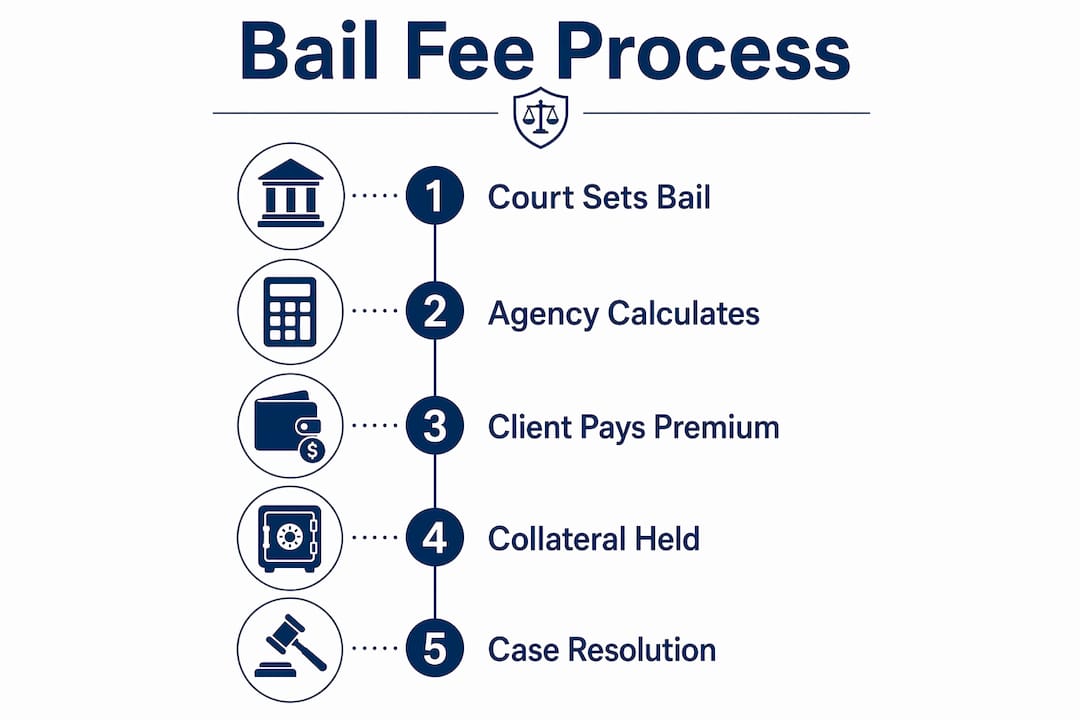
Here is how the full bail bond cost breakdown typically works:
- The premium: The non-refundable 10% fee paid to the bondsman. This is earned instantly upon bond posting and does not change based on case outcome.
- Administrative fees: Some agencies charge processing or paperwork fees. These are only legal in certain states, so verify before accepting them.
- Financing charges: If you use a payment plan, some agencies add interest or financing fees on top of the premium. These must be disclosed upfront.
- Collateral costs: While collateral itself is not a fee, managing it, such as recording a lien on real estate, can carry third-party costs like title fees.
- Recovery costs: If the defendant fails to appear in court, the bondsman may hire a recovery agent. Co-signers can be held liable for those costs under the indemnity agreement.
The bail bond premium is earned instantly upon bond posting. That single fact surprises most families. Even if charges are dropped the next morning, the bondsman keeps the full premium.
Pro Tip: Ask every agency for a written, itemized fee list before you agree to anything. Legitimate agencies provide this without hesitation. Agencies that resist are a warning sign.
Common misconceptions about bail bond fees
The biggest misconception is that the premium is refundable if the case resolves quickly. It is not. The premium is non-refundable the moment the bond is posted, regardless of whether charges are dropped, the defendant is acquitted, or the case is dismissed the following week. The fee compensates the bondsman for the risk taken, not for the time the bond remains active.
A second misconception involves pricing. Many clients assume that a lower quote means a better deal.
"If a bail agent offers a fee significantly below the state-mandated rate, that is not a discount. It is a red flag. Bondsmen who undercharge on the premium often recover costs through hidden fees, aggressive collateral seizure, or outright illegal practices that put clients at serious financial risk."
Charging below the regulated rate in states with fixed fee statutes is illegal. The offer may look attractive upfront, but the financial exposure it creates can far exceed the savings.
Co-signers carry the heaviest misconceptions. Many believe their only financial obligation is the premium. In reality, indemnity agreements hold co-signers liable for the full bail amount if the defendant skips court, plus any recovery costs the bondsman incurs. That liability can reach tens of thousands of dollars beyond the original premium. Understanding the factors that affect bail decisions helps co-signers assess the real risk before signing.
Missing payment plan installments adds another layer of risk. Missed payments can allow the bail agency to revoke the bond or seize collateral. The agency treats the debt like a personal loan with full legal enforcement rights.
How payment plans and collateral work in practice
Payment plans exist because most families cannot pay the full premium upfront. Payment plans typically require a down payment of 10% to 20% of the total premium, with the remaining balance paid over 6 to 12 months. On a $5,000 premium, that means $500 to $1,000 down and monthly installments for up to a year.
Approval for a payment plan is not automatic. The process works like this:
- Financial review: The agency evaluates the co-signer's credit score, employment status, and income. Higher risk profiles face stricter terms or outright denial.
- Down payment: The approved down payment is collected before the bond is posted. No down payment means no bond.
- Installment schedule: The agency sets a fixed monthly payment. Missing a payment triggers enforcement rights immediately.
- Collateral assessment: If the co-signer's financial profile is weak, the agency requires collateral to offset the risk. Common forms include real estate equity, vehicle titles, and cash deposits.
- Bond posting: Once the financial terms are agreed upon and the down payment is collected, the bond is posted and the defendant is released.
Collateral is held until the case concludes or the bond is fully paid off. It is not a payment toward the premium. Its sole purpose is to give the bondsman leverage to enforce court appearances. If the defendant fails to appear, the bondsman can move to seize the collateral to cover the forfeited bail amount.
Bail agencies evaluate co-signer credit and financial stability before approving any plan. Higher-risk clients face larger collateral demands or stricter payment terms. Knowing your financial profile before you apply helps you prepare the right documentation and avoid delays. You can review how payment plans for bail work in detail to understand what to expect at each step.
Key Takeaways
Bail bond fees are a regulated, non-refundable premium, typically 10% of the court-set bail amount, and co-signers carry significant financial liability beyond that initial fee.
| Point | Details |
|---|---|
| Standard premium rate | Most states mandate a 10% non-refundable fee based on the total bail amount. |
| Premium is non-refundable | The fee is earned upon bond posting and is not returned if charges are dropped. |
| State rules vary | Louisiana charges 12% plus flat fees; Colorado uses a sliding scale system. |
| Co-signer liability | Indemnity agreements can hold co-signers liable for the full bail amount and recovery costs. |
| Payment plan risks | Missed installments allow the agency to revoke the bond or seize collateral immediately. |
What I've learned from years of explaining bail fees to families
After working in bail bonds across California, the most damaging thing I see is not the fee itself. It is the shock families feel when they realize the premium is gone the moment the bond is posted. They call back a week later saying the charges were dropped and asking for a refund. That conversation is hard every time.
My honest advice: treat the premium as the cost of transferring risk, not as a deposit. The bondsman takes on legal and financial liability the second that bond is filed with the court. That risk does not disappear because the case resolves quickly.
The second thing I tell every co-signer is to read the indemnity agreement line by line before signing. Most people skip it. That document is where your real financial exposure lives. It is not the premium amount that should scare you. It is the clause that says you owe the full bail amount plus recovery costs if the defendant does not show up.
Always verify the state-mandated rate before you call any agency. In California, the rate is 10%, full stop. If someone quotes you 7% or 8% without an attorney discount qualification, walk away. That offer is either illegal or a setup for hidden costs later. Protecting yourself starts with knowing the number before the conversation begins.
— Jake
Jakehernandezbailbonds: transparent fee guidance across California
Jakehernandezbailbonds operates 24/7 across all 58 California counties and walks every client through the full bail bond cost breakdown before any paperwork is signed. There are no surprises on fees, no hidden charges, and no pressure.
Whether you need help understanding the 10% California premium, qualifying for a payment plan, or figuring out what collateral is required, the team at Jakehernandezbailbonds answers every question directly. Bonds range from $1,000 to $1,000,000, with 0% down options available for qualified co-signers. Use the bail bond cost calculator to get an instant fee estimate, or call for a free consultation any time. California bail bond services are available around the clock, with bilingual support for Spanish-speaking families.
FAQ
What is the standard bail bond fee percentage?
The standard bail bond fee is 10% of the total bail amount in most states, including California, Texas, and Florida. This rate is set by law and is non-negotiable.
Is the bail bond premium refundable if charges are dropped?
No. The premium is non-refundable the moment the bond is posted, regardless of case outcome. Even an immediate dismissal does not entitle the client to a refund.
What happens if I miss a payment plan installment?
Missing a payment plan installment gives the bail agency the right to revoke the bond or seize collateral. The agency can enforce the debt like a personal loan with full legal authority.
Why do some states charge more than 10% for bail bonds?
State legislatures set their own fee structures. Louisiana, for example, mandates a 12% premium plus flat fees. Colorado uses a sliding scale based on surety involvement. These differences reflect each state's regulatory approach to the bail bond industry.
What is collateral and why is it required?
Collateral is an asset, such as real estate equity or a vehicle title, held by the bondsman to guarantee the defendant's court appearances. It is separate from the premium and is returned when the case concludes, provided all terms are met.