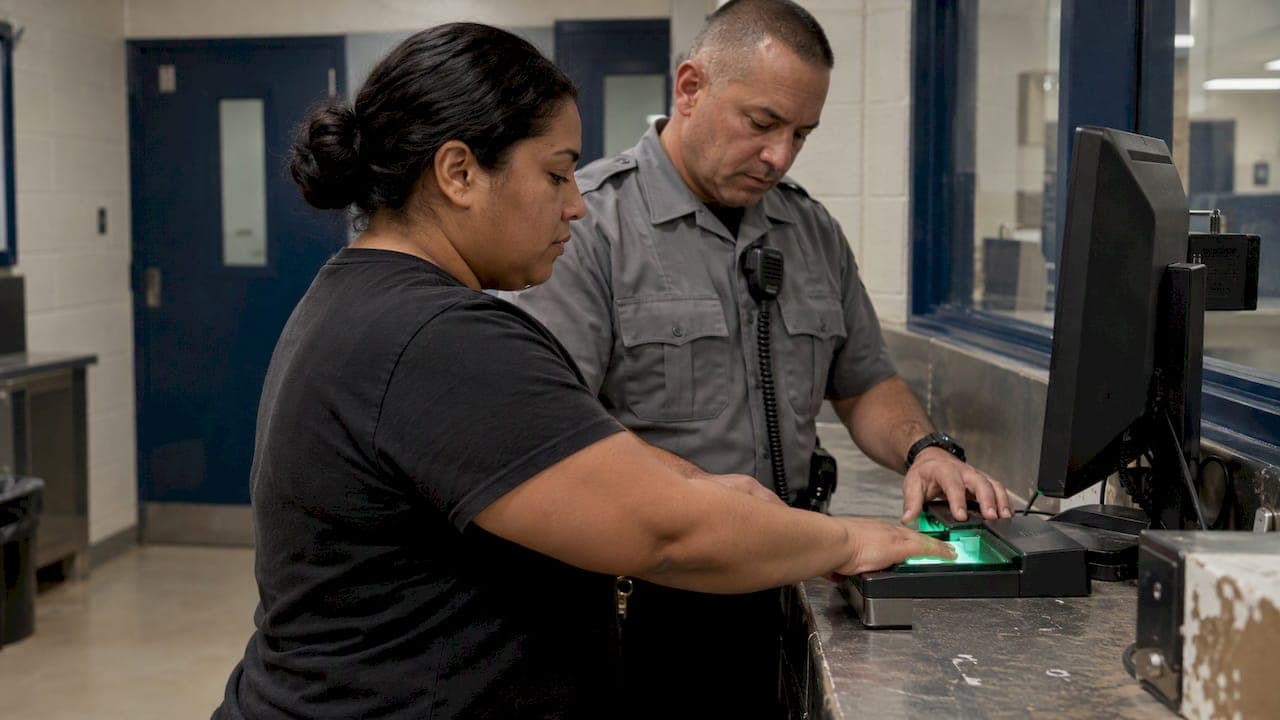
Booking is the jail's intake after an arrest. Officers record who the person is and what they are accused of, search them, take fingerprints and photographs, screen their health, and work out whether bail is available. In California it usually takes from under an hour to several hours, and the person can be released only once it is finished. If someone you love is going through it right now, this guide explains each step, what the wait looks like, and what you can do while it happens.
TL;DR
- Booking means search, property inventory, health screening, fingerprints, photographs, and recording personal information and charges.
- Officers in Monterey County describe a typical booking as 30 to 45 minutes, but delays can run past eight hours. Release on bail in Orange County averages about four hours.
- After an arrest, a person must generally be brought before a judge within 48 hours, not counting Sundays and holidays.
- Release options include own recognizance, supervised release, cash bail or a bail bond, depending on the judge and the charge.
- A family member can usually start the bail process while booking is still under way.
Table of Contents
- What booking means in California
- The booking steps, in order
- How long booking takes
- What a booking date means in jail records
- Your rights after an arrest in California
- Ways to get out after booking
- Starting the bail process during booking
- Mistakes families make during booking
- Our perspective
- Get a free consultation while booking is under way
- FAQ
- Sources
What booking means in California
Booking is an administrative process, not a verdict. It creates the official record that someone was arrested, by whom, and on what suspicion. The details differ from one county jail to the next, but the pattern is consistent across the state.
The Santa Cruz County Sheriff's corrections page lists a pat search, property inventory, medical and mental-health questionnaires, pre-classification screening, body scanning, fingerprinting and photographs. Biographical information is recorded, bail eligibility is determined, and people who stay in custody then move on to housing.

The San Bernardino County Sheriff's 2022 public information plan describes the same flow from the jail's side: medical screening, booking and classification. Booking there records personal information and charges, includes a search, photograph and fingerprints, and ends with a bail calculation and a court date.
The booking steps, in order
The exact order shifts by facility, but most people go through these stages.
- Arrival and search. Officers search the person and remove weapons and contraband. Pockets, belts, jewelry, phones and wallets are taken.
- Property inventory. Everything removed is listed and stored. This is why a released person often collects belongings at a property window.
- Identity and background questions. Placer County's inmate rulebook says booking asks about identity, health, religion, dietary needs and criminal history. Answer accurately, because the answers shape housing and medical care.
- Health and mental-health screening. Nurses or deputies ask about medications, injuries, pregnancy, substance use and suicidal thoughts. Someone who is hurt or intoxicated may need to be cleared at a hospital before the jail will accept them.
- Fingerprints and photographs. Prints are scanned and checked against criminal databases. Some jails add body or retina scanning, as Placer County's rulebook notes.
- Holding cell. The person waits while paperwork, record checks and classification are completed. A Santa Clara County court report describes holding-cell placement and a pretrial-services interview that can lead to release on the person's own recognizance.
- Bail determination and classification. Staff look up the bail amount for the charge and decide where the person will be housed if they stay.
If you want a broader view of what comes after intake, a criminal case process overview walks through the stages from first questioning toward trial, which helps put booking in context.
How long booking takes
The honest answer is that it depends on the night, the jail and the person's condition. Monterey County's court-published booking review says officers describe a typical booking as 30 to 45 minutes. A complete booking may take about two hours under good conditions, and delays can exceed eight hours. Queues, staffing, demand, medical screening and hospital clearance all push the time up.

Orange County gives families two useful benchmarks in its Custody FAQ. Charges and bail information are usually available two to three hours after booking time. Release after bail or bond averages about four hours, though it can be as short as two or as long as six.
What slows booking down
- Many arrests at once. Weekend nights and holidays create queues at intake.
- Medical issues. Injuries, intoxication or a need for outside clearance can add hours.
- Record checks. Warrants or holds in other counties take time to verify.
- Short staffing. Fewer deputies in the booking area means slower processing.
This is why a person may not show up in the online inmate lookup right away. Wait a couple of hours, then call the jail's records or information line, and have the full legal name and date of birth ready.
What a booking date means in jail records
The booking date is the date, and often the time, the jail recorded the person's intake. It is different from the arrest date, which may be hours earlier, and different from the court date, which comes later. When you search an inmate locator, the booking date tells you when the custody record began, and the booking or case number attached to it is what a bail agent or attorney needs to find the right person quickly.
Most counties also list the charges, bail amount and next court date beside the booking date. If any of these fields are blank, booking is probably still in progress. Check again later rather than assuming the person is not there.
Your rights after an arrest in California
Booking happens inside a legal framework, and several protections apply while it does.
The right to remain silent and to a lawyer
You can decline to answer questions about the alleged offense and ask for an attorney. Say it clearly and then stop talking about the case. Giving your name and the identity information the jail needs for booking is part of routine intake. Discussing what happened is a different matter and is best done only with a lawyer present.
The 48-hour rule
Under California Penal Code section 825, a defendant must be taken before a magistrate without unnecessary delay and, in general, within 48 hours of arrest, excluding Sundays and holidays. There are statutory exceptions when a court is not in session. The California Judicial Council's pretrial law overview adds that a warrantless arrest requires a prompt judicial probable-cause determination.
The Lassen Superior Court notes that weekends, court holidays and mandatory closure days do not count toward the 48 hours. A Friday-night arrest can therefore mean a long wait before the first court appearance, and the Fresno Superior Court confirms that an in-custody defendant has a right to arraignment within 48 hours of arrest, with bail open to being raised or lowered at that hearing.
What happens at arraignment
At arraignment the judge explains the charges and the person's constitutional rights, takes a plea, and addresses release. The California Courts Self-Help Guide says the judge may release the person on their own recognizance or under supervision, set bail, or set no bail and keep them in jail until the case ends. Supervised release can mean home detention or electronic monitoring.
Ways to get out after booking
The Los Angeles Superior Court describes three broad outcomes after an arrest and custody: release without charges, posting bail or release on your own with a court date, or staying in custody for transport to court. The Monterey Superior Court lists the same routes in more detail, including release on own recognizance after booking, release once cash or bond bail is posted, and pretrial-services release.
In practice, a family has three questions to answer quickly:
| Question | Why it matters |
|---|---|
| Is the person still being booked? | Bail usually cannot be posted until the bail amount is calculated. |
| What is the bail amount? | It sets the cost of a bond or the cash needed. |
| Who will sign? | A co-signer takes responsibility for the person appearing in court. |
For cost, you pay a bail agent a premium rather than the full bail. Our bail bond cost page shows the 10% premium and the 8% attorney discount. If you are choosing between putting up the whole amount and using a bond, our guide to cash bail versus a bond explains what families pay and what they get back.
Starting the bail process during booking
You do not have to wait for the person to finish booking before you prepare. Gather these details first:
- Full legal name, date of birth and the jail where the person is held.
- The booking number, if the inmate lookup shows one.
- The charge and bail amount, once the jail lists them.
- Your own ID, employment and contact information if you will co-sign.
With that, a bail agent can complete much of the paperwork by phone or online, then finalize with the jail when the booking record is ready. Our step-by-step explanation of how bail bonds work in California covers the contract, the co-signer's role and court dates. If the arrest happened overnight, read about after-hours bail bonds. If you are out of state, see how to bail someone out from another state. For the full sequence after the arrest, our guide to posting bail after arrest lays out what to do first.
For a felony or misdemeanor, the process differs mainly in the bail amount and the scrutiny. Our pages on felony bail bonds and misdemeanor bail bonds explain what to expect for each.
Mistakes families make during booking
- Calling the jail repeatedly in the first hour. Staff are busy processing, and the record often is not complete yet. Check the online lookup, then call after a couple of hours.
- Assuming no record means the person is not there. Intake lag is common.
- Discussing the case on jail phones. Calls from custody are generally recorded, so keep conversations to logistics.
- Waiting for the court date to arrange release. If bail is set at booking, release can happen far sooner than arraignment.
- Signing with an agent before understanding the terms. Ask about the premium, payment plans and what the co-signer is responsible for.
Our perspective
Booking is when families feel the most helpless. The phone rings, someone you love is in a holding cell, and nobody can tell you how long it will take. What we see is that the families who do best are the ones who get organized early: they have the name, the jail and the booking number, and they talk to a real person instead of a call center.
That is how we work. When you call us, you reach a licensed practitioner who explains the process in plain language, in English, Spanish, Hindi or Arabic, and who stays with you through every court date. We cover all 58 California counties and answer around the clock, because arrests do not keep office hours.
We also believe cost should never be a mystery. Our premium is 10%, attorneys get 8% applied automatically, and qualified co-signers can ask about payment plans and low-down options. A free consultation costs you nothing, and it often turns a frightening night into a clear plan.
Jake
Get a free consultation while booking is under way
If someone you know is being booked in California, we can start your paperwork now and be ready the moment the jail lists the bail amount. We offer free consultations, 24/7 support, online bail bonds, and a $500 down option for qualified co-signers.
To talk to us directly, start at Jake Hernandez Bail Bonds and tell us the person's name and the jail.
FAQ
How long is the booking process in jail?
It varies. A Monterey County court report says officers describe typical booking as 30 to 45 minutes, a complete booking can take about two hours, and delays can pass eight hours. Medical clearance and busy nights add time.
What does the booking process mean?
It is the jail's intake after an arrest. Staff search the person, inventory property, screen health, take fingerprints and photographs, record personal details and charges, and determine bail eligibility.
Can someone be released right after booking?
Sometimes. A person may be booked and released on their own recognizance, or released once bail is posted. If neither happens, they stay in custody until arraignment, which generally must occur within 48 hours, excluding Sundays and holidays.
What does booking date mean in jail records?
It is the date and often the time the jail logged the person's intake. It is not the arrest date or the court date. Give the booking number to a bail agent or attorney so they can find the right record fast.
Sources
- Corrections Bureau Frequently Asked Questions, Santa Cruz County Sheriff
- Public Information Plan 2022, San Bernardino County Sheriff
- Information and Rules for Inmates, Placer County
- Monterey County Jail Booking Procedures
- Custody FAQs, Orange County Sheriff
- California Penal Code section 825
- Pretrial Law and Procedure: an Overview, California Judicial Council
- The arraignment, California Courts Self-Help Guide
- What happens if I am arrested and taken into custody, Los Angeles Superior Court
- Criminal, Monterey Superior Court
- Criminal, Fresno Superior Court
- Criminal, Lassen Superior Court
- Criminal case process overview