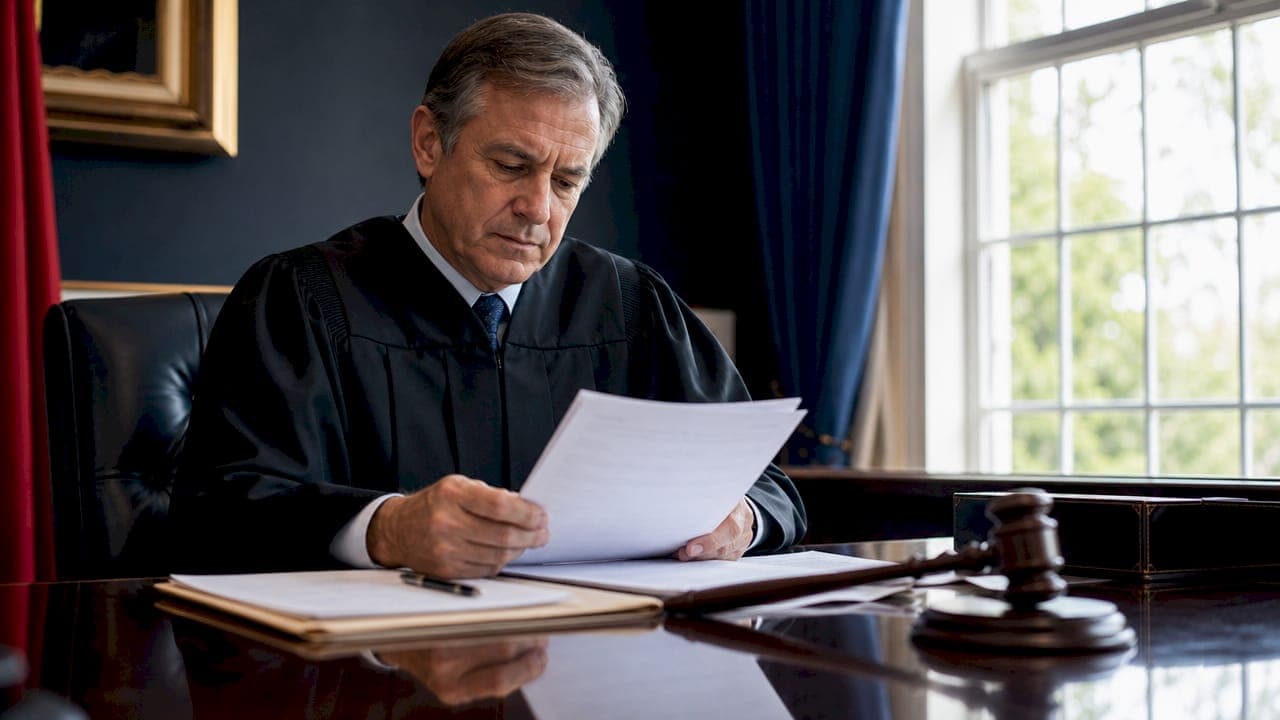
Bail is defined as a financial guarantee that a defendant will return to court after release from custody. The factors judges consider setting bail fall into four primary categories: the nature of the offense, the weight of the evidence, the defendant's personal history, and the danger posed to the community. These criteria are codified in federal law under 18 U.S.C. § 3142 and mirrored in most state statutes. Knowing how each factor works gives defendants and families a real advantage at the bail hearing.
1. What role does the offense play in bail decisions?
The nature and circumstances of the charged offense carry more weight than any other single factor in judicial bail assessment. Judges treat the offense as the starting point for measuring both flight risk and public safety concerns.
Violent crimes, weapons charges, and offenses with mandatory minimum sentences almost always produce higher bail or outright detention. A defendant charged with armed robbery faces a fundamentally different risk profile than one charged with petty theft. Violent crimes and mandatory minimums reflect a higher assessed risk for both community safety and flight.
Judges also weigh aggravating and mitigating elements within the charge itself. Aggravating factors include the use of a weapon, the vulnerability of the victim, or the presence of co-defendants. Mitigating factors include a first-time offense, the absence of physical harm, or circumstances suggesting the defendant acted under duress.
- Felony vs. misdemeanor: Felonies carry heavier bail schedules by default.
- Victim vulnerability: Crimes against children, the elderly, or domestic partners trigger heightened scrutiny.
- Weapon involvement: Any firearm or deadly weapon raises the risk score significantly.
- Offense category: Drug trafficking charges often carry preset bail amounts tied to quantity.
Pro Tip: Ask your attorney to identify any mitigating circumstances in the charge itself before the hearing. Presenting these proactively can shift the judge's starting point downward.
2. How does the weight of evidence affect bail?
The strength of the prosecution's case directly shapes what a judge believes the defendant will do if released. Strong evidence creates a stronger incentive to flee, which pushes bail higher.

Weight of evidence refers to how convincing the prosecution's proof appears at the time of the bail hearing. This is not a full trial assessment. Judges make a quick, preliminary judgment based on police reports, witness statements, and physical evidence available at that stage.
When evidence is strong, the flight risk assessment rises because the defendant has more to lose by staying. When evidence is weak or circumstantial, judges often set lower bail or consider nonmonetary release conditions. The evidence factor never operates alone. A defendant with overwhelming evidence against them but deep community roots may still receive moderate bail because the personal history factors pull in the opposite direction.
- Strong physical evidence: Surveillance footage, DNA, or a confession typically increases bail.
- Witness testimony: Credible eyewitnesses raise the prosecution's apparent case strength.
- Circumstantial evidence only: Weaker cases often support arguments for lower bail.
- Contested evidence: Defense attorneys can challenge evidence quality at the hearing to argue for reduced bail.
3. In what ways does personal history shape bail outcomes?
A defendant's personal background is the most detailed part of the judicial bail assessment. Judges look for stability indicators that predict whether the person will show up to court.
Community ties such as family connections, length of residence, stable employment, and property ownership reduce assessed flight risk. A defendant who has lived in the same city for ten years, holds a steady job, and has children in local schools presents a very different risk profile than someone with no local connections. Strong ties encourage more lenient bail conditions because the defendant has concrete reasons to stay.
Employment and financial resources also matter, but not in the way most families expect. Judges do not reward wealth. They assess whether the defendant has financial stability that anchors them to the community, and whether the proposed bail amount is actually meaningful as a deterrent.
- Length of local residence: Longer residency signals lower flight risk.
- Family ties: Dependents, spouses, and close relatives in the area work in the defendant's favor.
- Employment status: Steady employment shows community investment and financial responsibility.
- Prior failures to appear: Past failures to appear are among the most predictive factors in bail decisions and can override positive community ties.
- Criminal record: Prior convictions, especially for similar offenses, raise bail significantly.
- Mental health and substance use: Active untreated conditions may increase bail or trigger mandatory treatment conditions.
- Character references: Letters from employers, clergy, or community leaders can shift a judge's perception of reliability.
Pro Tip: Gather letters of support, proof of employment, and lease or mortgage documents before the bail hearing. Judges respond to concrete evidence of stability, not verbal assurances.
4. Why is danger to the community a critical bail factor?
Community safety is the factor most likely to result in bail denial. When a judge concludes that no bail amount or release condition can adequately protect the public, the defendant stays in custody.
Danger to others, including threats to victims or general public safety, can lead to denial of bail or very high bail amounts. Protective orders and documented violent behavior increase bail severity. This factor applies not just to strangers but also to witnesses, co-defendants, and family members who may be at risk.
"Liberty is the norm, and detention prior to trial or without trial is the carefully limited exception." This principle, drawn from the U.S. Supreme Court's ruling in United States v. Salerno, defines the constitutional floor for bail decisions. Judges must find a specific, articulable danger before denying bail outright.
Judges attach conditions to bail specifically to manage danger when it exists but does not justify full detention. Common conditions include:
- No-contact orders: Prohibit communication with victims or witnesses.
- GPS electronic monitoring: Tracks the defendant's location in real time.
- Surrender of firearms: Required for any weapons-related charge.
- Curfews: Restrict movement during high-risk hours.
- Check-ins with pretrial services: Regular reporting requirements to verify compliance.
5. How do risk assessment tools and finances factor into bail?
Modern bail hearings increasingly rely on structured tools alongside judicial instinct. Algorithmic risk assessments like the Public Safety Assessment score defendants by charge, prior convictions, and flight risk to inform bail recommendations. These tools supplement but do not replace judicial discretion.
Pretrial services agencies conduct interviews and risk assessments post-arrest, then provide judges with structured recommendations. Their reports cover employment, housing, substance use history, and prior court compliance. Judges use these reports as a starting framework, then apply their own judgment.
California's 2026 bail framework represents the most explicit financial accountability standard in the country. Courts must set reasonable bail considering financial ability, and liberty is the norm. Monetary bail must be justified as necessary over nonmonetary release conditions. Courts must explicitly state on the record why nonmonetary conditions are insufficient before imposing a cash requirement.
| Bail tool or condition | Primary purpose | When judges use it |
|---|---|---|
| Public Safety Assessment score | Predict flight risk and new criminal activity | At initial bail hearing |
| Pretrial services report | Provide background and risk context | Post-arrest, before hearing |
| Electronic monitoring | Manage danger without full detention | Moderate-risk defendants |
| Nonmonetary release conditions | Replace cash bail when financially unjust | Low-to-moderate risk cases |
| Monetary bail | Ensure court appearance through financial stake | When nonmonetary conditions are insufficient |
Defense attorneys often negotiate downward from bail schedules by citing personal and community factors, pushing bail below the fixed amounts assigned by law for specific charges. That negotiation is where preparation pays off.
Key Takeaways
The factors judges consider when setting bail create a risk profile that balances court appearance, community safety, and constitutional limits on pretrial detention.
| Point | Details |
|---|---|
| Offense nature sets the baseline | Violent crimes and mandatory minimums produce higher bail or detention by default. |
| Evidence strength signals flight risk | Strong prosecution evidence raises the incentive to flee, which drives bail higher. |
| Community ties lower bail | Stable employment, local residence, and family connections reduce assessed flight risk. |
| Danger can override all other factors | Documented threats to victims or the public can result in bail denial regardless of other positives. |
| California requires financial justification | Courts must state on record why cash bail is necessary over nonmonetary release conditions. |
What I've learned watching bail hearings play out
I've sat across from hundreds of families who walked into a bail hearing thinking the judge would just name a number. The reality is more nuanced, and understanding it changes everything about how you prepare.
The single biggest mistake I see is treating the bail hearing as passive. Families assume the attorney will handle it and nothing else is needed. But judges respond to evidence of stability, and that evidence has to be assembled before you walk into the courtroom. A letter from an employer, proof of a lease, a list of family members in the area. These are not formalities. They are the raw material a judge uses to build a mental picture of who the defendant actually is.
The second thing I've learned is that bail is a security deposit, not a fine. Courts generally refund bail after case completion. That framing matters because families sometimes accept high bail as inevitable, as if it were a punishment already being served. It is not. It is a negotiable number, and attorneys who understand the bail hearing process can often bring it down significantly by presenting the right personal history evidence.
My honest advice: do not wait until the morning of the hearing to gather documents. Start the moment your family member is arrested. The window between arrest and the first appearance is short, and the preparation you do in that window directly affects the outcome.
— Jake
Jakehernandezbailbonds is ready when you need help most
When bail is set and your family needs someone out of custody fast, Jakehernandezbailbonds operates 24/7 across all 58 California counties. There is no call center, no middleman, and no delay. You speak directly with a licensed agent who knows the local jail system and can move quickly.
Bonds range from $1,000 to $1,000,000, with 0% down options and payment plans available for qualified co-signers. Free consultations are available any time, day or night. Whether your family member is held at a facility in Los Angeles, San Diego, or anywhere in between, Jakehernandezbailbonds is equipped to secure release without unnecessary delays. Bilingual support is available for Spanish-speaking families. Call now and get answers within minutes.
FAQ
What are the main factors judges consider when setting bail?
Judges weigh four primary factors: the nature and severity of the offense, the weight of evidence against the defendant, the defendant's personal history and community ties, and the potential danger to the community. These criteria are codified in federal law under 18 U.S.C. § 3142.
Can a judge deny bail entirely?
Yes. When a judge determines that no bail amount or release condition can adequately protect the community or guarantee court appearance, the defendant can be held without bail. This outcome is most common in cases involving violent offenses, documented threats to witnesses, or a strong history of failing to appear.
How does a prior failure to appear affect bail?
Prior failures to appear are among the most predictive factors in bail decisions. A single documented failure to appear can result in significantly higher bail or outright denial, because it directly signals that the defendant may not return to court voluntarily.
Does financial ability affect how bail is set in California?
Yes. Under California's 2026 bail framework, courts must consider a defendant's financial ability when setting bail. Monetary bail must be justified as necessary over nonmonetary release conditions, and judges must state their reasoning on the record.
What can families do to help lower bail?
Families can gather concrete evidence of community ties before the hearing, including proof of employment, local residence, and family relationships. Character references from employers or community members also help. An attorney can present this evidence to argue for bail below the standard schedule.