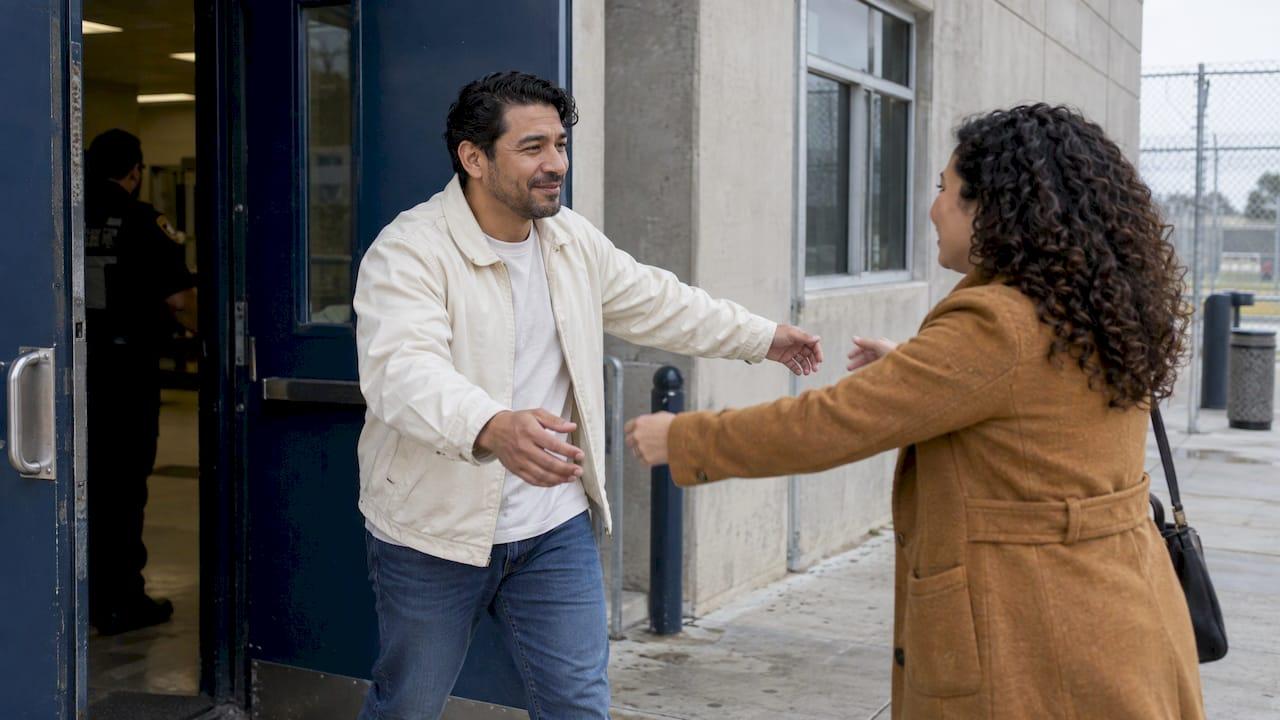
A trespassing arrest in California is usually a misdemeanor, and most people booked on it can get out quickly. How quickly depends on the county bail schedule, whether the jail releases on a promise to appear, and whether a co-signer posts a bond. If your family member is sitting in a cell right now, the fastest path is to learn the bail amount for the booking charge and call a licensed bondsman who can start the paperwork the same hour. We write bonds in all 58 California counties, consultations are free, and you can reach us 24/7.
This guide explains the charge, how the bail number is set, what your options are before and after the first court date, and what a bond costs. It is written for the person making the phone call: a parent, spouse, friend or attorney who needs a clear next step.
TL;DR
- Trespass under Penal Code 602 is generally a misdemeanor in California, and the county's bail schedule sets a presumptive amount for a warrantless arrest.
- Some people are released before seeing a judge, either on a promise to appear or on their own recognizance. Others need bail posted.
- A bail bond premium is 10% of the bail amount. Attorneys get an 8% rate, and qualified co-signers can ask about 0% down and payment plans.
- After the first appearance, a judge can raise, lower or waive bail, so the number on the booking sheet is not always final.
- Call us 24/7 with the person's full name, booking number and jail, and we will walk you through it.
Table of Contents
- Can you go to jail for trespassing in California?
- How bail is set after a trespassing arrest
- Ways out of jail after a trespassing arrest
- What a trespassing bail bond costs
- How to get someone out: a step-by-step plan
- When trespassing is not the only charge
- Getting the bond posted with us
- Our view: a trespass arrest should not become a crisis
- FAQ
- Sources
Can you go to jail for trespassing in California?
Yes. Penal Code 602 lists the specific acts that count as trespass, such as entering or staying on property without permission after notice. The statute says that, with specified exceptions, a person who willfully commits one of those acts is guilty of a misdemeanor. The text in force was effective January 1, 2024.
A misdemeanor is the lower tier of criminal offense, handled in county court. The San Francisco Superior Court lists trespassing among its examples of misdemeanors, which are punishable by a fine and/or up to one year in county jail. Actual sentences vary with the facts, the person's record and the county, and an attorney can speak to a specific case.
Trespass charges also come in different flavors. Someone might be arrested for staying in a closed business, entering a fenced lot, refusing to leave a property after being told to go, or being on posted land. The arrest can be made by an officer who sees it happen or on a property owner's complaint. In either case the person is booked into a county jail, and the question for the family becomes how fast they can come home.

How bail is set after a trespassing arrest
Bail is money (or a bond backed by a co-signer) that guarantees the defendant will come back to every court date. The California Courts self-help guide explains that bail is returned at the end of the case if the defendant appears. When a judge decides it, the guide says they weigh the type of crime, whether it involved domestic violence, public safety and the risk the person will not return.
Before any judge looks at the case, though, a number already exists: the county bail schedule.
The county bail schedule
Under Penal Code 1269b, every county's superior court judges must prepare, adopt and annually revise a uniform countywide bail schedule for felony and misdemeanor offenses. The Stanislaus County schedule effective January 1, 2026 states this plainly, and the Santa Barbara court's schedule effective June 2026 describes it as the presumptive bail for people arrested without a warrant until a judge reviews the case.
Two practical points follow:
- The number depends on the county. Each county publishes its own schedule, so a Penal Code 602 booking in Los Angeles County and one in Fresno County can carry different amounts. Ask the jail or the court's published schedule for the line that matches the exact charge on the booking sheet.
- The charge matters. Trespass is listed on the schedule by the specific subsection. If the person was booked for something more (for example, trespass plus another offense), the bail is driven by the more serious charge.
We do not quote a single statewide trespass bail figure, because no such figure exists. What we can do is read the schedule for your county's booking with you and tell you exactly what the premium would be.
Why the number can change
The schedule is a starting point. The Stanislaus schedule notes that after the first appearance the court may set bail above or below the schedule under Penal Code 1275, looking at public safety, seriousness of the offense, criminal history and the probability the person will appear. The Santa Barbara schedule describes a pre-arraignment review in which a judicial officer, using a risk assessment report, can release a person on their own recognizance, release them on $0 money bail with non-financial conditions, set money bail, or defer the release decision to arraignment.
Some offenses require a hearing in open court before bail can differ from the schedule. The Alameda County 2024 schedule marks those offenses with an asterisk under Penal Code 1270.1. Penal Code 602 trespass is listed without one, which means the ordinary schedule process applies to a standard trespass booking there.
If a judge orders a bail source hearing, that is a different matter. We cover it in our guide to a PC 1275 hold, which is a specialty of ours.
Ways out of jail after a trespassing arrest
Bail is only one of several routes. Knowing the others helps you avoid paying for something you do not need, and it tells you what to ask when you call the jail.
Before the first court appearance
The Stanislaus schedule explains that a booked arrestee can be released before the first court date in two ways: jail deputies can release eligible people on a promise to appear, or a judicial officer can release them on their own recognizance (OR), meaning no money, just a written promise to return. For a low-level misdemeanor like trespass, this does happen. If it does, no bond is needed.
If the person is not released that way, the scheduled bail applies and a bond is the usual solution. Some people are ineligible for pre-court release altogether, including those facing serious or violent felonies and certain other listed offenses. A simple trespass is not on that list by itself, but a booking that adds other charges can change the picture.
At arraignment
Arraignment is the first court hearing, where the charge is read and bail is addressed. The California Courts guide lists four outcomes: release on own recognizance, supervised release such as home detention or an ankle monitor, bail with the person staying in jail until it is posted, or no bail and continued detention.

California law also limits how bail can be used. According to the San Francisco Superior Court's bail fact sheet, under the California Supreme Court's Humphrey decision a court may not hold someone solely because they cannot afford bail, and it must consider ability to pay when bail is needed. People who plead not guilty generally have a right to release or affordable bail before trial, with limited exceptions.
That is useful for a family to know, and it is a reason to have an attorney at the arraignment. If your loved one has a lawyer, tell us. Attorneys have their own rate with us, covered below.
What a trespassing bail bond costs
When bail is set and the family cannot or does not want to put up the full amount in cash, a bail bond is how it works. You pay a premium to a licensed bondsman, a co-signer takes responsibility for the defendant's appearance, and the bondsman posts the bond with the jail.
Our premium is 10% of the bail amount. Attorneys are charged 8% on the same page, and the attorney discount is applied automatically. Here is a worked example with a hypothetical number (not a quote for any county):
| Scheduled bail | 10% premium | Attorney rate (8%) |
|---|---|---|
| $2,500 | $250 | $200 |
| $5,000 | $500 | $400 |
| $10,000 | $1,000 | $800 |
The premium is the fee for the service. For cases where cash up front is tight, qualified co-signers can ask us about 0% down and payment plans, and we also offer $500 down bail bonds. Military discounts are available too. Because the offer depends on the co-signer, the quickest way to know what you qualify for is a free consultation.
One point about refunds: a bill in the Legislature, SB 562, would require premium refunds in some situations where charges are dismissed or never filed. According to the official bill status page, as of August 13, 2026 it was held in the Assembly Appropriations Committee. It is pending legislation, not law, so do not count on it when budgeting.
How to get someone out: a step-by-step plan
Here is the sequence that gets a person out fastest, and where each step tends to go wrong.
- Confirm where the person is held and the booking charge. You need the full legal name, date of birth, the jail and, ideally, the booking number. Families lose time when they call a city police station when the person has already been moved to the county jail. Where it goes wrong: a name spelled differently from the booking record.
- Find the bail amount. The county's schedule gives the presumptive figure, but the jail's own inmate lookup shows what is attached to this booking. Where it goes wrong: assuming the amount is final when a judge may change it later.
- Ask whether a release on a promise to appear or OR is possible. If the person is eligible, the jail may release them without money. A bond is then unnecessary. Our team can tell you which situation you are in when you call.
- Choose the person who will co-sign. The co-signer is usually a family member or close friend with steady income or other ties to the area. They promise to make sure the defendant attends court. If you live out of state, see our guide to bailing someone out from another state.
- Start the paperwork. With us, much of it can be done through our online bail bonds process, so the co-signer does not need to drive to an office in the middle of the night. We have offices in major cities and take calls 24/7, in English, Spanish, Hindi and Arabic.
- Pay the premium or set up the plan. This is where qualified co-signers ask about 0% down or a payment plan.
- Wait for processing and release. Jail processing time varies by facility and by how busy the booking desk is. It is not something a bondsman controls, but speaking with someone who posts bonds in your county every week helps you set expectations.
- Make every court date. The bond lasts as long as the case does. A missed date can lead to a bench warrant and forfeiture of the bond, so keep the date list somewhere safe. If a warrant has already been issued, see our page on bench warrant bail bonds. For the whole process in one place, read how bail bonds work in California.
Our misdemeanor bail bonds page covers the same process for other low-level charges, and if the booking includes felony counts, see felony bail bonds.
When trespassing is not the only charge
Trespass often appears alongside something else: burglary when someone is accused of entering to steal, a drug charge found during the arrest, or an assault allegation from an argument on the property. That changes the bail number, the court process and the questions you need to ask.
If you are in that situation, these pages explain the related charges: burglary bail in California, assault bail bonds, and drug charge bail bonds. If the person is not a U.S. citizen, read about bail bonds for undocumented immigrants in California, since an immigration hold is handled differently from a criminal bail bond. We also handle federal and immigration bonds.
Getting the bond posted with us
We are a licensed bail bond company serving all 58 California counties. When you call, you speak with us directly, not a call center and not a middleman. Consultations are free. We cover all jail types and charge categories, from a simple misdemeanor to complex holds, with bonds from $1,000 to $1,000,000, and our support is bilingual.
The co-signer's call is the one that matters most. Have the defendant's name, date of birth, jail and booking number ready, and tell us your situation: whether you need 0% down, whether an attorney is involved, whether you are in another state. Start at jakehernandezbailbonds.com or see exactly how the 10% premium and attorney rate work on our bail bond cost page.
We stay with you through each court date, so the person you bail out keeps the bond in good standing.
Our view: a trespass arrest should not become a crisis
Most trespassing arrests we hear about are not the stories people imagine. It is a man who stayed in a parking lot after closing, a student on a fenced field, a worker who was told to leave a site and did not. The person is scared, the family is scared, and the first thing everyone asks is how fast they can be home.
We believe the answer should come from a person who knows the county, not from a script. That is why we work directly with each co-signer, tell them the real premium in plain numbers, and explain what the paperwork means before they sign. The premium is 10%, the attorney rate is 8%, and if you qualify as a co-signer you can ask about 0% down and a payment plan. We would rather spend ten minutes making sure you understand the obligation than rush you into it.
Misdemeanor cases still demand attention to court dates. We guide every client through each one, because a bond that stays in good standing is the point. And because we serve families in Spanish, Hindi and Arabic as well as English, no one has to translate a legal document at 2 a.m. for their parent.
Jake
FAQ
Can you go to jail for trespassing in California?
Yes. Penal Code 602 makes the listed trespass acts a misdemeanor, which can carry a fine and/or up to one year in county jail according to the San Francisco Superior Court. Many people are released before trial, and sentences depend on the facts of the case and the county. An attorney can advise on your specific charge.
Does bail still exist in California?
Yes. Bail is still used, but judges and counties now weigh alternatives. The court may release a person on their own recognizance, add supervised release, set money bail, or in limited cases hold the person. Under Humphrey, a court must consider ability to pay when it sets bail.
How much is bail for trespassing?
It depends on the county and the exact charge. Each county's superior court adopts a bail schedule under Penal Code 1269b, and a judge can change the amount after the first appearance. Call us with the booking details and we will read the schedule with you and tell you what the 10% premium would be.
Do I need a bail bond if the person can be released on a promise to appear?
No. If the jail releases the person on a promise to appear or a judge releases them on their own recognizance, no bond is needed. If neither happens and bail is set, a bond lets the co-signer secure release by paying the premium instead of the full amount.
Can a family member in another state arrange the bond?
Yes. We handle bonds online and by phone, so a co-signer outside California can start the process without traveling. Call us any time, day or night, and we will tell you what is needed.
Sources
- California Penal Code section 602
- Superior Court of California, County of San Francisco: Criminal division
- Stanislaus County Superior Court Bail Schedule, effective January 1, 2026
- Santa Barbara Superior Court Bail Schedule, effective June 2026
- Alameda County 2024 Misdemeanor and Felony Bail Schedule
- California Courts Self-Help Guide: The arraignment
- San Francisco Superior Court bail fact sheet, 2024
- Bill Status: SB-562 Bail