A bail hearing is a court proceeding where a judge decides whether a defendant can be released from custody before trial, and under what conditions. Understanding bail hearing what to expect gives you a real advantage when time is short and the stakes are high. Defendants generally must appear before a judge for a bail determination within 48–72 hours of arrest. That window is narrow. What you do before and during that hearing shapes the outcome more than most families realize.
What happens at a bail hearing: step-by-step overview
The bail hearing process is not a trial. It is a focused proceeding where the judge weighs one question: can this person be released safely while the case moves forward?
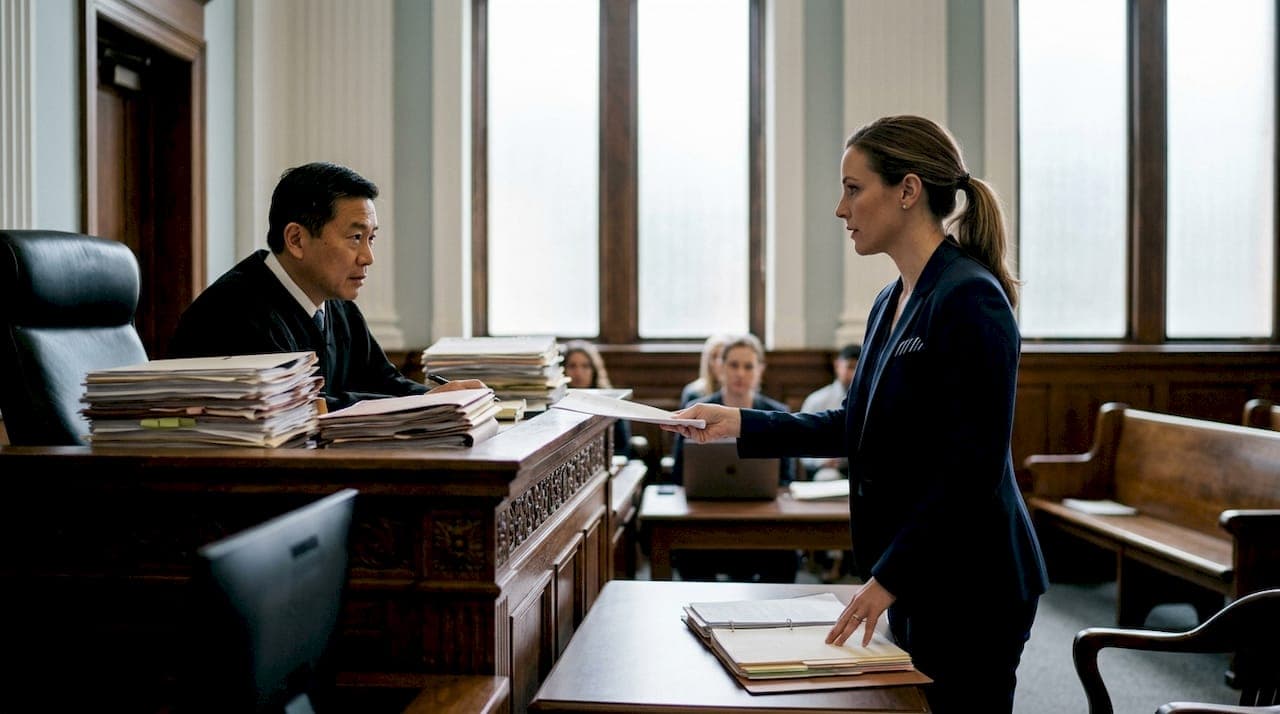
The hearing typically involves the judge, the prosecutor, defense counsel, and the defendant. Family members may sit in the gallery. The prosecutor presents the charges and argues why the defendant poses a flight risk or a danger to the public. Defense counsel responds by presenting evidence of stability, community ties, and a credible release plan. Prosecutors often rely on proffers, which are unsworn oral statements about case facts, rather than formal trial evidence, because the hearing moves fast.
The judge then chooses from several options:
- Release on recognizance (ROR): The defendant is released with no monetary bail, based on a promise to appear.
- Monetary bail: The judge sets a dollar amount the defendant or family must post to secure release.
- Conditional release: The judge sets bail with attached conditions such as travel restrictions or check-ins.
- Detention: The judge denies bail entirely if the risk is too high.
Most hearings last between 15 and 30 minutes. The atmosphere is formal but not theatrical. Speak only when addressed, and let your attorney do the talking.
Pro Tip: Arrive early, dress conservatively, and bring your attorney's contact information. First impressions in a courtroom carry real weight.
What factors does a judge consider when setting bail?
Judges do not set bail randomly. They evaluate a defined set of factors, and knowing those factors helps you prepare the right evidence.
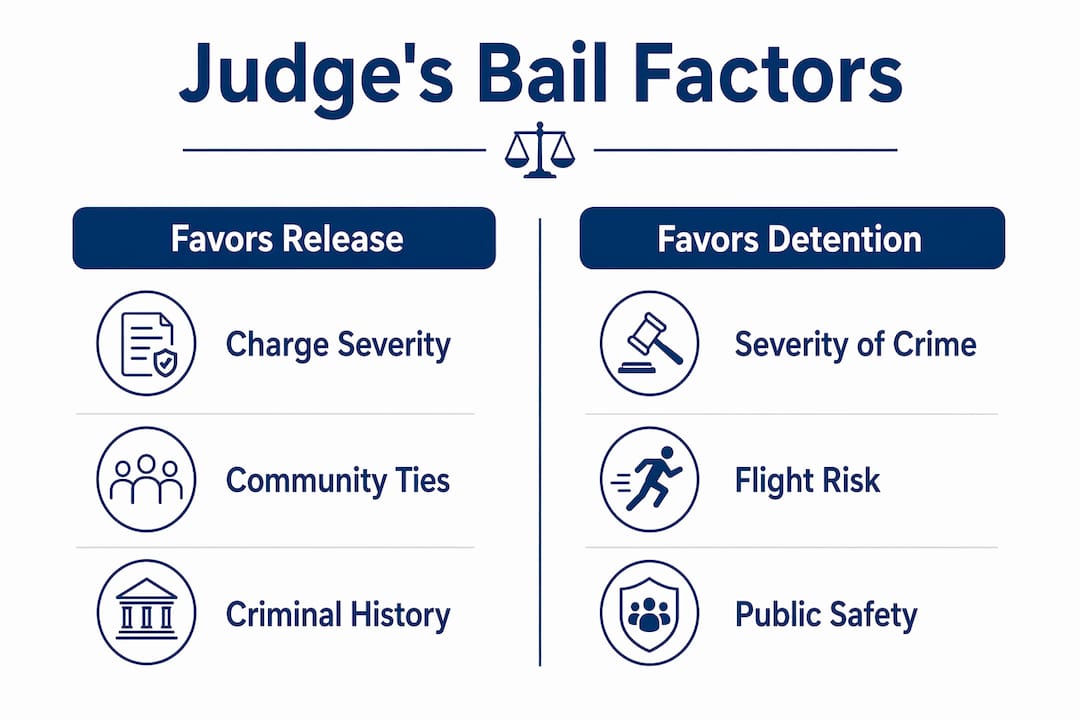
Judges weigh statutory factors including the severity of the charges, the defendant's criminal history, the risk of flight, and the potential danger to the public or specific victims. Local ties like residency proof and employment documents strongly influence the decision. A defendant with a stable address, a steady job, and family in the area looks very different from one with no roots in the community.
Key factors judges evaluate:
- Severity of charges: Violent or serious felonies carry a higher presumption of risk.
- Prior criminal record: Prior failures to appear in court weigh heavily against release.
- Flight risk: Lack of local ties, travel history, or access to resources abroad raises concern.
- Public safety: Charges involving weapons, domestic violence, or repeat offenses trigger extra scrutiny.
- Community ties: Stable housing, employment, and family relationships support release.
- Pretrial services report: This report shapes bail decisions more than most courtroom arguments. Be honest with the pretrial officer during your interview.
For a deeper breakdown of how courts weigh each criterion, the factors judges use setting bail guide from Jakehernandezbailbonds covers the 2026 California standards in detail.
| Factor | Favors Release | Favors Higher Bail or Detention |
|---|---|---|
| Charge severity | Misdemeanor or nonviolent felony | Violent or serious felony |
| Criminal history | Clean record or minor prior offenses | Prior failures to appear, prior convictions |
| Community ties | Local address, family, steady employment | No local ties, transient lifestyle |
| Flight risk | Surrendered passport, limited travel history | Access to foreign resources, prior flight |
| Public safety | No victim concerns, no weapons charges | Restraining orders, weapon involvement |
How to prepare for a bail hearing: documents and conduct
Preparation is the single biggest variable you can control before the hearing. A well-organized presentation signals stability and responsibility to the judge.

Gather proof of identity, residency, employment, and any medical treatment into one folder or envelope. Experts recommend keeping everything in a single packet so your attorney can present it efficiently without fumbling. Character letters from employers, clergy, or community leaders add weight. These letters should be brief, specific, and signed.
Steps to take before the hearing:
- Collect a government-issued photo ID, lease or utility bills showing your address, and recent pay stubs or an employer letter.
- Ask two or three people who know you well to write short character letters describing your reliability and community involvement.
- Brief your family on courtroom behavior. Supportive family members in the gallery signal stable structure to the judge. They should dress professionally and stay quiet.
- Do not discuss case details on jail phones. Recorded jail calls can be used by prosecutors to argue for higher bail or detention.
- Never hand documents directly to the judge. All evidence goes through your attorney to maintain proper courtroom procedure.
Pro Tip: Tell your attorney everything, including details that feel embarrassing. They cannot build a strong release plan around facts they do not know.
Family members play a bigger role than most people expect. Read the family bail hearing guide from Jakehernandezbailbonds for specific advice on how to show up and what to avoid.
What are the common bail hearing outcomes?
The hearing ends with one of three results: release, bail with conditions, or detention. Each outcome carries a different set of next steps.
Release on recognizance means the judge trusts the defendant to return without a financial guarantee. This outcome is most common for first-time offenders facing nonviolent charges with strong community ties. Monetary bail means the defendant or a co-signer must post the full amount or work with a licensed bail bond agent to secure release. Bail amounts reflect assessed risk, not punishment. A high number does not mean the judge thinks you are guilty.
Common conditions courts attach to release include:
- Travel restrictions, including surrendering a passport
- GPS monitoring or electronic ankle bracelet
- Regular check-ins with a pretrial officer
- Curfews or home confinement
- No contact orders with alleged victims or witnesses
If bail is set too high, you have options. A bail reduction hearing allows your attorney to argue for a lower amount based on changed circumstances or new evidence. Acting fast matters. Delays in bail hearings harm employment, housing, and family stability, and the same logic applies to delays in pursuing a reduction. Violating any bail condition can result in immediate revocation and return to custody, so take every condition seriously from day one.
Key Takeaways
A bail hearing is a judge's structured assessment of flight risk and public safety, and thorough preparation is the most reliable way to improve the outcome.
| Point | Details |
|---|---|
| Timing is tight | Hearings occur within 48–72 hours of arrest, leaving little time to prepare. |
| Preparation wins hearings | Bring identity, residency, employment proof, and character letters in one organized folder. |
| Judges read the room | Professional dress and calm, supportive family in the gallery positively influence bail decisions. |
| Pretrial reports carry weight | Be fully honest with the pretrial officer; their report often shapes the judge's decision more than arguments. |
| High bail is not final | A bail reduction hearing can lower an unaffordable amount if your attorney acts quickly. |
What I've learned after years of watching bail hearings unfold
The families I work with at Jakehernandezbailbonds often arrive at the bail hearing stage in a state of panic. That panic is understandable. What I tell them every time is this: the hearing is not about guilt. It is about one thing only, and that is whether the judge believes the defendant will show up and stay out of trouble.
The most common mistake I see is treating the bail hearing like a mini-trial. Defendants and families want to argue innocence, explain what really happened, or challenge the charges. That is the wrong fight for this moment. A strong showing at a bail hearing comes from presenting a clear, factual release plan: here is where I live, here is where I work, here is who will make sure I appear. That is what moves judges.
Visual cues matter more than people expect. Judges respond to respectful courtroom demeanor and the presence of calm, well-dressed family members. I have seen bail amounts drop simply because a defendant's employer showed up and said, "This person has a job waiting." That is not a legal argument. It is a human one, and it works.
My honest advice: do not wait until the morning of the hearing to organize your documents or brief your family. The defendants who walk out of that courtroom are the ones whose families spent the night before preparing, not panicking.
— Jake
Jakehernandezbailbonds is ready when bail is set
Once the judge sets bail, the clock starts. Every hour in custody costs a defendant their job, their routine, and their ability to help build their own defense.
Jakehernandezbailbonds operates 24/7 across all 58 California counties, with 0% down bail bond options available for qualified co-signers. Bonds range from $1,000 to $1,000,000, and payment plans are available so cost does not stand between your family and a release. There are no call center middlemen here. You speak directly with a licensed agent who knows local jail and court procedures. If you need walk-in service near a specific facility, Jakehernandezbailbonds has walk-in locations near major jails across California. Call anytime. Consultations are free, bilingual, and available right now.
FAQ
What is a bail hearing?
A bail hearing is a court proceeding where a judge decides whether a defendant can be released from custody before trial and under what conditions. The hearing focuses on flight risk and public safety, not guilt or innocence.
How long does a bail hearing take?
Most bail hearings last between 15 and 30 minutes. The judge hears arguments from both sides and issues a decision the same day.
Can bail be reduced after it is set?
Yes. Your attorney can file a motion for a bail reduction hearing if the original amount is unaffordable or circumstances have changed. Acting quickly improves the odds of a favorable result.
What should I bring to a bail hearing?
Bring proof of identity, residency, and employment, along with character letters from employers or community members. Keep everything in one organized folder and let your attorney present it to the court.
What happens if bail is denied?
If a judge denies bail, the defendant remains in custody until trial. Your attorney can appeal the decision or request a new hearing if new evidence or changed circumstances support release.