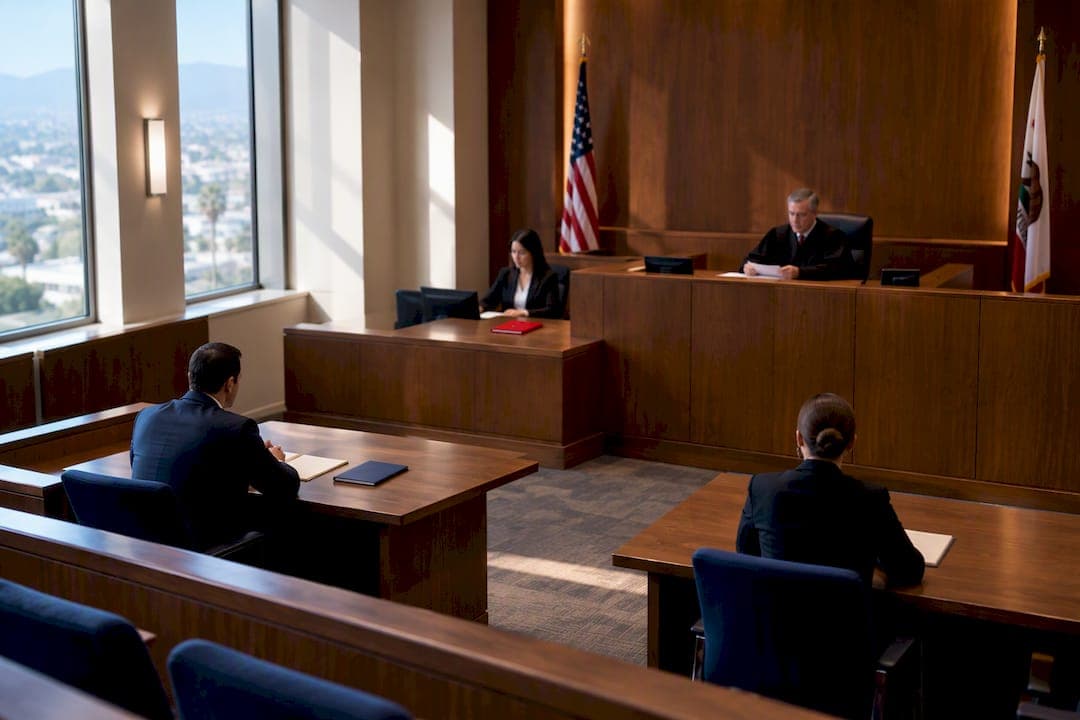
Bail for firearm charges in California is typically set high, follows county bail schedules that assign specific dollar amounts to specific Penal Code sections, and gets pushed upward by any allegation involving public safety risk. Judges weigh firearm use as a serious factor under state law, and cases involving violent felony enhancements often trigger a mandatory open-court hearing before release. If someone in your family needs out fast, the two moves that matter most are contacting a licensed bail bonds service and gathering evidence for a possible bail reduction hearing.
TL;DR:
- Bail amounts for firearm charges vary widely based on the specific Penal Code section, county bail schedules, and whether enhancements or prior convictions apply.
- Higher bail is often set for charges involving discharge, injury, or threat, with some cases reaching into the hundreds of thousands or even a million dollars.
- A mandatory open-court hearing under Penal Code 1270.1 is required for serious or violent firearm felonies, giving the defense a chance to argue for lower bail or alternative release.
- Quick release options include commercial bonds, cash bail, or pretrial services, with bonds often processed within hours if paperwork is prepared in advance.
- In extreme cases, bail can be denied entirely when public safety is deemed at high risk, based on evidence like prior violent convictions or credible threats.
Table of Contents
- How Much Is Bail for a Firearm Charge in California?
- What Laws Control Bail in Firearm Cases?
- What Are Your Options for Getting Out After a Firearm Arrest?
- How Do You Prepare for a Bail Reduction Hearing?
- What Happens After Release on a Firearm Charge?
- When Can a Judge Deny Bail Entirely?
- What Actually Happens, Hour by Hour, After a Firearm Arrest?
- Does Bail Differ Between Types of Firearm Charges?
- Have Recent Bail Reforms Changed Firearm Cases?
- What Should You Expect Walking Into a Bail Hearing?
- Practitioner Perspective: What Actually Gets People Out Fast
- How Jake Hernandez Bail Bonds Gets You Out Faster
- Sources
- FAQ
How Much Is Bail for a Firearm Charge in California?
There's no single number. Bail for a firearm charge in California depends on the exact Penal Code section charged, whether there's an enhancement attached, and which county's schedule applies. Each of California's 58 counties publishes its own bail schedule, and while the amounts trend similarly for comparable charges, they're not identical.

Simple possession charges tend to sit in the lower range of felony bail. Charges that involve pointing, firing, or using a gun during another crime climb fast. Once you add an enhancement, like personal use of a firearm during a felony or discharge causing great bodily injury, the number can jump into six figures within a single case.
Here's how that plays out using published amounts from actual county schedules:
| Charge (Penal Code section) | Typical offense description | Example scheduled bail |
|---|---|---|
| PC 29800 | Felon in possession of a firearm | a range of tens of thousands of dollars |
| PC 417 | Brandishing/exhibiting a firearm | a range of tens of thousands of dollars |
| PC 245(a)(2) | Assault with a firearm | typically around seventy-five thousand dollars |
| PC 246 | Shooting at an inhabited dwelling | around two hundred fifty thousand dollars |
| PC 12022.53 | Firearm discharge causing great bodily injury (enhancement) | up to one million dollars |
Figures above reflect examples published in the San Bernardino County felony-misdemeanor bail schedule and the Solano County bail schedule. Other counties, including Yuba County, publish comparable ranges for the same charges, though exact dollar figures vary by jurisdiction.
A few things drive these numbers higher than the base schedule amount:
- Multiple counts stack. Two separate firearm charges from the same arrest can mean two separate bail amounts added together, not averaged.
- Enhancements attach separately from the underlying charge. A PC 246 charge with a discharge enhancement doesn't just add a little. It can multiply the total exposure several times over.
- Prior convictions, especially prior violent or firearm-related felonies, often push a judge to set bail above the schedule amount entirely.
- Arresting officers can request bail above the published schedule at booking through a declaration when they believe public safety requires it, under the state's statutory bail framework.
None of this is fixed. County schedules exist as a starting point for arraignment and initial booking, not a ceiling or floor a judge is required to follow once the case is in court. If you want a closer read on how these numbers apply to your specific charge, this breakdown of gun charge bail in California walks through more scenario-specific examples.
What Laws Control Bail in Firearm Cases?
Two statutes do most of the work here, and both were written with public safety, not just flight risk, in mind.
Penal Code 1275 tells judges that public safety is the primary consideration when setting, reducing, or denying bail, and it specifically directs courts to weigh whether a firearm was used in the alleged offense as part of judging how serious the crime is. That single line in PC 1275 is why firearm cases routinely see higher bail than property or drug cases with similar sentencing exposure. A judge isn't just asking "will this person show up to court." They're asking "is releasing this person a risk to anyone right now."
Penal Code 1270.1 kicks in for serious or violent felonies, which covers a large share of gun charges once an enhancement is involved. It requires an open-court hearing before someone can be released on bail or their own recognizance, and it requires two court days' notice to both the prosecution and defense before a judge can set bail at an amount different from the schedule. This is the hearing that decides whether your bail stays at the scheduled number, drops, or climbs. The notice requirement under PC 1270.1 matters practically: it gives your attorney a real window to prepare mitigation evidence rather than walking into a hearing cold.
At that hearing, judges typically weigh:
- How serious the alleged offense is, including whether a weapon was fired, displayed, or used to threaten someone
- Whether the alleged victim suffered injury or was placed in fear
- The defendant's criminal history, particularly prior violent or firearm-related convictions
- The likelihood the defendant will appear for future court dates
- Findings from a pretrial risk assessment, where the county uses one
Judicial Council form CR-104 requires the court to make these findings on the record rather than simply reciting a schedule number, which means the judge has to articulate why a given bail amount or release condition addresses the actual risk in front of them. If a firearm was allegedly involved, expect that finding to be explicit. Cases involving a 1275 hold specifically add another layer, since those holds require the source of bail funds to be verified before release, which can add time even after bail is technically posted.
What Are Your Options for Getting Out After a Firearm Arrest?
You've got four real paths to release, and they don't all move at the same speed.
- Post cash bail directly with the court. This means paying the full scheduled or ordered amount yourself, and you get it back (minus court fees) if the case resolves and all appearances are made. Few families have that kind of cash sitting around for a typically around seventy-five thousand dollars or around two hundred fifty thousand dollars bail.
- Use a commercial bail bond. A licensed bondsman posts the full bail amount on your behalf in exchange for a premium, capped by law at commonly 10% of the bail amount, with some agencies offering an 8% rate when the defendant is already represented by an attorney. The premium isn't refundable, but it's a fraction of what cash bail would require upfront.
- Request release on own recognizance (OR). No money changes hands. This is more common for lower-level possession charges without enhancements, and far less likely once a violent felony enhancement is on the table, since PC 1270.1's hearing requirement exists specifically to scrutinize these releases in serious cases.
- Ask for a referral to pretrial services. Many counties use risk-assessment tools to recommend supervised release with conditions instead of money bail. The Judicial Council's pretrial release program reporting shows courts increasingly rely on these tools, though monetary bail still accounts for a large share of releases statewide.
Timing varies a lot by method. A commercial bond can often get someone released within a few hours of the bond being posted, once booking is complete. Cash bail takes as long as it takes you to physically get the funds to the court or jail. OR release and pretrial referrals depend entirely on the court's calendar and the required PC 1270.1 hearing, which can mean a 24 to 48-hour wait tied to the next available court date.
Pro Tip: Call a bail bondsman before the arraignment, not after. Agents can often start paperwork the moment they have the booking number, which shaves real time off release once bail is actually set.
How Do You Prepare for a Bail Reduction Hearing?
The judge isn't looking for character testimony. They're looking for concrete reasons the public-safety risk they're required to weigh under PC 1275 is lower than the schedule assumes.
Gather this before the hearing, not during it:
- Proof of stable employment, including pay stubs or a letter from an employer confirming the job is still there
- Proof of stable housing, ideally a lease or mortgage statement showing local ties
- Letters or documentation showing family and community ties, particularly if the defendant is a primary caregiver
- Documentation of any ongoing treatment, whether mental health, substance use, or medical, that shows a structured routine
- A clean explanation of why the defendant is not a flight risk, including any surrendered passport or lack of travel history
Because PC 1270.1 requires two court days' notice before a hearing can set bail differently from the schedule, your window to assemble this material is short. Coordinate with defense counsel immediately after arrest, since they'll need to file the request and gather statements within that window. For a more detailed walkthrough of what judges respond to, this guide to bail reduction hearing practices covers the sequencing in more depth. Expect the hearing itself to be brief. The judge reads submitted materials, hears brief argument from both sides, and issues findings on the record.
What Happens After Release on a Firearm Charge?
Release rarely means no strings attached, especially in gun cases. Common conditions include:
- Surrendering any firearms currently owned, even ones unrelated to the charge
- Stay-away orders if there's an alleged victim
- Travel restrictions, sometimes requiring a passport surrender
- GPS monitoring or check-ins with pretrial services, particularly when OR release was granted instead of bail
Missing a court date has serious financial consequences. If a defendant fails to appear, the court can order bail forfeited, and a bail agent typically has a limited window, often around 180 days, to locate the defendant and return them to court before the forfeiture becomes a final judgment against the bond company and any co-signer. That's the point where collateral matters. On a around two hundred fifty thousand dollars or $1,000,000 bond, a bondsman will usually require collateral, property, a vehicle title, or other security, from the co-signer before posting. If the case is skipped, that collateral is what's at risk, not just the premium already paid.
When Can a Judge Deny Bail Entirely?
California's default is release on the least restrictive conditions necessary, following In re Humphrey, which requires courts to consider a person's ability to pay before setting bail as a condition of release. But that presumption isn't absolute. A judge can deny bail or set it far above any published schedule when clear and convincing evidence shows no condition of release can protect public safety, particularly with prior violent convictions, credible threats, or a strong likelihood of great bodily harm. In those cases, the court must state its findings on the record, not just cite a number.
What Actually Happens, Hour by Hour, After a Firearm Arrest?
Booking starts the clock. Once someone is arrested on a firearm charge, jail staff process fingerprints, photos, and charges, and an arresting officer can request bail above the standard county schedule at this stage through a declaration if they believe the case poses a heightened public safety risk under the statutory bail framework.
For charges that don't trigger the PC 1270.1 hearing requirement, bail is often set immediately from the county schedule, meaning release can happen as soon as bail is posted, sometimes within hours.
For serious or violent felony firearm charges, the case is different. No release happens until the open-court hearing required by PC 1270.1 takes place, and prosecution and defense both get two court days' notice if either side wants bail set differently than the schedule. Arraignment typically happens within 48 hours of arrest (excluding weekends and holidays), and the bail hearing is often folded into that same court date.
After the hearing, the judge issues findings, sets or affirms the bail amount, and the release process, whether by bond, cash, or OR, begins. From there, timing depends entirely on how fast the money or paperwork moves. A prepared bail bond agent working with a booking number can sometimes complete the release within hours of the court's decision, while cash bail or family coordination across counties tends to take longer.
Does Bail Differ Between Types of Firearm Charges?
Significantly, and the difference usually comes down to whether the charge involves mere possession or active use of a weapon.
Possession-based charges, like being a felon in possession under PC 29800 or carrying a loaded firearm in public, sit at the lower end of firearm-related bail because no victim was directly threatened. Brandishing or exhibiting a firearm under PC 417 climbs higher because it involves an alleged direct threat, even without physical injury.
Charges where a firearm was used against a person, like assault with a firearm under PC 245(a)(2), jump substantially because PC 1275 requires judges to weigh both the seriousness of the offense and any victim injury. Charges involving discharge of a firearm, shooting at an inhabited dwelling under PC 246, or shooting from a vehicle, sit at the top of the range because they carry an inherent risk of death or great bodily injury regardless of whether anyone was actually hit.
Enhancements change the math further. A PC 12022.53 discharge enhancement attached to an underlying felony doesn't replace the base charge's bail. It stacks on top of it, which is how a single case can carry bail exposure into the hundreds of thousands or, in the most severe great-bodily-injury cases, up to $1,000,000. If you're facing a felony-level charge with any enhancement attached, it's worth reviewing options through a felony bail bonds resource that addresses higher-dollar releases specifically.
Have Recent Bail Reforms Changed Firearm Cases?
Not as much as many people assume. Proposition 25, which would have replaced money bail statewide with a risk-based system, was rejected by California voters in 2020, meaning the money bail system, including county bail schedules, remains in place today. SB 10, the legislation Proposition 25 was a referendum on, never took effect for that same reason.
What has changed is how courts weigh ability to pay. Following the California Supreme Court's ruling in In re Humphrey, judges are now required to consider a defendant's financial circumstances before setting bail as a condition of release, and to consider nonmonetary alternatives when they'd adequately protect public safety. The Judicial Council's pretrial services reporting confirms counties are leaning more heavily on risk-assessment tools for lower-level cases as a result.
For firearm charges specifically, this shift hasn't loosened much. Because PC 1275 already directs judges to prioritize public safety and specifically consider firearm use, gun cases were already being scrutinized under the standard Humphrey now requires for everyone else. The practical effect is more paperwork and more explicit findings on the record, not lower bail for serious firearm allegations.
What Should You Expect Walking Into a Bail Hearing?
If your case involves a violent felony firearm charge, know your hearing rights going in. You're entitled to have your attorney present, to receive two court days' notice if the prosecution or defense is asking for bail different from the schedule, and to have the judge state findings on the record rather than issue a number without explanation.
The typical sequence: the judge reviews the charges and any risk-assessment report, hears brief arguments from the prosecution about public safety concerns and from defense counsel about mitigating factors, then issues a ruling with stated reasons. You or your family member has the right to be present, and the right to have evidence of community ties, employment, and lack of flight risk actually considered, not just a database bail figure applied by default.
Bring your attorney into the process immediately after arrest rather than waiting for arraignment. The two-day notice window under PC 1270.1 moves fast, and mitigation evidence submitted late often doesn't make it into the judge's decision. If bail is set at the hearing and you're ready to move on release, having a bail agent already lined up means the paperwork can start the moment the judge's order is entered.
Practitioner Perspective: What Actually Gets People Out Fast
Families often treat a high bail number as a verdict on guilt. It isn't. It's a public-safety calculation, and the fastest releases happen when families stop arguing the case and start documenting stability: a job, a lease, a family that needs them home. Speed matters more than most people expect. Having collateral ready and counsel coordinated before the hearing, not after, is what actually moves the timeline. A statewide, 24/7 bail service exists precisely for that window when hours count.
— Jake
How Jake Hernandez Bail Bonds Gets You Out Faster
Jake Hernandez Bail Bonds is the direct alternative to sitting on hold with a call center while a bail schedule number keeps ticking against your family. Licensed across all 58 California counties, the service handles firearm charges from simple possession up through felony enhancements carrying six and seven-figure bail, including 1275 holds that require verified funds before release.
Qualified co-signers can access 0% down and structured payment plans instead of coming up with a full premium upfront, and cases with attorney representation may qualify for the an 8% rate attorney discount instead of the standard commonly 10% premium. Consultations are free and available 24/7, in English and Spanish, and support extends through every required court date, not just the initial release. Have the booking number, the facility name, and the exact charge ready when you call. If the bail amount is high enough to require collateral, the team will walk you through exactly what qualifies before you commit to anything. Start with a free consultation through Jake Hernandez Bail Bonds to see what release actually costs in your specific case.
This article is general information, not a substitute for advice from a qualified lawyer. Consult a qualified legal professional about your own circumstances before acting on anything here.
Sources
- California Penal Code §1275 — Justia
- California Penal Code §1270.1 — FindLaw
- San Bernardino County felony-misdemeanor bail schedule (2026)
- Solano County bail schedule (2026)
FAQ
How much would bail be for a gun charge?
It depends heavily on the specific charge and county, but published schedules show bail amounts for exhibiting a firearm in the low tens of thousands of dollars up to around two hundred fifty thousand dollars for shooting at an inhabited dwelling under Solano County's bail schedule. Enhancements involving discharge and great bodily injury can push total exposure toward $1,000,000.
How much jail time comes with a gun charge in California?
Sentencing exposure varies enormously by the specific Penal Code section and any enhancement, ranging from misdemeanor jail time for lower-level possession offenses to decades in state prison for charges involving discharge and injury. Bail amount and sentencing exposure are related but separate questions, and only a defense attorney reviewing the actual charges can give you a real estimate.
How much does a typically around seventy-five thousand dollars bail bond cost?
A commercial bail bond premium is typically capped at commonly 10% of the total bail amount, meaning a bond with amounts like seventy-five thousand dollars would commonly cost 10% of that as a nonrefundable premium. Defendants with attorney representation may qualify for a reduced 8% rate, and payment plans are often available for qualified co-signers.
Is California a no-bail state?
No. California uses money bail alongside county bail schedules, own-recognizance release, and pretrial risk assessments, and Proposition 25's attempt to eliminate money bail statewide failed at the ballot in 2020. Judges must still consider a defendant's ability to pay under In re Humphrey, but cash and commercial bail bonds remain standard tools for release in California.