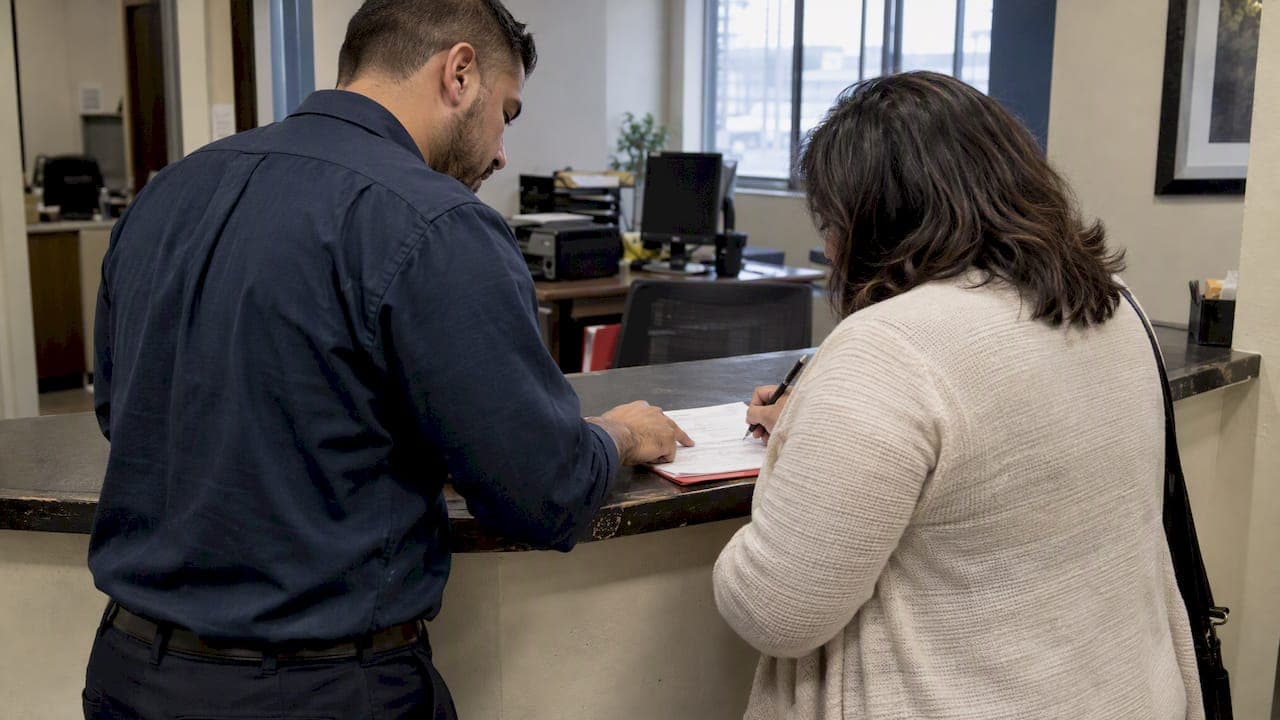
The fastest path to release starts with checking the Alameda County Sheriff's inmate search for booking status and bail amount, then calling an attorney or licensed bail bondsman right away. If the arrest qualifies for pre-arraignment release or release on own recognizance, ask about that option first. Have the arrested person's full name, date of birth, booking number, and the cosigner's ID ready before you make any calls.
TL;DR:
- Bail decisions now consider a defendant's ability to pay and less restrictive alternatives, with judges able to deviate from the traditional bail schedule based on case factors.
- Pre-arraignment release can occur through Alameda Superior Court's screening, potentially avoiding bail or fees, especially for low-risk arrests flagged by an automated tool.
- Most arrests in Oakland take place at Santa Rita Jail, with custody status often delayed by administrative processing or holds from other jurisdictions, requiring verification before posting bail.
- Fees for bail bonds usually amount to 10% of the bail, with payment plans and discounts available, but bonds are not refunded after case completion.
- Accurate documentation, quick communication with legal or bail services, and advanced preparation of proof of income or relationships can significantly speed up the release process.
Table of Contents
- Where Oakland Arrests Are Held and How to Find an Inmate
- How Bail Gets Set in Alameda County
- Pre-Arraignment Release, OR, Cash Bail, and Bail Bonds Explained
- Your Step-by-Step Checklist From Arrest to Release
- Costs, Timelines, and What Causes Delays
- What Attorneys Can Do at Arraignment and Bail Review
- How Alameda County Pretrial Services Screens Cases
- Holds and Penalties That Can Block Release
- A Bail Agent's View on What Families Should Expect
- Getting Fast, Licensed Bail Help in Alameda County
- FAQ
- Sources
Where Oakland Arrests Are Held and How to Find an Inmate
Most people arrested in Oakland end up at Santa Rita Jail, the main county detention facility, while their case moves through one of two Alameda County courthouses that handle arraignments: the René C. Davidson Courthouse or the Wiley W. Manuel Courthouse. Knowing which one applies to your situation usually becomes clear once you locate the booking record.
The Alameda County Sheriff's inmate search tool lets you look up custody status by name. A status of "Pending Release" means administrative processing is underway, not that the person has walked out the door, and that step can take several hours and may be delayed by other holds.
Before contacting a bondsman or attorney, gather:
- The arrested person's full legal name and date of birth
- The booking number and booking date from the inmate search
- Known charges, if listed, and the facility name (usually Santa Rita Jail)
- A valid photo ID for whoever will act as cosigner
How Bail Gets Set in Alameda County
Alameda Superior Court publishes a misdemeanor and felony bail schedule every year under Penal Code §1269b, and that schedule is a starting point, not a final number. Judges can and do deviate from it based on the facts of the case.
The 2024 Alameda County bail schedule functions as a guideline that judges may adjust using statutory factors, not a fixed price list, according to the Superior Court's own bail schedule. A judge weighing bail in Alameda County typically considers:
- Public safety and whether the charge involves violence
- The seriousness of the offense and any prior criminal record
- Flight risk, including ties to the community and employment
- Ability to pay, as required under the Humphrey standard
The California Supreme Court's decision in In re Humphrey changed how judges are supposed to approach bail. Courts must now weigh a defendant's ability to pay and consider less restrictive alternatives, like supervised release, before setting an amount that effectively keeps someone locked up simply because they are poor. In practice, this means a judge can set bail above the schedule for a serious or repeat offense, or well below it, even down to no bail at all, when the defendant can show limited financial means and the prosecution cannot justify a higher figure. An arraignment is often the first real opportunity to make that argument and request nonfinancial conditions of release, as explained in this step-by-step guide to the court-ordered firearms training process.
Pre-Arraignment Release, OR, Cash Bail, and Bail Bonds Explained
Families usually have four realistic paths to get someone out of Santa Rita Jail, and the right one depends on the charge, the person's record, and how quickly you need results.
- Pre-arraignment release through Alameda Superior Court's Pretrial Services program uses an automated risk tool to screen low-risk arrests before a judge ever sees the case, which can mean release without paying anything.
- Release on own recognizance (OR) happens when a judge decides the person can be trusted to show up for court without posting money, often tied to community ties, a clean record, or a non-violent charge.
- Cash bail means paying the full bail amount directly to the court or jail; that money is returned once the case concludes, assuming the person meets every court date.
- A licensed bail bondsman posts the bond in exchange for a premium, typically a percentage of the total bail, and the cosigner takes on responsibility if the defendant skips court.
Pro Tip: Ask whether the arrest qualifies for pretrial screening before you pay a bondsman. It costs nothing to ask, and it can save thousands.
Premium structures vary by provider. Jake Hernandez Bail Bonds, for example, lists a 10% premium with an 8% attorney discount as part of its standard fee structure, which illustrates how bond pricing generally works across the industry.
Your Step-by-Step Checklist From Arrest to Release
Acting in order saves time. Here is the sequence that tends to move fastest:
- Check the Alameda County inmate search to confirm booking, facility, and any listed bail amount.
- Call a public defender's office, a retained criminal defense attorney, or a licensed bail bondsman, depending on whether bail has already been set.
- Ask directly whether the case qualifies for pretrial release screening or OR before committing to a bond.
- Gather a valid photo ID, proof of relationship to the arrested person if requested, and your chosen payment method.
- If posting a bond, complete the paperwork with the bondsman, who typically coordinates directly with the jail's release desk.
- Call the facility or recheck the inmate search periodically to confirm the custody status has changed to released.
Documents that speed things along:
- Government-issued photo ID for the cosigner
- Proof of income or residence, if an attorney is arguing ability to pay
- Payment method accepted by the court or bondsman (cash, card, or financing)
Costs, Timelines, and What Causes Delays
Cash bail is returned after the case closes, provided every court date was met, while a bond premium paid to a bondsman is a fee for the service and is not refunded regardless of case outcome.
Timelines vary widely. Eligible low-risk arrests can see pre-arraignment release within about 24 hours through Pretrial Services screening, while other cases take anywhere from several hours to a few days depending on processing volume and any holds attached to the booking.

"Pending Release" status at Santa Rita Jail reflects administrative processing time, not a finished release, so confirming with both the sheriff's inmate search and the court clerk avoids false hope.
Common causes of delay include:
- Holds from another county or an outstanding warrant elsewhere
- Immigration detainers that require separate federal clearance
- Paperwork backlogs during high-booking periods at the jail
What Attorneys Can Do at Arraignment and Bail Review
Arraignment is the first formal court appearance, and it is where an attorney has the clearest shot at reducing bail or winning OR release. A defense lawyer can present a Humphrey-style argument built on concrete financial evidence.
- Pay stubs, bank statements, or proof of steady housing support an ability-to-pay argument.
- Proposed nonfinancial conditions, such as electronic monitoring or regular check-ins, give the judge an alternative to high cash bail.
- According to the Alameda County Public Defender's FAQ, having counsel present at arraignment substantially improves the odds of a reduced bail or OR release.
- If bail is set too high at arraignment, a separate bail-review hearing can be requested to present new evidence or argue changed circumstances.
How Alameda County Pretrial Services Screens Cases
Alameda Superior Court's Pretrial Services program runs an automated risk assessment shortly after booking, generating a report that helps determine whether someone qualifies for release before ever seeing a judge.
- The tool reviews factors like charge severity and criminal history to produce a risk score within minutes of booking.
- Certain charges are ineligible for automatic release under Penal Code §1270.1 and require a judge's hearing instead.
- For eligible low-risk defendants, this screening can shorten time in custody considerably compared to waiting for a scheduled arraignment.
Holds and Penalties That Can Block Release
Posting bail does not always mean someone walks free immediately, and missing court afterward carries real consequences.
- Missing a required court date can trigger a bench warrant, forfeiture of the posted bail, and a $300 civil assessment under Penal Code §1214.1.
- Immigration detainers, active probation holds, or warrants from another county can keep someone in custody even after bail is paid in full.
- Ask the jail directly whether any additional holds exist before paying bail, since clearing them afterward can take far longer than the original booking process.
A Bail Agent's View on What Families Should Expect
Families often make the process harder on themselves by having three or four relatives all calling the jail, the attorney, and the bondsman separately. Designating one point person cuts confusion and keeps everyone working from the same information.

Surprises tend to cluster around paperwork: bondsmen may ask for proof of relationship or income documentation that families did not expect to need. Having that ready in advance avoids a second trip or a delayed signature.
Once release is underway, confirm three things: the exact release time from the jail, the next scheduled court date, and written confirmation of the bond terms if one was used.
— Jake
Getting Fast, Licensed Bail Help in Alameda County
When bail is set and the clock matters more than anything else, we offer licensed bail bond services across all 58 California counties, including Oakland and the rest of Alameda County, with support available 24/7 through Jake Hernandez Bail Bonds.
We structure our pricing around a 10% premium with an 8% attorney discount, and we offer 0% down options with payment plans for qualified cosigners, including through our $500 down bail bonds option. Before you call, have ready:
- The arrested person's full name, date of birth, and booking number
- The facility name, typically Santa Rita Jail
- A valid photo ID for the person who will act as cosigner
Whether the case involves a felony charge or a more straightforward Oakland arrest, reach out to our team for a free consultation and we will walk you through the paperwork and timeline step by step.
This article is general information, not a substitute for advice from a qualified lawyer. Consult a qualified legal professional about your own circumstances before acting on anything here.
FAQ
What is the new bail law in California?
California's bail standard now follows the state Supreme Court's decision in In re Humphrey, which requires judges to consider a defendant's ability to pay and to weigh less restrictive alternatives before setting cash bail. This means bail amounts are no longer set purely from a fixed schedule and can be adjusted based on financial circumstances and public safety factors.
How much is bail on a $1,000 bond?
Bail bond premiums are typically a percentage of the total bail amount, so the exact cost depends on the provider's rate structure rather than a single fixed fee. Jake Hernandez Bail Bonds lists a 10% premium as its standard rate, with an attorney discount available for qualified cases.
Where can I get bail bonds in Oakland?
Families in Oakland can work with a licensed bail bondsman who serves Alameda County, and Jake Hernandez Bail Bonds offers 24/7 bail bond services in the Oakland and Alameda County area, including coordination directly with the Santa Rita Jail release desk.
How much does a $75,000 bail bond cost?
The premium on a bail bond is generally a percentage of the total bail amount set by the court; Jake Hernandez Bail Bonds applies a 10% premium with an 8% attorney discount for qualifying cases, and offers payment plans for cosigners who need flexibility.
Sources
- 2024 Misdemeanor and Felony Bail Schedule — Superior Court of California, County of Alameda
- Alameda County Sheriff inmate search
- In re Humphrey — California Supreme Court (opinion excerpt)