
The 24 hour bail bond process is the full sequence of steps required to secure an arrested person's release from jail at any time of day or night. It begins the moment someone is booked and ends when they walk out of the facility. The process involves jail administration, a licensed bail bondsman, and in some cases a court hearing. Knowing exactly what to expect at each stage cuts confusion, reduces delays, and gets your loved one home faster. This guide covers every step, the documents you need, common obstacles, and how to handle them.
What information do you need to start the 24 hour bail bond process?
Getting the right information together before you call a bondsman is the single fastest thing you can do. Every minute spent tracking down basic details after you call is a minute added to the wait.
The core details you need are:
- Full legal name (no nicknames). Using nicknames delays the inmate search and slows the entire process.
- Date of birth and middle name. Exact identifying information including the middle name speeds up inmate location significantly.
- Booking or inmate ID number. This number ties directly to the arrest record at the facility.
- Name and address of the jail. Different facilities have different procedures and processing speeds.
- Bail amount and charges. Knowing the bail amount tells the bondsman the premium due and whether a payment plan applies.
The co-signer, also called the indemnitor, plays a critical legal role. Signing an indemnity agreement makes the co-signer legally liable for the full bail amount if the defendant fails to appear in court. This is a binding financial contract, not a formality. The co-signer should understand that responsibility fully before signing.
Pro Tip: Write all of this information down on paper before you call. Bondsmen work faster when you can answer every question in the first two minutes of the call.
Accuracy matters more than speed at this stage. One wrong digit on a booking number or a misspelled name can send paperwork to the wrong record and add hours to the process.
How does the bail bond process work step by step?
The release process follows a fixed sequence. Understanding each stage tells you where you are in the timeline and what to expect next.
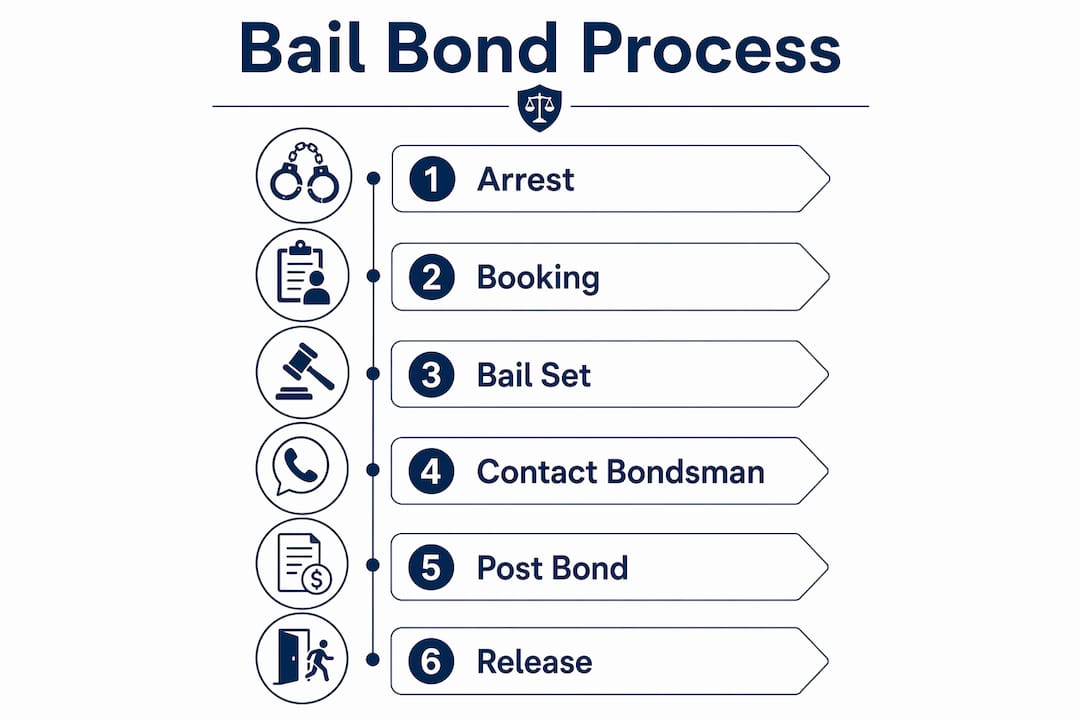
Step 1: Arrest and booking
After an arrest, the person is taken to a jail facility for booking. Booking includes fingerprinting, photographing, recording personal information, and entering the charges into the system. This step typically takes 1–4 hours depending on how busy the facility is.
Step 2: Bail determination
Bail is set either through a preset bail schedule or at a formal hearing before a judge. A bail schedule allows immediate release for qualifying offenses without waiting for a court date. For more serious charges, a judge sets bail at an initial appearance, which typically occurs within 24–48 hours of arrest.
Step 3: Contacting a bondsman and completing the application
Once bail is set, you contact a licensed bail bondsman. The bondsman collects the identifying information listed above, explains the premium (typically 10% of the bail amount in California), and has the co-signer complete and sign the indemnity agreement. Jakehernandezbailbonds offers free consultations and 0% down options for qualified co-signers, which removes a major financial barrier at a stressful moment.

Step 4: Posting the bond
The bondsman submits the bond to the jail. Cash bonds process in 1–3 hours when funds are available. Surety bonds, which is what a bail bondsman provides, take 2–6 hours. Property bonds are the slowest, often requiring 24 hours or more due to title verification.
Step 5: Jail processing and release
After the bond is accepted, jail staff verify the defendant's identity, complete release paperwork, and return personal property. This post-bond processing takes 2–8 hours depending on the facility's workload and time of day. Busy urban jails run longer. Smaller county facilities can move faster.
| Bond type | Typical processing time | Key factor |
|---|---|---|
| Cash bond | 1–3 hours | Funds must be immediately available |
| Surety bond | 2–6 hours | Bondsman paperwork and jail verification |
| Property bond | 24+ hours | Title search and court approval required |
Pro Tip: Posting bond during off-peak hours at a facility, typically mid-morning on weekdays, tends to produce the fastest release times.
What causes delays in the bail bond process?
Delays are the most frustrating part of the process for families. Most of them are predictable, and knowing the cause helps you stay calm and respond correctly.
Jail shift changes are one of the most common culprits. Shift changes at jails, which often occur around 7:00 AM and 7:00 PM, cause staff to prioritize handover procedures over processing releases. Posting bond just before a shift change almost always means a longer wait.
Additional holds are a more serious obstacle. If the defendant has an outstanding warrant from another jurisdiction, an immigration hold, or a probation violation, posting bail will not result in release until that hold is resolved. A background check during processing will surface these issues. Checking for warrants before posting bond saves time and money.
Paperwork errors cause avoidable setbacks. A wrong booking number, a misspelled name, or a missing signature sends the paperwork back to the start. This is why accuracy in the information-gathering stage matters so much.
Families often assume that paying bail means their loved one walks out immediately. The reality is that jail verification and paperwork govern the actual timing. Posting bond is not immediate release. The 2–8 hour post-bond window is standard, not a sign that something went wrong.
What to do if release is delayed beyond 8 hours: Call the jail directly and ask for a status update on the release paperwork. Then call your bondsman. A good bondsman will follow up with the facility on your behalf. Jakehernandezbailbonds handles this follow-up as part of its service, so you are not left waiting without answers.
Why do 24 hour bail bond services speed up release?
The timing of an arrest does not follow business hours. Arrests happen at 2:00 AM on a Tuesday and at noon on a Sunday. A bondsman who is only available 9:00 AM to 5:00 PM cannot help you when it matters most.
The core benefits of using a 24 hour bail bond service include:
- Immediate response at any hour. Not all licensed bondsmen offer round-the-clock availability. Choosing one that does cuts the time between arrest and bond posting.
- Fewer paperwork errors. Experienced bondsmen reduce errors and provide guidance that enables faster release. An agent who knows a specific facility's intake process submits paperwork correctly the first time.
- Financial flexibility. Payment plans and low-down options mean you do not have to scramble for the full premium at midnight. Jakehernandezbailbonds covers bonds from $1,000 to $1,000,000 with payment plan options for qualified co-signers.
- Guidance through legal complexity. Bail is a financial guarantee, not a penalty. A bondsman explains the defendant's court obligations clearly so the co-signer understands what happens if those obligations are not met.
- Local facility knowledge. Bondsmen who work a specific region know which facilities run slow on weekends, which jails have after-hours processing windows, and which staff contacts move paperwork faster.
Pro Tip: Ask any bondsman you contact how many bonds they have posted at the specific jail where your loved one is held. Local experience is worth more than a low advertised rate.
The financial comparison is also clear. Posting cash bail requires the full bail amount upfront, which can be tens of thousands of dollars. A surety bond through a licensed bondsman requires only the premium, typically 10% in California, and that amount is non-refundable but far more accessible than the full sum.
Key Takeaways
The fastest release comes from combining accurate information, a licensed 24-hour bondsman, and realistic expectations about jail processing timelines.
| Point | Details |
|---|---|
| Gather exact legal details first | Full legal name, date of birth, booking number, and jail location are required before calling a bondsman. |
| Bond type determines speed | Surety bonds take 2–6 hours; cash bonds run 1–3 hours; property bonds require 24 hours or more. |
| Post-bond wait is normal | Jail processing after bond acceptance takes 2–8 hours regardless of bond type. |
| Holds block release | Outstanding warrants or immigration holds prevent release even after bail is posted. |
| 24-hour availability matters | Bondsmen with round-the-clock service reduce the gap between arrest and posting. |
What I've learned after years of working bail bonds in California
The families I work with are almost always caught off guard, not by the arrest itself, but by how long everything takes after the bond is posted. They expect their loved one to walk out within an hour. When that does not happen, panic sets in. The most useful thing I can tell you is this: the wait after posting bond is a jail administration issue, not a sign that something went wrong with your bond.
The cases that go smoothest share one thing in common. The caller has the full legal name, the booking number, and the bail amount ready before the first call ends. That single preparation step cuts 30–60 minutes off the process every time. The cases that drag are almost always tied to missing information or an undiscovered hold.
My honest advice on choosing a bondsman: skip any service that cannot tell you specifically which jails they work with regularly. A bondsman who posts bonds at Men's Central Jail in Los Angeles every week knows that facility's intake rhythm. That knowledge is not something you can replicate by reading a website. It comes from showing up there repeatedly and building relationships with staff.
Patience is not passive during this process. While you wait, stay in contact with your bondsman, keep your phone charged, and make sure the defendant knows to follow all release instructions from jail staff. One missed step at the release window can send the paperwork back for re-processing.
— Jake
Jakehernandezbailbonds is available right now, around the clock
When someone you care about is in custody, every hour counts. Jakehernandezbailbonds is a licensed bail bond service operating across all 58 California counties, available 24 hours a day, 7 days a week, with no call center and no middleman.
Agents at Jakehernandezbailbonds know the intake procedures at facilities across the state, from Men's Central Jail in Los Angeles to San Diego Central Jail and beyond. Bonds start at $1,000, with 0% down and payment plans available for qualified co-signers. Consultations are free, bilingual service is available, and the team picks up the phone at any hour. Call Jakehernandezbailbonds now to start the release process immediately.
FAQ
How long does the 24 hour bail bond process take?
The full process from posting bond to release typically takes 4–12 hours. Surety bonds process in 2–6 hours, and post-bond jail processing adds another 2–8 hours depending on facility workload.
What happens if bail is posted but the person is not released?
An outstanding hold, such as a warrant from another jurisdiction or an immigration detainer, can block release even after bail is posted. Contact the jail directly and ask your bondsman to follow up on the hold status.
What does a co-signer agree to when signing a bail bond?
A co-signer signs a legally binding indemnity agreement making them financially responsible for the full bail amount if the defendant misses a court date. This obligation applies regardless of the personal relationship between co-signer and defendant.
Can bail be posted at any time of night?
Yes, provided you work with a bondsman offering true 24-hour service. Not all licensed bondsmen are available around the clock, so confirming availability before you need help is worth doing in advance.
Does posting bail during a jail shift change cause delays?
Shift changes at most jails occur around 7:00 AM and 7:00 PM. Staff prioritize handover procedures during these windows, which routinely extends release processing times by one to several hours.