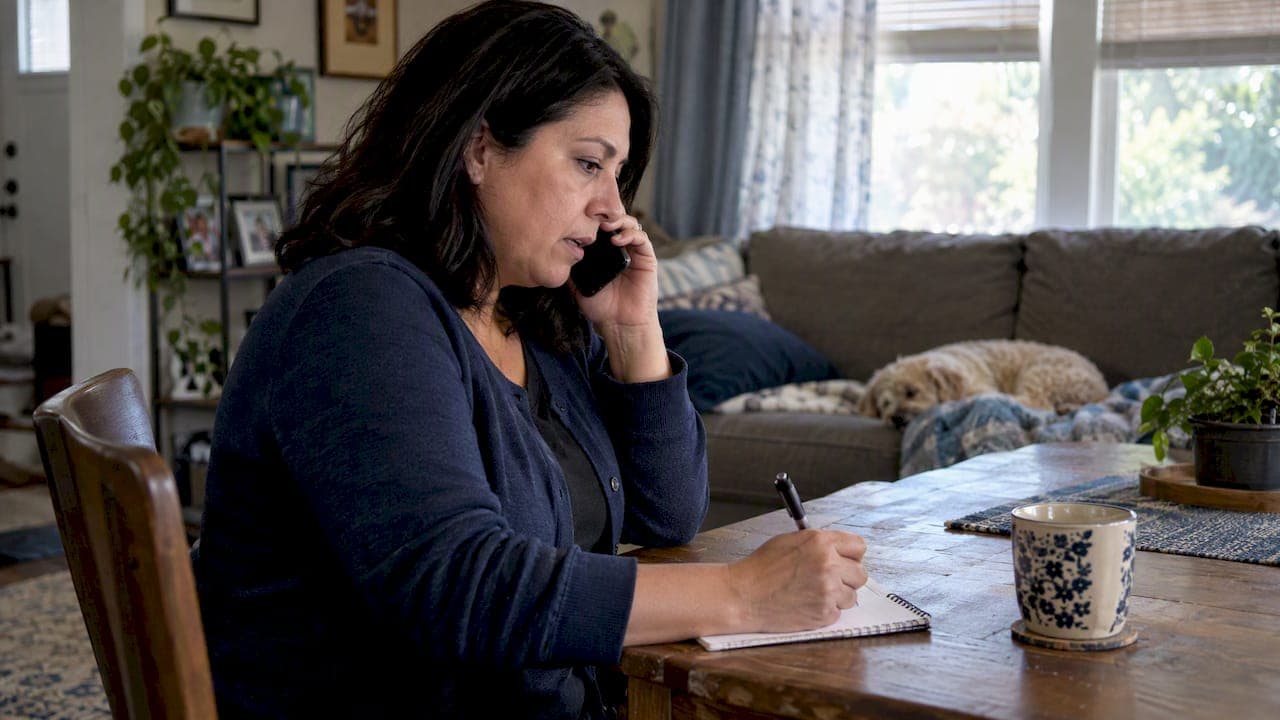
Ask about the premium and whether it matches the filed rate on the undertaking, the agent's license number and surety name, the release timeline, payment and collateral terms, and what happens if court is missed, then get every answer on a numbered, itemized receipt. Write down the license number and surety name before you hang up. Those seven answers tell you almost everything you need to know about whether a bondsman is trustworthy.
TL;DR:
- Ask whether the premium matches the filed rate on the undertaking, request itemized expenses with receipts, and get a numbered transaction statement at release.
- Verify the agent’s license and surety with your state regulator before paying; refuse pressure to sign unread agreements, especially confession of judgment clauses.
- Get any refund policy in writing: the premium is generally earned at release, while only some jurisdictions allow partial relief for surrender before forfeiture.
- Release estimates depend on booking backlogs, jail processing hours, active holds, and accurate inmate details; federal or immigration holds can require extra approvals.
- If collateral is required, get its description and holding terms in a receipt, ask about property liens and release timing, and review added collateral rights.
Table of Contents
- The questions to ask on your first call
- Reading the answers: what sounds right and what should worry you
- Costs, premiums, and common fee traps
- Licensing, verification, and where to report problems
- What affects how quickly someone gets released
- Collateral, cosigner terms, and what to get in writing
- Warning signs and what to do if something goes wrong
- What we recommend and a short script for your call
- Different bond types and how to ask about each one
- How a statewide bondsman handles jurisdiction across California
- When and how a bail premium gets refunded
- The conventional advice misses the paperwork problem
- How we can help you right now
- FAQ
- Sources
The questions to ask on your first call
Keep this list next to the phone. Reading these questions in order gets you the information you need without missing anything important in a stressful moment.
- "What is the premium, and is that the filed rate shown on the undertaking?"
- "What itemized expenses should I expect beyond the premium?"
- "What is your license number and the name of the surety company backing the bond?"
- "Realistically, how long will it take to get the defendant released?"
- "Do you offer payment plans or a 0% down option for qualified cosigners?"
- "What collateral do you require, and how will it be documented?"
- "What exactly happens if the defendant misses a court date?"
- "Will I receive a numbered, itemized receipt at the time of release?"
- "Are you available 24/7, and do you have staff who speak Spanish or other languages?"
- "How will you update me on the case, and who do I contact if I have questions later?"
Ask these in the same call, before you give a credit card number or sign anything. A bondsman who answers clearly and quickly is usually one who runs a clean operation.
Reading the answers: what sounds right and what should worry you
The words a bondsman uses matter as much as the information itself. Vague or rushed answers often signal a problem later.
A trustworthy answer sounds specific and checkable:
- The premium matches a figure tied to the actual undertaking document, not just a round percentage quoted from memory.
- Itemized expenses come with the promise of vouchers or receipts, matching the format described in state transaction forms guidance.
- The license number is given immediately, without hesitation, along with the surety company's name.
- The timeline includes realistic caveats, such as booking backlogs or jail processing hours.
- Payment plans and collateral terms are described as written agreements, not verbal promises.
A red flag answer deflects or pressures:
- A vague percentage with no mention of paperwork or an undertaking.
- "You'll find out the fees later" or "we'll settle up after."
- Refusal or hesitation to give a license number.
- Pressure to sign a confession-of-judgment clause without time to read it.
- No offer of a numbered receipt, or a promise that one will come "eventually."
These patterns echo warnings from consumer-protection guides, which flag poorly disclosed premium-financing agreements and confession-of-judgment misuse as common sources of consumer harm.
Pro Tip: Ask for the surety name and a copy of the undertaking or transaction receipt, and take a photo of any collateral paperwork the moment you receive it.
Costs, premiums, and common fee traps
The premium is the fee you pay the bondsman to post bail, and while it is often described as about ten percent in many places, the number that actually matters is the filed rate shown on the undertaking itself. Ask for that figure by name, and ask for an itemized receipt that breaks out every charge separately.
Lawful itemized expenses can include notary fees, long-distance phone charges, reasonable travel costs, and guard fees after extended hold periods in some jurisdictions. State-level guidance confirms that agents must charge the filed premium shown on the undertaking rather than an arbitrary number.
- Ask which expenses are standard and which are optional.
- Confirm in writing that no extra charge appears without a receipt.
- Ask directly whether the premium is refundable if the case is dismissed early.
Refund rules are narrow. California practice treats the premium as earned once the defendant is released, so a dismissal rarely triggers an automatic refund outside specific pre-forfeiture surrender situations. Our breakdown of how bail bond fees are calculated walks through the math in more detail, and our guide to hidden bail bond fees lists the add-on charges that tend to cause disputes.
Licensing, verification, and where to report problems
Every legitimate bondsman carries a license number and a named surety company backing the bond. Ask for both, then verify them through your state's insurance regulator or licensing portal before you pay anything.
- Check the state regulator's consumer pages or the Better Business Bureau for complaint history.
- Request the numbered transaction statement at release; it should list the premium, itemized expenses with vouchers, collateral description, and the court date.
- Some states, like Connecticut, maintain dedicated bail bond regulation pages explaining licensing requirements and consumer protections.
If something feels wrong, document every conversation and receipt, then contact your state's insurance regulator or attorney general's consumer division. A consumer attorney can help if the issue involves a confession-of-judgment clause or an unlawful fee.
What affects how quickly someone gets released
A bondsman's typical process runs through a few predictable steps: collecting the defendant's information, preparing the bond paperwork, posting it with the jail, and coordinating confirmation of release. Booking backlogs, active holds, or incorrect inmate information are the most common causes of delay.

Ask for an estimated timeline up front, and ask how you'll receive updates as the process moves. Federal and immigration holds often require additional approvals, so confirm whether those apply to your situation. You can check jail processing status through state public safety portals in some states while you wait.
Collateral, cosigner terms, and what to get in writing
If collateral is required, ask exactly what form it takes, cash, property, or another asset, and how it will be held and documented. You should receive a receipt describing the collateral in detail.
- Ask whether a lien will be placed on real property and request a copy of any deed-of-trust.
- Ask about the reconveyance timeline for when the lien is released once the obligation ends.
- Ask whether the agent can demand additional collateral if property values drop.
- Ask whether a confession-of-judgment clause is included, and if so, review it carefully before signing.
Our guide on cosigner responsibilities and typical premium costs covers what cosigners are legally on the hook for in more depth.
Warning signs and what to do if something goes wrong
Walk away, or at least slow down, if you see any of these signs:
- Refusal to give you a written, numbered receipt.
- Surprise fees that never appeared on the original paperwork.
- Threats or attempts to repossess collateral outside the agreed process.
- Pressure to sign a confession-of-judgment clause without time to review it.
If any of this happens, keep copies of every document and message, then contact your state's insurance commissioner or consumer protection division. Consumer-protection guides consistently recommend documenting the transaction and filing a regulator complaint as the most effective first step. A consumer attorney can advise on next steps if the amount involved is significant.
What we recommend and a short script for your call
We answer these questions directly every time, with no call center standing between you and a licensed agent. We offer payment plans along with bilingual support in Spanish, Hindi, and Arabic.
When you call, say: "I need information on bailing someone out. What's the premium, your license number, and the surety name?" Write down every answer before the call ends.
Different bond types and how to ask about each one
The right questions shift slightly depending on the charge. For a misdemeanor, timing and cost usually dominate the conversation, since these bonds tend to move faster and at lower amounts. Ask specifically about misdemeanor bail bonds and how quickly the agent can post them.
Felony cases carry higher bail amounts and more paperwork, so ask whether the agent has direct experience with felony bail bonds in the county where the arrest happened, since felony bonds sometimes require additional court coordination.
Federal bonds work differently from state bonds entirely. They often involve a federal judge's approval and different collateral standards, so ask whether the agent regularly handles federal bonds and what additional steps that process requires.
Immigration bonds add another layer, since they involve ICE custody and federal immigration court rather than a local jail. Ask whether the agent has specific experience with immigration holds, since the posting process and required documentation differ from a standard criminal bond.
Some cases also involve what's known as a 1275 hold, where a judge requires proof that bail funds come from a legitimate source before release is approved. Ask directly whether the case involves a 1275 hold, since it changes the documentation you'll need to provide and can add time to the process.

How a statewide bondsman handles jurisdiction across California
California's 58 counties each run their own jail booking systems, court schedules, and local procedures, which means a bondsman working only in one county may not be equipped to help if an arrest happens somewhere else.
Ask whether the agent you're speaking with can post bonds statewide or only in a limited service area. A bondsman with established relationships across multiple county jails can usually move faster, since they already understand each county's booking process and paperwork requirements.
Ask specifically how the agent handles jurisdiction: do they have local contacts or staff in the county where the defendant is held, or do they coordinate remotely? Remote coordination can still work, but local familiarity with a specific jail's hours and procedures often shortens the wait.
If the arrest happened somewhere you weren't expecting, such as while traveling within the state, ask whether the agent can still help without requiring you to find a new bondsman in that specific county. Statewide coverage matters most in exactly this kind of situation, when time and unfamiliarity with local procedures both work against you.
When and how a bail premium gets refunded
Ask directly, before you pay anything, whether the premium is refundable if the case is dismissed, resolved favorably, or ends quickly. In most cases, the premium is considered earned the moment the defendant is released from custody, regardless of how the case later resolves.
This surprises a lot of people, since it seems logical that a dismissed case should mean the money comes back. It generally does not work that way. The bondsman has already assumed financial risk and performed the service of posting bail, so the premium compensates for that risk and work, not for the case outcome.
There are narrow exceptions. If a defendant is surrendered back into custody before the bond is forfeited, some jurisdictions allow partial relief under specific surrender procedures. Our guide on surrendering a defendant within 48 hours explains how that process works and what it means for any refund.
Ask the bondsman to put the refund policy in writing before you sign anything, including what specific circumstances, if any, would allow for a partial return of the premium. If the case involves a missed court date instead, our explanation of how bail forfeiture proceedings work covers what happens to the bond and your financial responsibility.
The conventional advice misses the paperwork problem
Most lists telling people what to ask a bail bondsman focus on price. That's useful, but it misses the bigger risk: verbal promises with no paper trail. A bondsman can quote a fair premium and still leave you exposed if nothing gets written down.
The single most protective habit is demanding documentation at every step, the filed rate on the undertaking, an itemized receipt, a written payment plan, and a collateral receipt with lien disclosure. Price matters, but price without paperwork is a promise, not a fact.
If you only have time for one question, make it this one: "Will you give me a numbered, itemized receipt at release?" A bondsman who answers yes without hesitation is usually the one who runs a clean, accountable operation. A family dealing with an arrest rarely has the bandwidth to chase down missing documents later, so get them up front.
— Jake
How we can help you right now
We offer free consultations and answer every one of these questions directly, since we believe families dealing with an arrest deserve straight answers, not a call center script. We provide 0% down options and flexible payment plans available for qualified cosigners, plus an automatic discount when an attorney is involved.
Before you call, have ready: the defendant's full name, the jail where they're held, the bail amount if known, and the booking number. We provide bilingual support in Spanish, Hindi, and Arabic.
- Call or visit our main page for coverage options.
- Ask about online bail bonds if you need to start the process remotely.
- Review our bail bond cost breakdown to understand premium and discount details before you call.
If the situation also involves a separate legal matter, such as a protective order violation, a family law attorney can advise on next steps alongside the bail process.
FAQ
Do I have to check in with my bail bondsman?
Most bail agreements require the cosigner or indemnitor to keep the bondsman updated on the defendant's address and court dates, since missed check-ins can affect the agreement. Ask your specific bondsman what check-in schedule, if any, applies to your contract before you sign.
Is a bail bondsman cheaper than paying bail directly?
Paying the full bail amount directly to the court costs more upfront but is refundable if the case resolves without forfeiture, while a bondsman's premium is a smaller upfront cost but is generally nonrefundable once earned. Which option costs less overall depends on whether you can afford the full bail amount and whether you expect it back.
What should I say when calling a bail bondsman?
Start with the defendant's name, the jail location, and the bail amount if you know it, then ask directly about the premium, license number, surety name, and expected timeline. Request a numbered, itemized receipt before you provide any payment information.
What happens if you can't pay back a bond?
If a cosigner can't cover the premium or collateral obligations, the bondsman may pursue the collateral pledged in the signed agreement, which could include property or other assets depending on what was documented. Review the collateral terms and any lien disclosures in writing before signing, since those documents define what happens if payment isn't made.
Sources
- Forms Used in Bail Bond Transactions — Free Study Guide 2026 | OpenExamPrep
- Consumers and bail bonds - Iowa Legal Aid