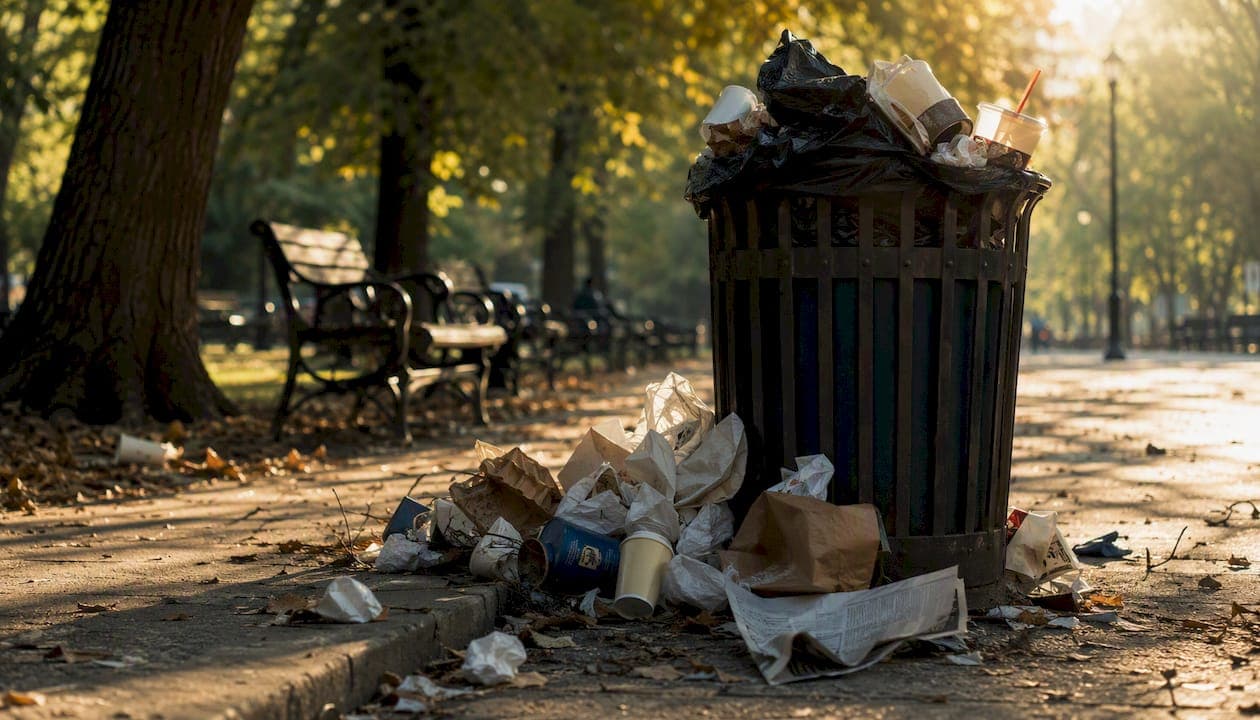
A littering ticket is a civil citation or criminal charge issued when someone deposits waste on public or private property without permission. Most first-time tickets result in a fine, a deadline to respond, and sometimes a community service order. Ignoring it can result in escalating legal consequences.
Here is what typically happens right after you receive one:
- Fine: Ranges from as low as about twenty-five dollars in some states to tens of thousands in extreme cases, depending on jurisdiction, volume, and whether it is a repeat offense, according to the National Conference of State Legislatures.
- Response deadline: Many courts require a response within 21 days. Massachusetts, for example, sets a 21-day payment or response window before escalation begins.
- Community service: Courts in many states can order litter-pickup hours alongside or instead of a fine.
- Court appearance: Required if you contest the ticket or if the charge is criminal rather than civil.
- Escalation triggers: Large volume, hazardous materials, a commercial vehicle, or a prior conviction can push a civil infraction into misdemeanor or felony territory.
Check the ticket itself for the statute or municipal ordinance number cited. That code tells you the exact penalty range and your deadline. Your immediate actions in the next 48–72 hours: photograph the scene, note the officer's name and badge number, and contact the court clerk to confirm your deadline and payment options.
Key Takeaways
A littering ticket can stay a minor fine or escalate to a criminal charge depending on volume, location, and prior offenses — acting within the first 48–72 hours is what keeps it manageable.
| Point | Details |
|---|---|
| Check the ticket immediately | Find the statute number, response deadline, and payment or hearing options before anything else. |
| Fine ranges vary widely | Fines run from $25 to $30,000 across states; California's first-conviction mandatory range is $250–$1,000. |
| Deadlines are hard | Many courts set a 21-day response window; missing it can trigger a criminal complaint or arrest warrant. |
| Volume determines severity | Washington classifies offenses by cubic feet; officer estimates can be challenged with scaled photos and independent assessments. |
| Felony triggers require counsel | Large volume, hazardous materials, or commercial dumping can push a case to felony level — get legal help before responding. |
Table of Contents
- What legally counts as littering or illegal dumping?
- How do penalties vary across states?
- How and when do officers issue littering tickets?
- What are your options to resolve a littering ticket?
- How do you contest a littering ticket?
- What are the collateral consequences beyond the fine?
- What do littering laws look like in Florida, Michigan, South Carolina, California, Texas, and New York?
- How do jurisdictions measure litter volume and weight?
- What if you can't afford the littering fine?
- When can a littering case become a felony?
- A practical perspective on littering tickets
- If a serious charge leads to arrest, Jakehernandezbailbonds can help
- Sources
What legally counts as littering or illegal dumping?
Littering is legally defined as knowingly depositing litter on public or private property without the owner's permission. That word "knowingly" matters in court. A prosecutor generally needs to show the act was intentional, not accidental.
Common item categories covered by state statutes include beverage containers, food packaging, paper, tobacco products, construction debris, large appliances, and hazardous waste. The law treats these very differently depending on volume and type.
A single candy wrapper tossed from a car window is the classic civil infraction. Dumping a broken refrigerator on a rural road is a different category entirely, often a misdemeanor or felony depending on the state. The line between "littering" and "illegal dumping" usually falls somewhere around one cubic yard of material or the presence of hazardous content, though exact thresholds vary by jurisdiction.
Officers and prosecutors typically rely on these proof elements:
- Direct observation by a law enforcement officer or park ranger
- Surveillance footage with a timestamp and clear view of the act
- Witness statements from bystanders or property owners
- Physical evidence connecting the litter to a specific person (mail, prescription bottles, or other identifying documents found in a dumped pile)
- Vehicle identification when litter is thrown from a moving car
Pro Tip: If you believe the ticket was issued in error, write down exactly what you were doing at the time and location noted on the citation — before memory fades. A specific, time-anchored account is far more useful in court than a general denial.
How do penalties vary across states?
Penalties for littering span a wide range, from a $25 civil fine to a $30,000 penalty with possible jail time. The NCSL's state-penalties summary documents this spread and notes that many states increase fines for each subsequent conviction.
Civil infraction vs. misdemeanor vs. felony
A civil infraction is the lowest tier. You pay a fine, and there is no criminal record. Most first-time, small-volume littering tickets fall here.
A criminal misdemeanor applies when volume, location, or a repeat offense crosses a statutory threshold. Jail time becomes possible, typically up to one year in a county jail.
A felony applies to large-scale commercial dumping, hazardous waste, or repeat serious offenses. Sentences can run multiple years in state prison.
Additional consequences beyond the base fine
- Mandatory community service (litter-pickup hours)
- Driver's license suspension in some states
- Restitution orders covering cleanup costs
- Court fees and administrative surcharges that can double the base fine
How states escalate charges
Ten states use weight or volume thresholds to determine severity, according to the NCSL. Location also matters: dumping near a highway, a waterway, or a school often triggers enhanced penalties. Item type is a third escalation factor — hazardous materials, large appliances, and commercial waste receive harsher treatment than household trash.
| Dimension | Civil infraction | Misdemeanor | Felony |
|---|---|---|---|
| Typical fine range | $25–$500 | $500–$5,000 | $5,000–$30,000+ |
| Jail possible? | No | Yes (up to 1 year) | Yes (1+ years) |
| Community service | Sometimes | Often required | Often required |
| License suspension | Rare | Possible | Possible |
| Common trigger | Small volume, first offense | Volume over threshold, repeat offense | Large-scale, hazardous, commercial |
| Typical resolution | Pay fine or contest | Court appearance, plea, or trial | Legal counsel required |
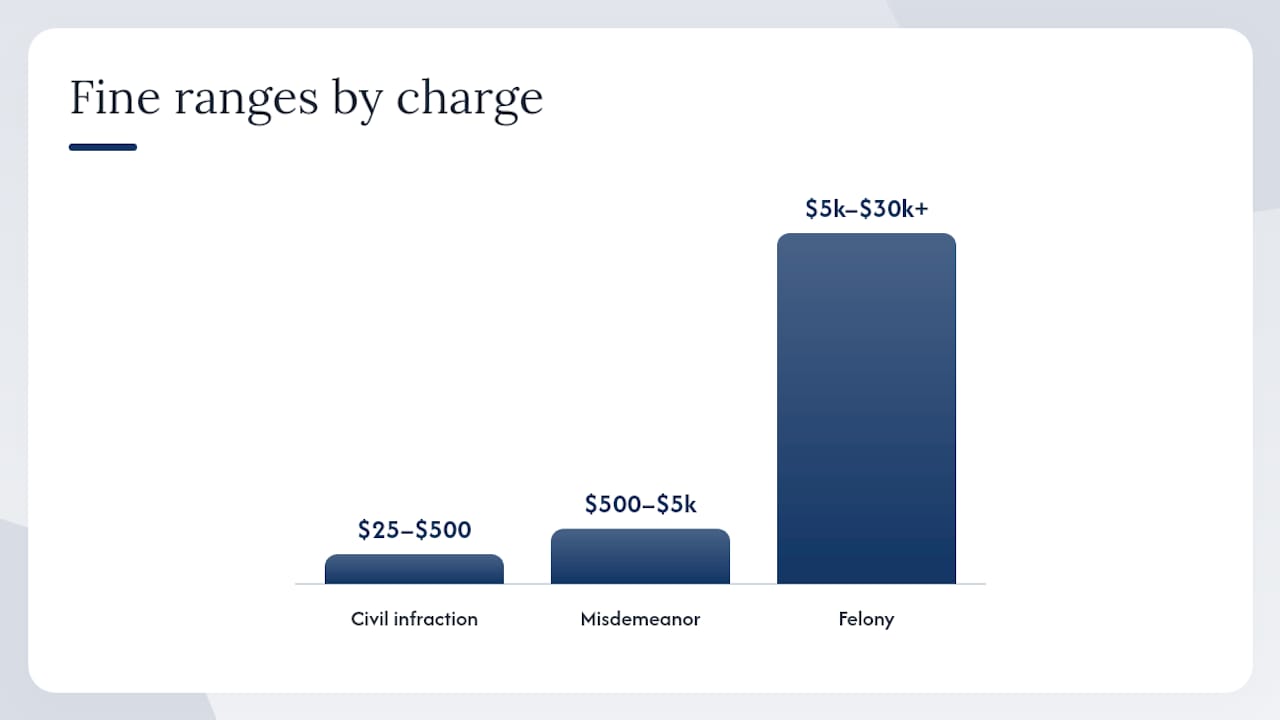
California's Penal Code section 374.4 illustrates how mandatory fine bands work in practice: a first conviction carries a $250–$1,000 fine; a second conviction, $500–$1,500; a third or subsequent conviction, $750–$3,000. Courts may also require at least eight hours of litter-pickup as a condition of probation.
How and when do officers issue littering tickets?
Most littering citations come from one of four scenarios: a patrol officer witnesses the act directly, a member of the public reports it with a description or plate number, a camera system captures it, or investigators trace dumped material back to a specific person through identifying documents found in the pile.
Direct observation is the strongest evidence. When an officer sees you throw something from a vehicle, the citation is straightforward. Camera evidence is increasingly common in urban areas and along highways. The trickiest cases for prosecutors involve reported incidents where no officer was present.
What to record immediately if you plan to contest
- The exact location on the ticket (street address, GPS coordinates if possible)
- The officer's name, badge number, and agency
- The date and time of the alleged violation
- Names and contact information of any witnesses who can support your account
- Photographs of the area showing conditions, signage, and any relevant context
- A written timeline of your own movements that day
Pro Tip: Take photos with your phone's native camera app — it embeds GPS coordinates and a timestamp in the file metadata. That data can corroborate your account of where you were and when, and it is harder to dispute than a handwritten note.
What are your options to resolve a littering ticket?
You have three practical paths: pay the fine, negotiate a plea or alternative resolution, or contest the ticket at a hearing. Each has a different timeline and a different effect on your record.
Step-by-step payment checklist
- Find the deadline. Look at the ticket for the response date. Many jurisdictions set a 21-day window. Massachusetts courts, for example, require payment or a formal response within 21 days of the citation.
- Locate the payment portal. The ticket usually lists a court website, a phone number, or a mailing address. Many courts now accept online payment through their official portal.
- Calculate the total. The base fine is often supplemented by court costs, administrative fees, and sometimes a state environmental surcharge. The total can be significantly higher than the printed fine.
- Pay before the deadline. Late payment typically adds fees and may trigger a failure-to-appear notice or a criminal complaint.
- Keep your receipt. A clerk-stamped receipt or a payment confirmation number is your proof of compliance.
What happens if you miss the deadline?
Missing the deadline without contacting the court is the worst outcome. In Massachusetts, failure to respond can trigger a criminal complaint and, eventually, an arrest warrant. Most states follow a similar escalation path. Contact the clerk before the deadline expires, even if you cannot pay yet.
When a plea or negotiated resolution makes sense
If the fine is large or the charge is criminal, a negotiated plea can reduce the penalty, substitute community service for a fine, or keep the conviction off your record. First-time offenders often have the most leverage here. Ask the clerk whether a diversion program or deferred adjudication is available in your jurisdiction before you simply pay.
How do you contest a littering ticket?
Contesting a littering ticket is a realistic option, especially when the evidence is thin or the officer's volume estimate is questionable. The process is straightforward in most jurisdictions.
Step-by-step: from filing to hearing
- Request a hearing before the deadline. Write "not guilty" on the ticket response form, or submit a written request to the court clerk. Do this before the response deadline, not after.
- Get a hearing date in writing. Confirm the date, time, courtroom, and any filing requirements. Some courts require a written answer; others only need your appearance.
- Gather your evidence. Collect timestamped photos, surveillance footage if available, witness contact information, and any documentation showing lawful disposal (a receipt from a licensed waste facility, for example).
- Prepare a written timeline. A one-page factual account of your movements, signed and dated, is more persuasive than verbal testimony alone.
- Appear on time. Failure to appear typically results in a default judgment against you.
- Present your case clearly. Stick to facts: where you were, what you were doing, and why the officer's account is inconsistent with the evidence.
Evidence that helps most
- Timestamped photos of the location showing no litter, or showing conditions inconsistent with the citation
- Surveillance footage from nearby businesses or traffic cameras
- Witness affidavits (a signed, dated statement from someone who observed the incident)
- Receipts from a licensed waste disposal facility proving lawful disposal
- Scale reference photos if you are challenging a volume estimate
Questions to ask the prosecutor
At a hearing, you can ask the officer or prosecutor to clarify: How was the volume measured? Was the observation direct or reported? Was the identifying evidence (mail, documents) tested for chain of custody? These questions do not need to be aggressive. They just need to be specific.
Pro Tip: A witness affidavit does not need to be long. One paragraph stating the witness's name, their location at the time, what they observed, and their signature is enough. Courts treat a signed, dated affidavit more seriously than an informal verbal statement.
What are the collateral consequences beyond the fine?
Paying a littering fine is not always the end of the story. The collateral effects depend heavily on whether the charge was a civil infraction or a criminal offense.
- Criminal record: A misdemeanor or felony conviction appears on background checks. A civil infraction typically does not.
- Driver's license action: Some states suspend or restrict driving privileges for littering convictions, particularly when a vehicle was involved. The NCSL documents this as a penalty option in multiple states.
- Restitution orders: Courts can order you to pay cleanup costs directly. Under Washington's RCW 70A.205.195, restitution is split between the landowner and the local health department.
- Increased fines for repeat offenses: Most states escalate fines significantly for second and third convictions. California's mandatory bands, for example, nearly triple between a first and third conviction.
- Background check impact: A misdemeanor or felony conviction for illegal dumping can affect employment, housing applications, and professional licensing.
Paying vs. pleading guilty: the record difference
Paying a civil infraction fine is not the same as entering a guilty plea to a criminal charge. For a civil infraction, payment closes the matter with no criminal record. For a criminal misdemeanor or felony, paying the fine is equivalent to a guilty plea and creates a conviction record. If the charge on your ticket is criminal, get legal advice before you pay.
Sealing or expungement
Some states allow expungement of misdemeanor convictions after a waiting period and completion of all sentence conditions. Eligibility rules vary widely. Check your state's criminal records statute or consult a local attorney to see whether your conviction qualifies. Public records of charges and convictions can also appear on third-party sites; understanding how charges appear on public records can help you assess what a potential employer or landlord might see.
What do littering laws look like in Florida, Michigan, South Carolina, California, Texas, and New York?
State laws vary enough that the same act can be a $100 ticket in one state and a $5,000 misdemeanor in another. The statute cited on your ticket is the controlling document. These summaries give you a starting point.
Florida
Florida's litter law grades penalties by weight. Depositing less than 15 pounds or 27 cubic feet is a noncriminal infraction. Between 15 pounds and 500 pounds is a second-degree misdemeanor. Above 500 pounds or more than 100 cubic feet triggers a third-degree felony. Fines range from $50 for a first infraction to several thousand dollars for criminal violations. The statute also authorizes community service and mandatory litter-pickup hours.
Michigan
Michigan's litter law sets fines based on the amount deposited. A first offense for small amounts carries a civil fine. Repeat offenses or larger volumes escalate to misdemeanor charges with fines up to $10,000 and possible imprisonment. Michigan also allows courts to order cleanup restitution and community service. Municipal ordinances in Detroit and other cities may add local penalties on top of state fines.
South Carolina
South Carolina law makes littering a misdemeanor for a first offense, with fines ranging from $200 to $1,000 and up to 30 days in jail. A second offense within five years doubles the fine range. The statute also authorizes driver's license suspension for vehicle-related littering. South Carolina courts commonly offer community service as an alternative to fines for first-time offenders.
California
California Penal Code § 374.4 sets mandatory fine bands: $250–$1,000 for a first conviction, $500–$1,500 for a second, and $750–$3,000 for a third or subsequent conviction. Courts may require at least eight hours of litter-pickup as a condition of probation. Illegal dumping of larger volumes is addressed under separate statutes with higher penalties.
Texas
Texas law grades littering by weight and volume. grades littering by weight and volume. Five pounds or less is a Class C misdemeanor (fine only, up to $500). Between five and 500 pounds is a Class B misdemeanor (up to $2,000 fine and 180 days in jail). Above 500 pounds or 200 cubic feet is a Class A misdemeanor or higher. Commercial dumping of hazardous waste can reach felony level. Texas also allows courts to order community service and cleanup restitution.
New York
New York law covers littering and illegal dumping with escalating fines and penalties. covers littering and illegal dumping. Fines for a first offense start at $250 and can reach $5,000 for larger volumes. Repeat offenses and commercial dumping carry higher penalties. New York City adds its own administrative code violations on top of state law, and enforcement is active in the five boroughs through the Department of Sanitation.
| State | Statute | First-offense fine range | Escalation trigger | License suspension possible? |
|---|---|---|---|---|
| Florida | § 403.413 | $50–misdemeanor range | 15 lbs / 27 cu ft | No (standard) |
| Michigan | MCL 324.8905 | Civil fine to $10,000 | Volume / repeat offense | Possible |
| South Carolina | § 16-11-700 | $200–$1,000 | Repeat offense / vehicle | Yes |
| California | PEN § 374.4 | $250–$1,000 | Repeat conviction | Possible |
| Texas | § 365.012 | Up to $500 (Class C) | 5 lbs / 200 cu ft | Possible |
| New York | ECL § 27-0521 | $250–$5,000 | Volume / commercial | Possible |
Always verify the current statute text at your state legislature's official code site before assuming these ranges apply to your specific citation.
How do jurisdictions measure litter volume and weight?
Volume and weight thresholds are the engine behind penalty escalation, but they are often based on officer estimates rather than precise measurement. That creates room to challenge the classification.
Washington State's approach under its laws reflects a structured system for classifying littering offenses based on volume and restitution.](https://apps.leg.wa.gov/rcw/default.aspx?cite=70A.205.195) is one of the clearest examples in the country. One cubic foot or less is a Class 3 civil infraction. More than one cubic foot but less than one cubic yard is a misdemeanor, with restitution calculated at $50 per cubic foot as a baseline. One cubic yard or more is a gross misdemeanor with higher restitution formulas. Restitution is split equally between the landowner and the local health department.
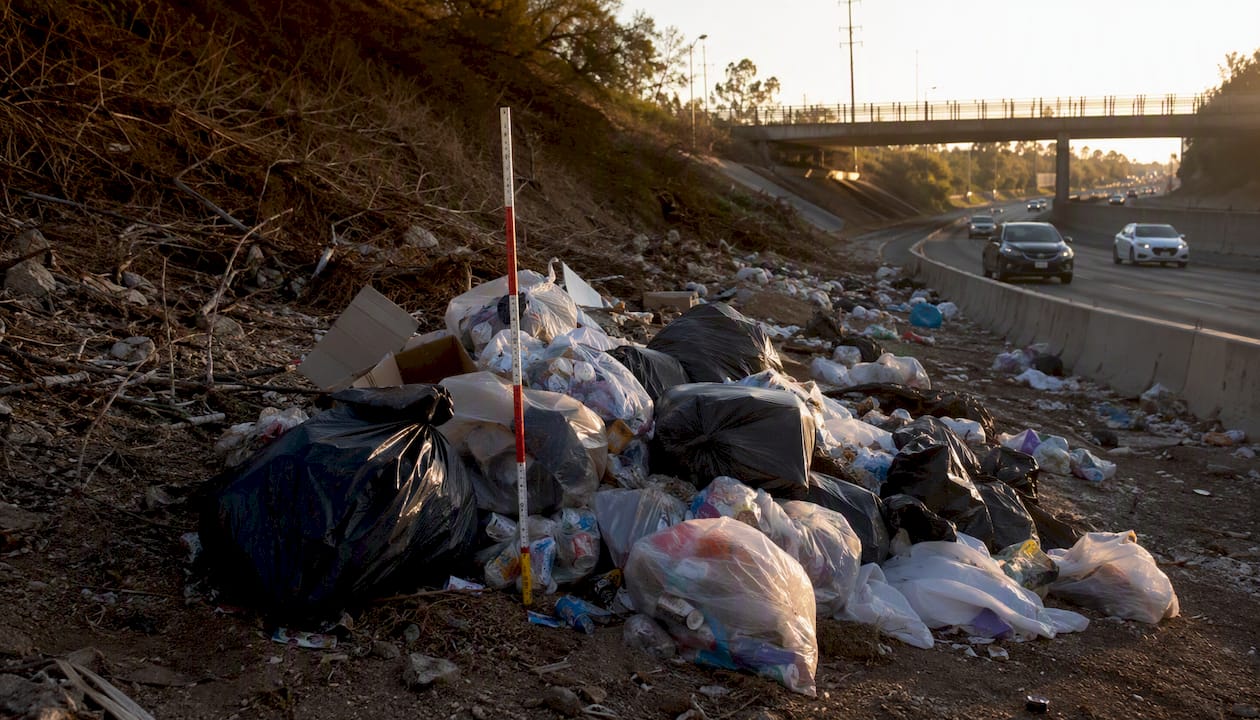
The NCSL notes that ten states use weight or volume thresholds to determine offense severity. Some use per-item categories (a single appliance vs. a truckload). Others focus on cleanup cost as the primary measure.
How officers estimate volume
Officers typically eyeball volume or use a rough comparison to a standard reference (a 55-gallon drum, a pickup truck bed). These estimates are not measurements. They are approximations, and they can be wrong.
How to challenge a volume estimate
- Scaled photographs: Place a ruler, tape measure, or common object of known size next to the material in your photos. This gives the court a visual reference.
- Independent cleanup estimate: A licensed waste hauler can provide a written estimate of the actual volume or weight of material removed. That document carries more weight than an officer's field note.
- Witness testimony: Anyone present who can describe the volume in concrete terms (number of bags, approximate dimensions) adds corroboration.
- Expert testimony: For large-scale cases approaching felony thresholds, a licensed environmental consultant can provide a formal volume or weight assessment.
| Volume threshold | Washington RCW classification | Typical restitution basis |
|---|---|---|
| ≤1 cubic foot | Class 3 civil infraction | No restitution formula |
| >1 cu ft to <1 cu yd | Misdemeanor | $50 per cubic foot (baseline) |
| ≥1 cubic yard | Gross misdemeanor | Higher formula; split landowner/health dept. |
What if you can't afford the littering fine?
Missing a deadline because you cannot pay is one of the most common ways a manageable ticket turns into a warrant. Courts have alternatives, but you have to ask for them before the deadline passes.
Step-by-step: requesting alternatives
- Call the court clerk before the deadline. Explain your situation and ask specifically about payment plans, community service substitution, and fee waivers.
- Ask about a hardship or indigency waiver. Many courts have a formal process. Bring proof of income (pay stubs, tax return, or a benefits letter) to any in-person visit.
- Request community service in writing. Ask the clerk to note your request in the case file and give you a case number or stamped receipt confirming the request.
- Appear at any scheduled hearing. Even if you cannot pay, appearing shows good faith. Judges are more likely to offer alternatives to someone who shows up than to someone who ignores the process.
- Ask about a deferred adjudication or diversion program. First-time offenders in many jurisdictions can complete a program and have the charge dismissed entirely.
Common alternatives judges offer: extended payment plans (monthly installments over 6–12 months), community service at a rate that converts fine dollars to service hours, and reduced fines for first offenders who complete a litter-abatement program.
Pro Tip: Always request alternatives in writing and ask the clerk to stamp or sign your request. A verbal conversation with a clerk is not a formal record. A stamped document with a case number is.
When can a littering case become a felony?
Most littering tickets never come close to felony territory. But a handful of circumstances can push a case there quickly, and the consequences are severe enough that you should recognize the triggers.
Felony-level dumping typically involves one or more of these factors:
- Very large volume: Dumping measured in cubic yards, tons, or truckloads rather than bags or boxes
- Hazardous or toxic materials: Motor oil, chemicals, medical waste, asbestos, or other regulated substances
- Commercial dumping: A business or contractor disposing of waste illegally to avoid disposal fees
- Large appliances or vehicles: Abandoned cars, refrigerators, or industrial equipment
- Repeat serious offenses: A prior misdemeanor conviction for illegal dumping in the same jurisdiction
- Environmental harm aggravators: Dumping near a waterway, wetland, or drinking water source
Felony dumping convictions carry state prison sentences, fines in the tens of thousands of dollars, and permanent criminal records. Some states also impose civil liability for environmental remediation costs that can far exceed the criminal fine.
If any of these factors apply to your case, do not speak to investigators without an attorney present. Do not pay the fine as a shortcut. A felony guilty plea has consequences that follow you for decades. If an arrest occurred and bail is needed, felony bail bond services in California are available statewide around the clock. Understanding how judges set bail for serious charges can also help you prepare for what comes next.
A practical perspective on littering tickets
The single most important thing you can do in the first 48 hours is read the ticket carefully and contact the court clerk. Not next week. Not after you figure out whether to contest. Now.
Most people who end up with warrants or doubled fines did not ignore the ticket out of defiance. They set it aside, missed the deadline, and then felt too embarrassed or overwhelmed to call the court. Clerks handle this every day. They will tell you your options, your exact deadline, and whether alternatives like community service are available. That one phone call changes the outcome more than any other single action.
For cases that involve a criminal charge, a large volume estimate, or any of the felony triggers listed above, get local legal counsel before you decide how to respond. The difference between a civil infraction and a misdemeanor conviction is not just the fine amount. It is your record, your license, and your options for the next several years.
If a serious charge leads to arrest, Jakehernandezbailbonds can help
When a littering or illegal dumping case escalates to an arrest in California, the priority shifts from the ticket to getting out of custody quickly. Jakehernandezbailbonds provides 24/7 bail bond services across all 58 California counties, with 0% down options and flexible payment plans for qualified co-signers. Free consultations are available around the clock, and bilingual support (Spanish, Hindi, Arabic) means no one gets left waiting because of a language barrier.
Use the bail bond cost calculator to get an immediate estimate, or call directly for a free consultation. For a step-by-step walkthrough of the release process, the California bail-out guide covers every stage from booking to release.
Sources
Finding the exact statute cited on your ticket is the most reliable way to confirm your penalty range, deadline, and resolution options. Here is where to look:
- States with Littering Penalties
- California Code, PEN 374.4
- Mass
- RCW 70A.205.195:
- Litter Law and Legal Definition | USLegal, Inc.
If the ticket cites only an ordinance number with no statute name, call the issuing agency or the court clerk and ask them to identify the governing code section. Never assume the penalty range from a general web search. Read the actual statute text before deciding whether to pay or contest.
This article is general information, not a substitute for advice from a qualified lawyer. Consult a qualified legal professional about your own circumstances before acting on anything here.