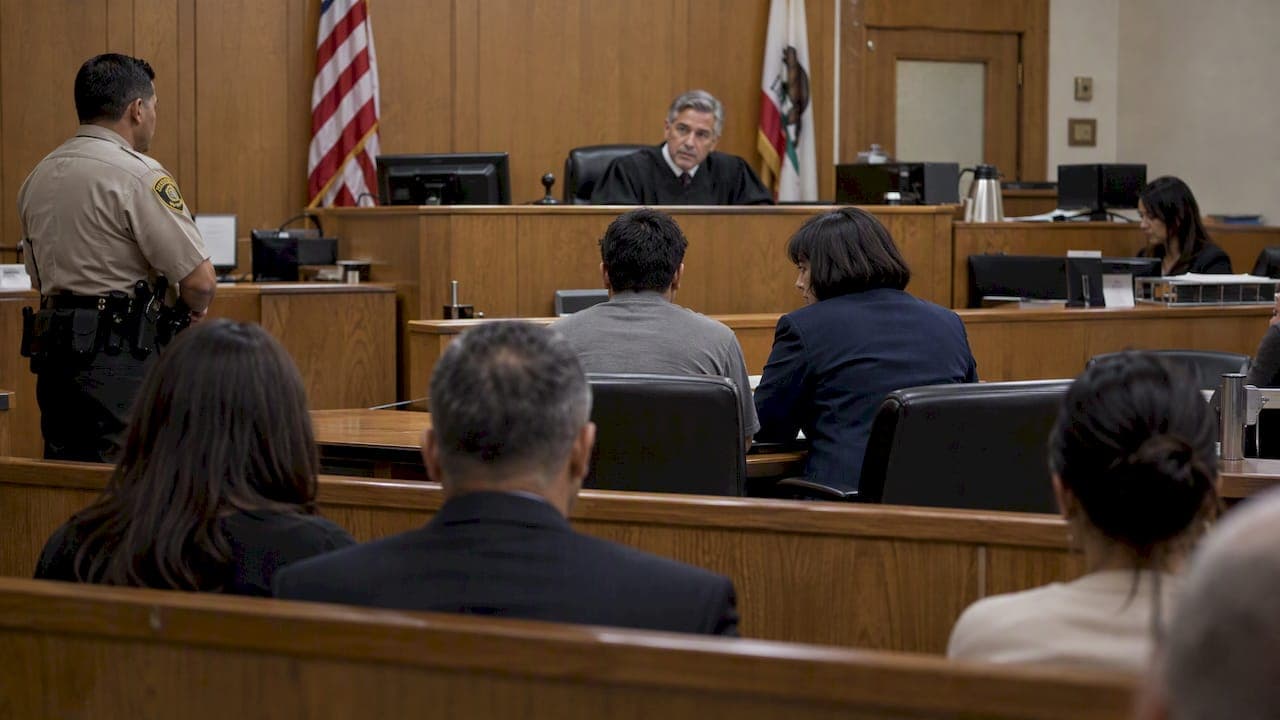
Bail for a human trafficking arrest in California is possible in many cases, but it is slower and less predictable than bail for most felonies. The amount comes from the county bail schedule for Penal Code 236.1, a judge can raise it or deny it at arraignment, and a second check on where the money comes from can hold up release even after a bond is posted. If someone you love has just been arrested on this charge, this guide explains what happens, in what order, and what a co-signer should have ready.
This is general information, not legal advice. The person arrested needs a criminal defense attorney right away, and the attorney, not a bondsman, decides strategy in court.
TL;DR
- Bail for PC 236.1 charges is set by each county's schedule. Across 2026 county schedules, typical amounts run from $75,000 to $500,000, and some aggravated charges involving minors can carry no bail at all.
- The first real chance to address bail is arraignment, which must happen within 48 hours of arrest, not counting Sundays and holidays.
- A judge can go above the schedule or deny bail, because victim and public safety come first for serious felonies.
- Even a posted bond can be blocked by a Penal Code 1275.1 hold, which requires proof that the bail money was not feloniously obtained.
- Call a licensed bondsman early so the co-signer paperwork and income documents are ready before the hearing.
Table of Contents
- What counts as human trafficking under California law
- How bail amounts are set for PC 236.1
- Arraignment: the hearing that decides most things
- Why the schedule is not the last word
- The 1275.1 hold: the hurdle most families miss
- What a bond costs on a high bail amount
- Our perspective: what we tell families on these calls
- Getting started with a bond on a trafficking charge
- FAQ
- Sources
What counts as human trafficking under California law
California's main statute is Penal Code 236.1. It covers depriving someone of personal liberty with the intent to obtain forced labor or services, and it separately covers trafficking for a commercial sex act. The sentencing structure matters for bail, because the more serious the subsection, the higher the schedule amount and the harder the court looks at release.
As summarized from the statute, general labor trafficking carries 5, 8, or 12 years in state prison. Sex trafficking carries higher terms, and offenses against minors using force, fear, or coercion carry 15 years to life. Fines can reach $500,000. Those numbers explain why judges treat these arrests differently from, say, a theft or drug possession case.

The federal government also prosecutes trafficking, and many investigations involve several agencies. The U.S. Attorney's Office describes a victim-centered approach to these cases. In practice, an arrest is often the start of a long investigation, which is one reason judges are cautious about lower bail or release on a person's own recognizance.
How bail amounts are set for PC 236.1
Every California county adopts a bail schedule, a list of presumptive amounts for each offense. Officers use it at booking when someone is arrested without a warrant. A judge can later change the amount.
The schedules differ by county, sometimes sharply. In the 2026 Santa Clara County criminal bail schedule, trafficking offenses sit among the highest amounts in the code, and our review of 2026 county schedules found typical figures between $75,000 and $500,000, depending on the subsection. The same subsection, for example 236.1(b), can be set at $150,000 in one county and $500,000 in another. Charges involving a minor and force or fear under 236.1(c)(2) can show as "No Bail" in some jurisdictions.
| Factor | How it affects the bail amount |
|---|---|
| County of arrest | Each county adopts its own schedule, so the same charge can differ by hundreds of thousands of dollars |
| Subsection charged | Labor, sex trafficking, and offenses involving minors are scheduled differently |
| Minor involved, force or fear | Can be "No Bail" in some counties |
| Additional charges | Added counts (for example pimping, pandering, or weapons) raise the total |
| Prior record | Judges weigh it when deciding whether to depart from the schedule |
Do not rely on a statewide estimate. Find the schedule for the county where the arrest happened. Many courts publish the PDF on their site, and the booking jail can tell you the amount currently listed. If you cannot tell which charge or subsection was booked, ask the jail for the booking charges and the bail amount, and ask the defense attorney to confirm them.
For how judges decide beyond the schedule, see our guide to the factors judges consider when setting bail, and for how a prior record plays in, see why criminal records matter for bail in California.
Arraignment: the hearing that decides most things
Under Penal Code 825, a person held in custody must be brought before a magistrate within 48 hours of arrest, excluding Sundays and holidays. According to the California Courts, at the arraignment the judge tells the defendant the charges, and if the person is still in jail, decides whether they stay in custody or can be released, and on what conditions.
For families, that makes arraignment the main window. It is where the defense attorney can argue for a lower amount or for release conditions in place of high money bail. Prosecutors usually file charges just in time, so do not count on a missed deadline to produce a release.
What to do before that hearing:
- Get the full name, booking number, jail, and listed charges.
- Confirm a defense attorney is retained or that a public defender will appear.
- Gather documents that show lawful income and the source of any money that might be used (more on this below).
- Talk to a bondsman before the hearing, so the paperwork can start the moment a bail amount is set.
Our 24 to 72 hour felony bail checklist walks through the same early window for felony arrests in general.
Why the schedule is not the last word
In most felony cases, posting the scheduled amount ends the matter. Trafficking cases are different, for three reasons.
Victim and public safety come first
The California Constitution, Article I, Section 28, directs courts to consider the safety of the victim and the victim's family when fixing bail and release conditions, and gives victims a right to be reasonably protected from the defendant. Victims also have the right to be heard at a post-arrest release hearing. If the victim or the district attorney argues that the defendant is a continuing threat, a judge can set bail well above the schedule, add conditions such as no-contact orders, or deny release.
Co-signers should plan for that. A bond quoted on Monday for the scheduled amount may not be the bond you end up needing on Wednesday.
Ability to pay is a legal factor, not a loophole
In In re Humphrey, the California Supreme Court held that when a financial condition is necessary, the court must consider the arrestee's ability to pay, and may not effectively detain someone solely because they lack the resources to post bail. It also pointed to less restrictive alternatives that can protect public and victim safety. That decision does not mean bail will be low in a trafficking case. It means the defense attorney has a legal basis to ask the judge to explain why a given amount or detention is necessary.
Bail can be denied outright
Some aggravated charges involving minors can appear as no bail on a county schedule. In that situation a bond is not available until a judge sets an amount, and the defense attorney will usually have to request a hearing. Our article on no bail holds in California lays out five steps a family can take in the first 24 hours.
The 1275.1 hold: the hurdle most families miss
The step that surprises people most is Penal Code 1275.1. It says bail is not to be accepted unless a judge or magistrate finds that no part of the money, pledge, security, or promise used to secure it was feloniously obtained. In trafficking cases, prosecutors may suspect that funds come from illicit proceeds, so a 1275.1 hearing is a real possibility.
What that means in practice:
- The defendant carries the burden of showing the source of the bail funds is lawful.
- You need documents: pay stubs, tax returns, bank statements, a property deed, proof of a sale or an inheritance, whatever shows where the money or collateral came from.
- Once a hold is filed, release is not rapid. An evidentiary hearing is needed, and a defendant can ask that privacy be protected.
- The review can apply to a co-signer's collateral, not only to cash, so a co-signer should expect questions about their own income and assets.
This is why a bond for a trafficking charge is not simply a matter of paying a percentage. The paperwork that proves clean funds can take longer to assemble than the premium takes to collect. Start collecting it on day one.
We handle 1275 holds as part of our work, and we explain the fast-release side of that process in our piece on fugitive recovery, PC 1275 and fast bail.
What a bond costs on a high bail amount
With a bail bond, you pay a premium instead of the full bail. Our published premium is 10% of the bail amount, and attorneys get an 8% rate. As an illustration only, a $150,000 bail at 10% means a $15,000 premium, and a $500,000 bail at 10% means $50,000. Your actual terms depend on the bail set, the co-signer's qualifications, and the case, so ask for a quote against the real number, not a guess.
The larger point is that on trafficking bail amounts, the premium is a big sum, and co-signers take on responsibility for the full bail if the defendant misses court. Think hard about who signs, what collateral is at stake, and whether the family can keep the defendant making every court date. If you are comparing a bond to putting up cash, read cash bail versus a bond first. If you want the mechanics, our step-by-step guide to how bail bonds work in California covers them.
If the co-signer lives out of state, you can still arrange a bond. See how to bail someone out of a California jail from another state.
Our perspective: what we tell families on these calls
We get these calls at odd hours, usually from a parent, a spouse, or an attorney who needs to know what is realistic. We answer them directly, with no call center in between, and we cover all 58 California counties.
Here is what we say most often. First, do not assume the schedule number is the number. Trafficking charges draw attention from prosecutors and sometimes victims, and the judge has the room to go higher. Second, we would rather tell you early that a case is likely to need a hearing than promise a quick release we cannot deliver. A 1275.1 hold is not something a bondsman can talk past. It is a court finding, and it depends on documents.

Third, the best thing a family can do in the first day is work with the defense attorney and gather paper. Income records, the source of any collateral, and clear contact details for the co-signer do more for release than anything we say on the phone. We handle 1275 holds and complex cases as a specialty, and we can tell you what the court is likely to ask for.
Finally, be honest with yourselves about the commitment. A co-signer on a large bond is accountable through the whole case, not only until release. We stay with clients through court dates because missed appearances are what turn a hard situation into a worse one.
— Jake
Getting started with a bond on a trafficking charge
We offer free consultations around the clock, bilingual support in Spanish, Hindi, and Arabic, and we handle felony, federal, and immigration bonds. If a bail amount has been set, our felony bail bond service can walk you through terms for that number. If you are not sure yet what the amount will be, contact us before the arraignment and we will tell you what to prepare. You can also start online if you cannot get to an office.
When the arrest was in a large county, our county pages can help, such as felony bail bonds in Los Angeles County or Orange County.
If you are supporting someone through the first days after an arrest, family support during arrest covers the practical side.
FAQ
Can you get bail for human trafficking in California?
Often yes, but not always. Bail is set by the county schedule and then reviewed by a judge, who can raise it or deny it, especially where a minor and force or fear are alleged. Some aggravated charges show as no bail on county schedules until a judge acts.
How much is bail for human trafficking in California?
It depends on the county and the subsection charged. Across 2026 county schedules, typical amounts range from $75,000 to $500,000, and the same subsection can differ by county. Check the schedule for the county of arrest and confirm with the jail and the defense attorney.
What is a 1275.1 hold?
It is a court finding under Penal Code 1275.1 that must be made before bail is accepted: that no part of the bail funds was feloniously obtained. The defendant has to show the source of the money is lawful, usually with income and asset records. It can delay release by days while the court holds a hearing.
How long does it take to get out on bail after a trafficking arrest?
There is no fixed time. Arraignment must occur within 48 hours of arrest, excluding Sundays and holidays, and bail is usually addressed there. If the court orders a hearing on the source of funds or the victim is heard, release can take longer.
Do I need a lawyer as well as a bondsman?
Yes. A bondsman secures release once bail is set, but only a criminal defense attorney can argue for a lower amount, release conditions, or challenge the charges. Hire one before arraignment if you can.
Sources
- California Penal Code 236.1
- California Penal Code 1275.1
- California Constitution, Article I, Section 28
- Santa Clara County Superior Court 2026 Criminal Bail Schedule
- California Courts Self Help Guide: The arraignment
- In re Humphrey, California Supreme Court
- U.S. Attorney's Office, Central District of California: Human Trafficking