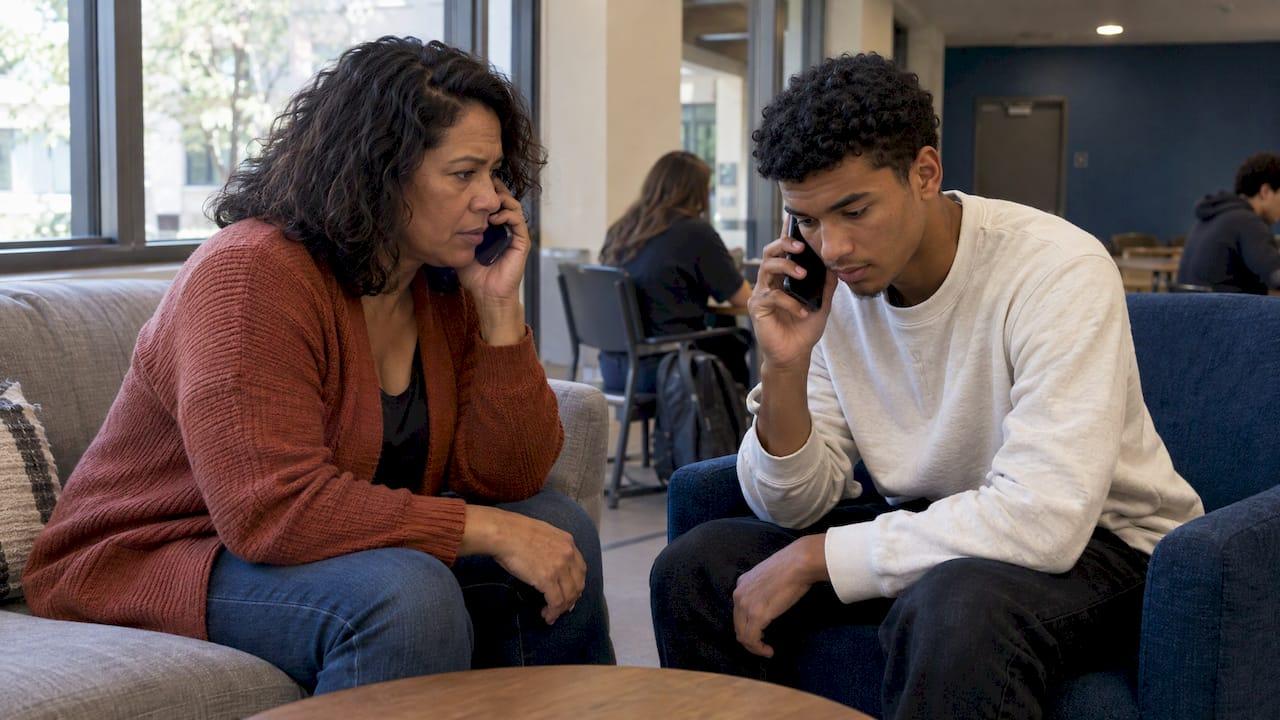
When a student is arrested in California, the first question is which system is holding them: a county jail on a criminal charge, or federal immigration custody. The answer decides whether you post bail or an immigration bond, who sets the amount, and how fast release can happen. Jake Hernandez Bail Bonds handles both kinds of release statewide, around the clock, and the first call is free.
This guide is for parents, relatives, friends and co-signers who just heard that a college or university student is in custody. It explains the two paths in plain language, the order of steps that saves the most time, and what a co-signer takes on.
TL;DR
- First find out who is holding the student: a city or county jail (criminal bail) or ICE (an immigration bond). The two work differently.
- For a criminal arrest, a bail bond typically costs a 10% premium of the bail amount. Our bail cost page shows how that works, and attorneys get an 8% rate.
- For ICE custody, DHS sets an initial bond, and an immigration judge can review it on request. There is no filing fee for that request.
- Being a student does not change the bail process. The charge, the county and the booking status do.
- Call us 24/7. Consultations are free, and we serve all 58 California counties in English, Spanish, Hindi and Arabic.
Table of Contents
- Step one: Is it a criminal arrest or an ICE detention?
- If the student is in a California jail: how bail works
- If the student is in ICE custody: how an immigration bond works
- Criminal bail or immigration bond: a quick comparison
- What to do in the first hour
- Get the student out with a person, not a call center
- Our perspective
- FAQ
- Sources
Step one: Is it a criminal arrest or an ICE detention?
A student can end up in custody in two very different ways.
Criminal arrest. Campus police, city police, a sheriff's office or a federal agency arrests the student on suspicion of a crime. The student is booked into a city or county jail. Bail is set under a county bail schedule or by a judge, and a bail bond can secure release.
Immigration detention. ICE detains a noncitizen student, sometimes at an airport, a courthouse or a home, on an immigration matter rather than a crime. The student may be held at a federal or contract detention facility, often far from campus. There is no county bail schedule here. Release happens through an immigration bond or a decision by an immigration judge.

News coverage often blurs the two. A student who is "arrested" may be in a county jail on a misdemeanor, or in ICE custody on an administrative matter. Do not assume. Find out first, because posting the wrong type of bond wastes hours and money.
How to find out where the student is
- Ask the student's phone contact. If the student made a call from custody, note the number and any facility name the recording mentioned.
- Check the county sheriff's online inmate locator. Most California sheriff's offices publish one. Search under the county where the arrest happened, using the student's full legal name and date of birth.
- For a possible ICE detention, use the federal online detainee locator with the student's full name and country of birth, or the student's A-Number if the family has it. Records can take time to appear after a transfer.
- Call the school. A dean of students or campus police office can often confirm whether campus officers were involved, even if they cannot share details.
- Call us. Tell us the student's name, birth date and where you think they are held. We can help you work out whether a bail bond or an immigration bond applies.
If the student is in a California jail: how bail works
A bail bond is a promise to the court that the student will appear at every hearing. A bail agent posts that promise for you. You pay a premium, and the student is released while the case proceeds.
What drives the bail amount
Bail depends on the charge and the county. Each county uses a schedule that lists an amount for each offense, and a judge can raise or lower it at arraignment. A first-time misdemeanor, such as a campus fight, disorderly conduct or a minor drug charge, usually carries a much lower bail than a felony such as a serious assault or a theft over a set threshold. The same charge can carry a different amount in Los Angeles County than in Alameda or Fresno County.
Students are often charged in these situations:
- Fights and assault claims on or near campus (see our guide on resisting arrest bail)
- Disorderly conduct and public intoxication (disorderly conduct bail)
- Protest-related arrests (protest arrest bail)
- Drug possession and DUI
- Theft, fraud and computer-related offenses (white collar bail rules)
For each of these we handle misdemeanor bail bonds and felony bail bonds, so the process stays the same whatever the charge.
What it costs
The premium on a bail bond is 10% of the bail amount, as published on our bail cost page. If a student's bail is set at $5,000, the premium is $500. If it is $20,000, the premium is $2,000. Attorneys get an 8% rate, and that discount is applied automatically when an attorney is involved.
Families who cannot gather the premium at once have options. We offer 0% down and payment plans for qualified co-signers, and our $500 down bail bonds page explains the lower-upfront route. A free consultation tells you what you qualify for before you commit to anything.
Worked example
A 20-year-old community college student is arrested after a fight outside a party and booked into county jail on a misdemeanor. Bail on the county schedule is $10,000. Her mother calls us from another city at 11 p.m.
- We take the student's name, booking number and the county.
- Her mother, as co-signer, completes the paperwork online, which our online bail bonds service allows from anywhere.
- The premium is $1,000 at 10%, and a payment plan may spread it out for a qualified co-signer.
- We post the bond with the jail. Once the jail processes it, the student is released with her court date.
Jail processing time is set by the jail, not by us, and busy booking nights can run longer. What we control is that the paperwork is ready and the bond is posted without delay.
Co-signer duties
The co-signer is the person who signs for the bond and takes responsibility for the student making every court date. That is a real commitment, so choose someone who can stay in touch with the student. Co-signers should:
- Keep the student's phone number, address and school schedule current with us
- Make sure the student knows each court date and how to get there
- Call us right away if the student moves, changes phones or is struggling to attend
We provide court-date support through the case, so a missed date does not come as a surprise. For a clear overview of the whole sequence, read our step-by-step guide to how bail bonds work in California.
Parents out of state or abroad
Many students at California universities come from other states or countries, and their parents cannot drive to the jail. Bail can be arranged remotely. Our guides on bailing someone out from another state and out-of-state arrestees cover the details. Because our service is bilingual, a family member who is more comfortable in Spanish, Hindi or Arabic can complete the process in that language.
When there is a no-bail hold
Sometimes a student is arrested and the jail says there is no bail or bail is not yet available. This can happen when a hold is placed on the booking, such as a 1275 hold. We specialize in these holds. Our guide on no-bail holds in California lists five steps families can take in the first 24 hours.
If the student is in ICE custody: how an immigration bond works
Immigration bond is a different process with different rules. It applies when a noncitizen student is held by ICE, for example after a visa or asylum issue.
Who sets the bond, and who can review it
According to the Executive Office for Immigration Review, DHS initially sets the bond, but an immigration judge may hold a bond hearing and redetermine the amount on request. The judge first decides whether the person is eligible for bond. If so, the judge weighs danger to people or property and the likelihood that the person will appear. There is no filing fee for the request.
The request can be made in several ways: by checking a box on Form I-286, by telephone if the judge allows it, orally at a hearing, or by a written motion. An immigration attorney can tell you which route fits the student's case.
If ICE keeps a person in custody or sets a bond the family cannot afford, the American Immigration Council explains that the person can ask an immigration judge to order release or reduce the bond. Release is warranted when the person is not a danger and is likely to appear at future hearings. Conditions such as an ankle monitor can also be addressed by the judge.
The rules are shifting
Immigration bond eligibility has been in flux. A 2026 legal update reports that the government appealed the February 18, 2026 Maldonado-Bautista ruling and that its broader protections were paused from March 6, 2026, except for detainees in the Central District of California. Because eligibility can depend on where the student is held and on the student's history, a family should speak to an immigration attorney early. We work with attorneys regularly, and attorneys receive our 8% rate.
How an immigration bond is posted, and how fast
ICE's page on posting bonds explains that a cash bond goes through its online bond system, and that verification, contract review and payment typically take about one to two hours during bond-posting hours. Those hours are Monday through Friday, 9 a.m. to 3 p.m. in the time zone where the person is held, excluding government holidays. A request not completed in that window is processed the next business day.
The practical lesson: start before noon on a weekday if you can. Gather the student's full name, A-Number, the facility, and the bond amount from the detention officer or the attorney. Posting is a federal process, so the facility and the timing are fixed by ICE, but a prepared family loses no time.

We offer immigration bail bonds statewide. For families in Southern California, there is a dedicated page for immigration bail bonds in Orange County. We also handle federal bonds, for cases where the student's arrest is on a federal criminal charge rather than an immigration matter.
Criminal bail or immigration bond: a quick comparison
| Criminal arrest (county jail) | ICE detention | |
|---|---|---|
| Who holds the student | City or county jail | ICE or a contract facility |
| Who sets the amount | County bail schedule or a judge | DHS first, then an immigration judge on request |
| Typical premium | 10% of bail; 8% with an attorney | Set by the bond amount and the arrangement |
| Main document | Bail bond agreement | Immigration bond, posted with ICE |
| Release timing | After the jail processes the bond | Bond-posting hours are weekday daytime |
| First call | A bail agent | An immigration attorney and a bail agent |
What to do in the first hour
- Confirm the student's full legal name, date of birth and the arresting agency.
- Locate the student with the sheriff's locator or the federal detainee locator.
- Ask the student, if you can reach them, not to discuss the case on jail phones. Calls from custody are recorded.
- Call us and describe what you know. We tell you whether a bail bond or an immigration bond fits, what it costs and what we need from the co-signer.
- If the charge is serious, or the student is a noncitizen, contact a criminal defense or immigration attorney. A lawyer should handle the defense. We handle the release.
- Tell the school only what you must. Many universities have a dean or a student legal office, but the student's best protection is a prompt release and a lawyer.
For a calm overview of what family members can do in the first day, see our guide to family support during an arrest.
Get the student out with a person, not a call center
When your child or friend is in custody, you want a real person who answers and explains what happens next. Jake Hernandez Bail Bonds provides licensed bail bond service across all 58 California counties, with direct practitioner-led help and no call center in between. Consultations are free and support is available 24/7. We offer 0% down options and payment plans for qualified co-signers, plus attorney and military discounts.
Start on our California bail bonds page, or look up what a bond would cost on our bail cost page.
Our perspective
A student's arrest is usually the worst night a family has had in years. Parents are frightened, often far away, and they want one thing: to know their child will come home and sleep in their own bed.
We believe that is best served by a person who picks up the phone, tells you the real steps and stays with you through every court date. That is why we run without call centers or middlemen. When you call us, you speak to someone who does this work.
Our bonds range from $1,000 to $1,000,000, and our free consultation tells you where you stand before you commit. For families who cannot gather the premium at once, we offer 0% down and payment plans for qualified co-signers. For families who speak Spanish, Hindi or Arabic, we help in those languages.
A criminal arrest and an ICE detention are different problems, and we cover both: county bail, federal bonds, immigration bonds and 1275 holds. Whichever it is, we start with one goal, getting the student released quickly and safely, and keeping the case on track after that.
Jake
FAQ
Does being a student change the bail amount?
No. Bail depends on the charge, the county schedule and any decision by a judge, not on enrollment. A student's clean record, local ties and school enrollment can matter when a judge reviews bail at arraignment, which is one reason to involve a defense attorney early.
How much does it cost to bail out a student in California?
The premium is 10% of the bail amount, and attorneys receive an 8% rate, as shown on our bail cost page. On a $10,000 bail, that is $1,000. Qualified co-signers can ask about 0% down options and payment plans during a free consultation.
Can I bail out a student from another state?
Yes. The paperwork can be completed online and remotely, so a parent in another state can act as co-signer. Our online bail bonds page explains the process, and we serve all 58 California counties.
What if the student was detained by ICE, not arrested by police?
Then there is no county bail. DHS sets an initial bond, and an immigration judge can review it on request. An immigration attorney should guide that request, and we handle the bond itself through our immigration bail bonds service.
Will a bail bond make the student's case go away?
No. A bond secures release while the case continues. The student still has to attend every court date, and a defense attorney handles the charge itself.
Sources
- Executive Office for Immigration Review, Policy Manual: Bond Proceedings
- Illinois Legal Aid Online, Immigration bond FAQ
- American Immigration Council, Seeking Release from Immigration Detention
- ICE, Post a Bond
- NILC, Rapid Response Update on Bond Eligibility